Occupation Summary

Residential Advisors

O*NET 39-9041.00

Description:

Coordinate activities in resident facilities in secondary school and college dormitories, group homes, or similar establishments. Order supplies and determine need for maintenance, repairs, and furnishings. May maintain household records and assign rooms. May assist residents with problem solving or refer them to counseling resources.

Annual Wages:
$37,794.00
Employment Rate:
Employment is expected to increase by 19.23%.
Education Level:
Some College Courses. According to O*Net, the majority of people employed in this occupation have this level of education.
Endorsement:
Public Service

  1. Enforce rules and regulations to ensure the smooth and orderly operation of dormitory programs.
  2. Provide emergency first aid and summon medical assistance when necessary.
  3. Mediate interpersonal problems between residents.
  4. Administer, coordinate, or recommend disciplinary and corrective actions.
  5. Communicate with other staff to resolve problems with individual students.
  6. Counsel students in the handling of issues such as family, financial, and educational problems.
  7. Make regular rounds to ensure that residents and areas are safe and secure.
  8. Observe students to detect and report unusual behavior.
  9. Determine the need for facility maintenance and repair, and notify appropriate personnel.
  10. Collaborate with counselors to develop counseling programs that address the needs of individual students.
  11. Develop program plans for individuals or assist in plan development.
  12. Hold regular meetings with each assigned unit.
  13. Direct and participate in on- and off-campus recreational activities for residents of institutions, boarding schools, fraternities or sororities, children's homes, or similar establishments.
  14. Assign rooms to students.
  15. Provide requested information on students' progress and the development of case plans.
  16. Confer with medical personnel to better understand the backgrounds and needs of individual residents.
  17. Answer telephones, and route calls or deliver messages.
  18. Process contract cancellations for students who are unable to follow residence hall policies and procedures.
  19. Sort and distribute mail.
  20. Supervise the activities of housekeeping personnel.
  21. Order supplies for facilities.
  22. Supervise students' housekeeping work to ensure that it is done properly.
  23. Chaperone group-sponsored trips and social functions.
  24. Compile information such as residents' daily activities and the quantities of supplies used to prepare required reports.
  25. Accompany and supervise students during meals.
  26. Provide transportation or escort for expeditions, such as shopping trips or visits to doctors or dentists.
  27. Inventory, pack, and remove items left behind by former residents.
  28. Develop and coordinate educational programs for residents.
  29. Supervise, train, and evaluate residence hall staff, including resident assistants, participants in work-study programs, and other student workers.
  30. Oversee departmental budget.


National Industry Employment Patterns


Industry % of Residential Advisors employed Annual Growth Rate
Residential mental health facilities 23 0.62
Colleges, universities, and professional schools 13.6 0.38
Community food and housing, and emergency and other relief services 11.2 0.90
Other residential care facilities 10 0.21
Individual and family services 10 1.37
Continuing care, assisted living facilities 4.3 1.16
Vocational rehabilitation services 3.8 -0.87
Elementary and secondary schools 2.8 0.36


Labor Market Information


2024 Statewide average hourly wage $18.17
2024 National average hourly wage $19.99
2022 National employment 95,700
2022 Texas employment 3,723
Texas projected employment by 2032 4,439
Texas projected annual employment and Turnover openings through 2032 777


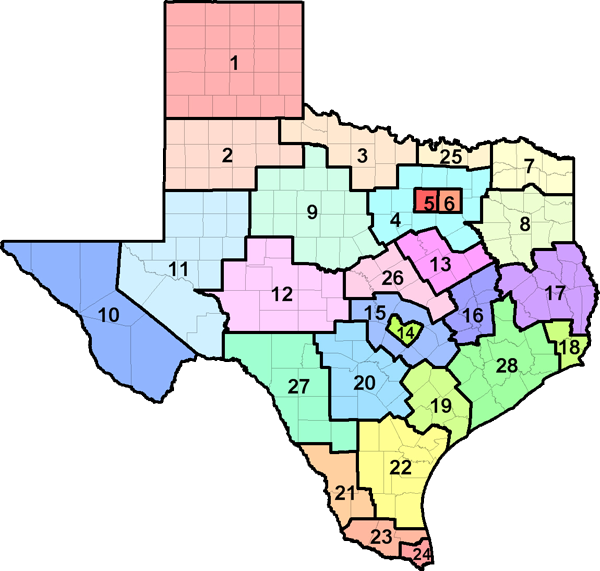
TEXAS COUNTY MAP BY WORKFORCE DEVELOPMENT AREA
* Due to confidentiality rules, not all regions may have the data displayed. The sum of all the regions may not be equal to the state total.


Top 10 Relevant Knowledge Areas Relevant Importance Levels
Customer and Personal Service
Knowledge of principles and processes for providing customer and personal services. This includes customer needs assessment, meeting quality standards for services, and evaluation of customer satisfaction.
89.00%
Administration and Management
Knowledge of business and management principles involved in strategic planning, resource allocation, human resources modeling, leadership technique, production methods, and coordination of people and resources.
84.20%
Public Safety and Security
Knowledge of relevant equipment, policies, procedures, and strategies to promote effective local, state, or national security operations for the protection of people, data, property, and institutions.
81.00%
Education and Training
Knowledge of principles and methods for curriculum and training design, teaching and instruction for individuals and groups, and the measurement of training effects.
79.80%
English Language
Knowledge of the structure and content of the English language including the meaning and spelling of words, rules of composition, and grammar.
78.40%
Sociology and Anthropology
Knowledge of group behavior and dynamics, societal trends and influences, human migrations, ethnicity, cultures, and their history and origins.
74.80%
Administrative
Knowledge of administrative and office procedures and systems such as word processing, managing files and records, stenography and transcription, designing forms, and workplace terminology.
70.20%
Personnel and Human Resources
Knowledge of principles and procedures for personnel recruitment, selection, training, compensation and benefits, labor relations and negotiation, and personnel information systems.
69.60%
Therapy and Counseling
Knowledge of principles, methods, and procedures for diagnosis, treatment, and rehabilitation of physical and mental dysfunctions, and for career counseling and guidance.
69.00%
Psychology
Knowledge of human behavior and performance; individual differences in ability, personality, and interests; learning and motivation; psychological research methods; and the assessment and treatment of behavioral and affective disorders.
63.40%


Top 10 Relevant Skill Areas Relevant Importance Levels
Social Perceptiveness
Being aware of others' reactions and understanding why they react as they do.
80.00%
Active Listening
Giving full attention to what other people are saying, taking time to understand the points being made, asking questions as appropriate, and not interrupting at inappropriate times.
77.60%
Speaking
Talking to others to convey information effectively.
75.00%
Monitoring
Monitoring/Assessing performance of yourself, other individuals, or organizations to make improvements or take corrective action.
75.00%
Coordination
Adjusting actions in relation to others' actions.
75.00%
Negotiation
Bringing others together and trying to reconcile differences.
72.40%
Service Orientation
Actively looking for ways to help people.
72.40%
Critical Thinking
Using logic and reasoning to identify the strengths and weaknesses of alternative solutions, conclusions, or approaches to problems.
72.40%
Time Management
Managing one's own time and the time of others.
72.40%
Persuasion
Persuading others to change their minds or behavior.
67.60%


Top 10 Relevant Abilities Relevant Importance Levels
Problem Sensitivity
The ability to tell when something is wrong or is likely to go wrong. It does not involve solving the problem, only recognizing that there is a problem.
80.00%
Oral Expression
The ability to communicate information and ideas in speaking so others will understand.
80.00%
Oral Comprehension
The ability to listen to and understand information and ideas presented through spoken words and sentences.
80.00%
Speech Clarity
The ability to speak clearly so others can understand you.
75.00%
Speech Recognition
The ability to identify and understand the speech of another person.
72.40%
Written Comprehension
The ability to read and understand information and ideas presented in writing.
67.60%
Deductive Reasoning
The ability to apply general rules to specific problems to produce answers that make sense.
67.60%
Inductive Reasoning
The ability to combine pieces of information to form general rules or conclusions (includes finding a relationship among seemingly unrelated events).
62.40%
Written Expression
The ability to communicate information and ideas in writing so others will understand.
62.40%
Near Vision
The ability to see details at close range (within a few feet of the observer).
62.40%


  • Assisting and Caring for Others
    -- Providing personal assistance, medical attention, emotional support, or other personal care to others such as coworkers, customers, or patients.
  • Organizing, Planning, and Prioritizing Work
    -- Developing specific goals and plans to prioritize, organize, and accomplish your work.
  • Establishing and Maintaining Interpersonal Relationships
    -- Developing constructive and cooperative working relationships with others, and maintaining them over time.
  • Communicating with Supervisors, Peers, or Subordinates
    -- Providing information to supervisors, co-workers, and subordinates by telephone, in written form, e-mail, or in person.
  • Identifying Objects, Actions, and Events
    -- Identifying information by categorizing, estimating, recognizing differences or similarities, and detecting changes in circumstances or events.
Other Activities


  • Relationships
    - Occupations that satisfy this work value allow employees to provide service to others and work with co-workers in a friendly non-competitive environment. Corresponding needs are Co-workers, Moral Values and Social Service.
  • Support
    - Occupations that satisfy this work value offer supportive management that stands behind employees. Corresponding needs are Company Policies, Supervision: Human Relations and Supervision: Technical.


Tools

Answering machines: Telephone answering machines;

Cash or ticket boxes: Cash drawers;

Composter: Compost bins;

Desktop calculator: 10-key calculators;

Desktop computers: Desktop computers;

Dry erase boards or accessories: Whiteboards;

Fire extinguishers: Portable fire extinguishers;

Inkjet printers: Computer inkjet printers;

Laser fax machine: Laser facsimile machines;

Minivans or vans: Passenger vans;

Mobile medical services first aid kits: Emergency first aid kits;

Mobile phones: Smart phones;

Notebook computers: Laptop computers;

Photocopiers: Copy machines;

Portable computer gaming console: Video game consoles;

Scanners: Computer data input scanners;

Security or access control systems: Automated lock systems;

Smoke detectors: Smoke detectors;

Special purpose telephones: Multiline telephone systems;

Staple guns: Staple guns;

Therapeutic heating or cooling pads or compresses or packs: First aid ice packs;

Wet or dry combination vacuum cleaners: Wet-dry vacuums;


Technology

Accounting software: Budgeting software;

Analytical or scientific software: Survey software;

Electronic mail software: Email software; Microsoft Outlook;

Internet browser software: Web browser software;

Office suite software: Microsoft Office software;

Presentation software: Microsoft PowerPoint;

Spreadsheet software: Microsoft Excel;

Web page creation and editing software: Website development software;

Word processing software: Word processing software; Google Docs; Microsoft Word;


Related O*NET occupational titles for Residential Advisors include:
  • 21-1021.00 Child, Family, and School Social Workers
  • 21-1012.00 Educational, Guidance, and Career Counselors and Advisors
  • 39-1014.00 First-Line Supervisors of Entertainment and Recreation Workers, Except Gambling Services
  • 37-1011.00 First-Line Supervisors of Housekeeping and Janitorial Workers
  • 39-1022.00 First-Line Supervisors of Personal Service Workers
  • 29-2099.08 Patient Representatives
  • 39-9032.00 Recreation Workers
  • 21-1015.00 Rehabilitation Counselors
  • 11-9151.00 Social and Community Service Managers
  • 21-1093.00 Social and Human Service Assistants


No sources of additional information found.

Contact Texas Workforce Commission
Labor Market and Career Information  |  101 E. 15th Street, Annex Room 0252  |  Austin, Texas 78778
Official Website  |  1-800-822-PLAN (7526)  |  512.936.3200

** The information in this report may be derived from many sources like O*NET, BLS (Bureau of Labor Statistics), OOH (Occupational Outlook Handbook), and Career One Stop.