Occupation Summary

Cashiers

O*NET 41-2011.00

Description:

Receive and disburse money in establishments other than financial institutions. May use electronic scanners, cash registers, or related equipment. May process credit or debit card transactions and validate checks.

Annual Wages:
$28,747.00
Employment Rate:
Employment is expected to increase by 5.93%.
Education Level:
High School Diploma - or the equivalent (for example, GED). According to O*Net, the majority of people employed in this occupation have this level of education.
Endorsement:
Business and Industry

  1. Receive payment by cash, check, credit cards, vouchers, or automatic debits.
  2. Issue receipts, refunds, credits, or change due to customers.
  3. Count money in cash drawers at the beginning of shifts to ensure that amounts are correct and that there is adequate change.
  4. Greet customers entering establishments.
  5. Establish or identify prices of goods, services, or admission, and tabulate bills, using calculators, cash registers, or optical price scanners.
  6. Issue trading stamps, and redeem food stamps and coupons.
  7. Answer customers' questions, and provide information on procedures or policies.
  8. Cash checks for customers.
  9. Weigh items sold by weight to determine prices.
  10. Calculate total payments received during a time period, and reconcile this with total sales.
  11. Compute and record totals of transactions.
  12. Sell tickets and other items to customers.
  13. Keep periodic balance sheets of amounts and numbers of transactions.
  14. Bag, box, wrap, or gift-wrap merchandise, and prepare packages for shipment.
  15. Sort, count, and wrap currency and coins.
  16. Process merchandise returns and exchanges.
  17. Request information or assistance, using paging systems.
  18. Compile and maintain non-monetary reports and records.
  19. Monitor checkout stations to ensure they have adequate cash available and are staffed appropriately.
  20. Post charges against guests' or patients' accounts.
  21. Offer customers carry-out service at the completion of transactions.
  22. Assist customers by providing information and resolving their complaints.
  23. Maintain clean and orderly checkout areas, and complete other general cleaning duties, such as mopping floors and emptying trash cans.
  24. Assist with duties in other areas of the store, such as monitoring fitting rooms or bagging and carrying out customers' items.
  25. Supervise others and provide on-the-job training.
  26. Help customers find the location of products.
  27. Answer incoming phone calls.
  28. Stock shelves, sort and reshelve returned items, and mark prices on items and shelves.

Watch a video about Cashiers

Career videos are provided by: CareerOneStop.org


National Industry Employment Patterns


Industry % of Cashiers employed Annual Growth Rate
Gasoline stations 18.6 -0.62
Restaurants and other eating places 10.1 -1.17
Health and personal care retailers 5.7 -2.00
Building material and supplies dealers 4.4 -0.54
Clothing and clothing accessories retailers 2.5 -1.66
Beer, wine, and liquor retailers 2.3 0.18


Labor Market Information


2024 Statewide average hourly wage $13.82
2024 National average hourly wage $15.29
2022 National employment 3,345,800
2022 Texas employment 288,075
Texas projected employment by 2032 305,154
Texas projected annual employment and Turnover openings through 2032 58,981


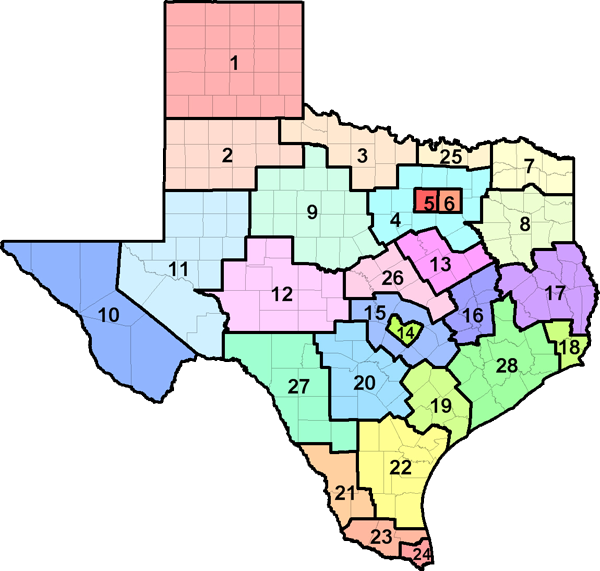
TEXAS COUNTY MAP BY WORKFORCE DEVELOPMENT AREA
* Due to confidentiality rules, not all regions may have the data displayed. The sum of all the regions may not be equal to the state total.


Top 10 Relevant Knowledge Areas Relevant Importance Levels
Customer and Personal Service
Knowledge of principles and processes for providing customer and personal services. This includes customer needs assessment, meeting quality standards for services, and evaluation of customer satisfaction.
81.00%
English Language
Knowledge of the structure and content of the English language including the meaning and spelling of words, rules of composition, and grammar.
67.40%
Sales and Marketing
Knowledge of principles and methods for showing, promoting, and selling products or services. This includes marketing strategy and tactics, product demonstration, sales techniques, and sales control systems.
61.40%
Administration and Management
Knowledge of business and management principles involved in strategic planning, resource allocation, human resources modeling, leadership technique, production methods, and coordination of people and resources.
57.40%
Mathematics
Knowledge of arithmetic, algebra, geometry, calculus, statistics, and their applications.
57.20%
Administrative
Knowledge of administrative and office procedures and systems such as word processing, managing files and records, stenography and transcription, designing forms, and workplace terminology.
56.80%
Computers and Electronics
Knowledge of circuit boards, processors, chips, electronic equipment, and computer hardware and software, including applications and programming.
53.80%
Public Safety and Security
Knowledge of relevant equipment, policies, procedures, and strategies to promote effective local, state, or national security operations for the protection of people, data, property, and institutions.
52.40%
Law and Government
Knowledge of laws, legal codes, court procedures, precedents, government regulations, executive orders, agency rules, and the democratic political process.
50.40%
Economics and Accounting
Knowledge of economic and accounting principles and practices, the financial markets, banking, and the analysis and reporting of financial data.
47.60%


Top 10 Relevant Skill Areas Relevant Importance Levels
Service Orientation
Actively looking for ways to help people.
62.40%
Social Perceptiveness
Being aware of others' reactions and understanding why they react as they do.
60.00%
Active Listening
Giving full attention to what other people are saying, taking time to understand the points being made, asking questions as appropriate, and not interrupting at inappropriate times.
60.00%
Speaking
Talking to others to convey information effectively.
60.00%
Critical Thinking
Using logic and reasoning to identify the strengths and weaknesses of alternative solutions, conclusions, or approaches to problems.
55.00%
Reading Comprehension
Understanding written sentences and paragraphs in work-related documents.
55.00%
Coordination
Adjusting actions in relation to others' actions.
55.00%
Monitoring
Monitoring/Assessing performance of yourself, other individuals, or organizations to make improvements or take corrective action.
52.40%
Mathematics
Using mathematics to solve problems.
52.40%
Time Management
Managing one's own time and the time of others.
52.40%


Top 10 Relevant Abilities Relevant Importance Levels
Oral Expression
The ability to communicate information and ideas in speaking so others will understand.
70.00%
Oral Comprehension
The ability to listen to and understand information and ideas presented through spoken words and sentences.
70.00%
Near Vision
The ability to see details at close range (within a few feet of the observer).
65.00%
Speech Clarity
The ability to speak clearly so others can understand you.
62.40%
Written Comprehension
The ability to read and understand information and ideas presented in writing.
62.40%
Problem Sensitivity
The ability to tell when something is wrong or is likely to go wrong. It does not involve solving the problem, only recognizing that there is a problem.
60.00%
Information Ordering
The ability to arrange things or actions in a certain order or pattern according to a specific rule or set of rules (e.g., patterns of numbers, letters, words, pictures, mathematical operations).
60.00%
Speech Recognition
The ability to identify and understand the speech of another person.
60.00%
Selective Attention
The ability to concentrate on a task over a period of time without being distracted.
57.60%
Time Sharing
The ability to shift back and forth between two or more activities or sources of information (such as speech, sounds, touch, or other sources).
57.60%


  • Getting Information
    -- Observing, receiving, and otherwise obtaining information from all relevant sources.
  • Performing for or Working Directly with the Public
    -- Performing for people or dealing directly with the public. This includes serving customers in restaurants and stores, and receiving clients or guests.
  • Establishing and Maintaining Interpersonal Relationships
    -- Developing constructive and cooperative working relationships with others, and maintaining them over time.
  • Communicating with Supervisors, Peers, or Subordinates
    -- Providing information to supervisors, co-workers, and subordinates by telephone, in written form, e-mail, or in person.
  • Communicating with People Outside the Organization
    -- Communicating with people outside the organization, representing the organization to customers, the public, government, and other external sources. This information can be exchanged in person, in writing, or by telephone or e-mail.
Other Activities


  • Relationships
    - Occupations that satisfy this work value allow employees to provide service to others and work with co-workers in a friendly non-competitive environment. Corresponding needs are Co-workers, Moral Values and Social Service.
  • Support
    - Occupations that satisfy this work value offer supportive management that stands behind employees. Corresponding needs are Company Policies, Supervision: Human Relations and Supervision: Technical.

No certifications found.


Tools

Bar code reader equipment: Stationary bar code scanners; Handheld bar code scanners;

Belt conveyors: Belt conveyors;

Cash registers: Cash registers; Electronic cash registers;

Commercial use scales: Electronic food scales; Food scales;

Desktop calculator: 10-key calculators;

Desktop computers: Desktop computers;

Electronic funds transfer point of sale equipment: Electronic funds transfer EFT terminals;

Fluid regulators: Gas pump controllers;

Laser printers: Laser printers;

Magnetic stripe readers and encoders: Credit card readers;

Notebook computers: Laptop computers;

Packaging compactors: Cardboard balers; Trash compactors;

Personal computers: Personal computers;

Security cameras: Surveillance cameras;

Ticket dispensing machines: Ticket dispensing machines; Lottery ticket machines; Money order machines;


Technology

Accounting software: Bookkeeping software; Accounting software;

Data base user interface and query software: Database software; ReliaSoft Prism;

Medical software: Electronic medical record EMR software;

Office suite software: Microsoft Office software;

Operating system software: Microsoft Windows; Handheld computer device software;

Point of sale POS software: Point of sale POS software; AFEXDirect;

Spreadsheet software: Microsoft Excel;


Related O*NET occupational titles for Cashiers include:
  • 41-2021.00 Counter and Rental Clerks
  • 43-4051.00 Customer Service Representatives
  • 41-1011.00 First-Line Supervisors of Retail Sales Workers
  • 43-3041.00 Gambling Cage Workers
  • 41-2012.00 Gambling Change Persons and Booth Cashiers
  • 43-4151.00 Order Clerks
  • 31-9095.00 Pharmacy Aides
  • 43-5051.00 Postal Service Clerks
  • 41-2031.00 Retail Salespersons
  • 43-3071.00 Tellers


Sources of Additional Information
  • The Handbook does not have contacts for more information for this occupation.
  • Occupational Requirements Survey

  • For a profile highlighting selected BLS data on occupational requirements, see
  • Cashiers (PDF)
  • CareerOneStop

  • For a career video on cashiers, visit: Cashiers
  • Cashiers

  • Contact Texas Workforce Commission
    Labor Market and Career Information  |  101 E. 15th Street, Annex Room 0252  |  Austin, Texas 78778
    Official Website  |  1-800-822-PLAN (7526)  |  512.936.3200

    ** The information in this report may be derived from many sources like O*NET, BLS (Bureau of Labor Statistics), OOH (Occupational Outlook Handbook), and Career One Stop.