Occupation Summary

Real Estate Brokers

O*NET 41-9021.00

Description:

Operate real estate office, or work for commercial real estate firm, overseeing real estate transactions. Other duties usually include selling real estate or renting properties and arranging loans.

Annual Wages:
$75,753.00
Employment Rate:
Employment is expected to increase by 16.97%.
Education Level:
Bachelor's Degree. According to O*Net, the majority of people employed in this occupation have this level of education.
Endorsement:
Business and Industry

  1. Sell, for a fee, real estate owned by others.
  2. Obtain agreements from property owners to place properties for sale with real estate firms.
  3. Monitor fulfillment of purchase contract terms to ensure that they are handled in a timely manner.
  4. Compare a property with similar properties that have recently sold to determine its competitive market price.
  5. Act as an intermediary in negotiations between buyers and sellers over property prices and settlement details and during the closing of sales.
  6. Generate lists of properties for sale, their locations, descriptions, and available financing options, using computers.
  7. Maintain knowledge of real estate law, local economies, fair housing laws, types of available mortgages, financing options, and government programs.
  8. Check work completed by loan officers, attorneys, or other professionals to ensure that it is performed properly.
  9. Arrange for financing of property purchases.
  10. Appraise property values, assessing income potential when relevant.
  11. Maintain awareness of current income tax regulations, local zoning, building and tax laws, and growth possibilities of a property's area.
  12. Manage or operate real estate offices, handling associated business details.
  13. Supervise agents who handle real estate transactions.
  14. Rent properties or manage rental properties.
  15. Arrange for title searches of properties being sold.
  16. Give buyers virtual tours of properties in which they are interested, using computers.
  17. Review property details to ensure that environmental regulations are met.


No Industry Employment Patterns found.

Labor Market Information


2024 Statewide average hourly wage $36.42
2024 National average hourly wage $44.07
2022 National employment 127,200
2022 Texas employment 5,586
Texas projected employment by 2032 6,534
Texas projected annual employment and Turnover openings through 2032 598


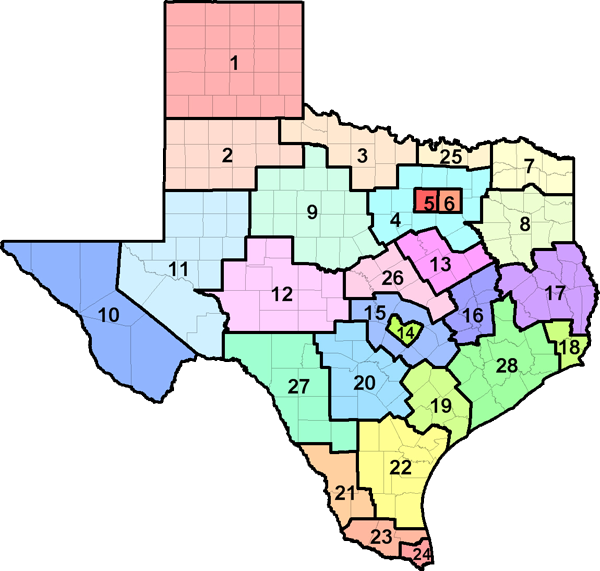
TEXAS COUNTY MAP BY WORKFORCE DEVELOPMENT AREA
* Due to confidentiality rules, not all regions may have the data displayed. The sum of all the regions may not be equal to the state total.


Top 10 Relevant Knowledge Areas Relevant Importance Levels
Sales and Marketing
Knowledge of principles and methods for showing, promoting, and selling products or services. This includes marketing strategy and tactics, product demonstration, sales techniques, and sales control systems.
89.80%
Customer and Personal Service
Knowledge of principles and processes for providing customer and personal services. This includes customer needs assessment, meeting quality standards for services, and evaluation of customer satisfaction.
85.20%
English Language
Knowledge of the structure and content of the English language including the meaning and spelling of words, rules of composition, and grammar.
82.60%
Law and Government
Knowledge of laws, legal codes, court procedures, precedents, government regulations, executive orders, agency rules, and the democratic political process.
80.00%
Administration and Management
Knowledge of business and management principles involved in strategic planning, resource allocation, human resources modeling, leadership technique, production methods, and coordination of people and resources.
78.80%
Economics and Accounting
Knowledge of economic and accounting principles and practices, the financial markets, banking, and the analysis and reporting of financial data.
70.40%
Computers and Electronics
Knowledge of circuit boards, processors, chips, electronic equipment, and computer hardware and software, including applications and programming.
67.60%
Mathematics
Knowledge of arithmetic, algebra, geometry, calculus, statistics, and their applications.
66.20%
Communications and Media
Knowledge of media production, communication, and dissemination techniques and methods. This includes alternative ways to inform and entertain via written, oral, and visual media.
64.60%
Building and Construction
Knowledge of materials, methods, and the tools involved in the construction or repair of houses, buildings, or other structures such as highways and roads.
64.00%


Top 10 Relevant Skill Areas Relevant Importance Levels
Speaking
Talking to others to convey information effectively.
80.00%
Reading Comprehension
Understanding written sentences and paragraphs in work-related documents.
77.60%
Active Listening
Giving full attention to what other people are saying, taking time to understand the points being made, asking questions as appropriate, and not interrupting at inappropriate times.
77.60%
Critical Thinking
Using logic and reasoning to identify the strengths and weaknesses of alternative solutions, conclusions, or approaches to problems.
77.60%
Active Learning
Understanding the implications of new information for both current and future problem-solving and decision-making.
72.40%
Negotiation
Bringing others together and trying to reconcile differences.
72.40%
Persuasion
Persuading others to change their minds or behavior.
70.00%
Social Perceptiveness
Being aware of others' reactions and understanding why they react as they do.
67.60%
Writing
Communicating effectively in writing as appropriate for the needs of the audience.
67.60%
Judgment and Decision Making
Considering the relative costs and benefits of potential actions to choose the most appropriate one.
67.60%


Top 10 Relevant Abilities Relevant Importance Levels
Oral Comprehension
The ability to listen to and understand information and ideas presented through spoken words and sentences.
80.00%
Written Comprehension
The ability to read and understand information and ideas presented in writing.
80.00%
Oral Expression
The ability to communicate information and ideas in speaking so others will understand.
80.00%
Deductive Reasoning
The ability to apply general rules to specific problems to produce answers that make sense.
72.40%
Near Vision
The ability to see details at close range (within a few feet of the observer).
72.40%
Speech Recognition
The ability to identify and understand the speech of another person.
72.40%
Speech Clarity
The ability to speak clearly so others can understand you.
72.40%
Written Expression
The ability to communicate information and ideas in writing so others will understand.
70.00%
Problem Sensitivity
The ability to tell when something is wrong or is likely to go wrong. It does not involve solving the problem, only recognizing that there is a problem.
67.60%
Inductive Reasoning
The ability to combine pieces of information to form general rules or conclusions (includes finding a relationship among seemingly unrelated events).
65.00%


  • Getting Information
    -- Observing, receiving, and otherwise obtaining information from all relevant sources.
  • Establishing and Maintaining Interpersonal Relationships
    -- Developing constructive and cooperative working relationships with others, and maintaining them over time.
  • Updating and Using Relevant Knowledge
    -- Keeping up-to-date technically and applying new knowledge to your job.
  • Working with Computers
    -- Using computers and computer systems (including hardware and software) to program, write software, set up functions, enter data, or process information.
  • Organizing, Planning, and Prioritizing Work
    -- Developing specific goals and plans to prioritize, organize, and accomplish your work.
Other Activities


  • Achievement
    - Occupations that satisfy this work value are results oriented and allow employees to use their strongest abilities, giving them a feeling of accomplishment. Corresponding needs are Ability Utilization and Achievement.
  • Independence
    - Occupations that satisfy this work value allow employees to work on their own and make decisions. Corresponding needs are Creativity, Responsibility and Autonomy.


Tools

Automobiles or cars: Passenger vehicles;

Desktop computers: Desktop computers;

Digital camcorders or video cameras: Digital video cameras;

Digital cameras: Digital cameras;

Laser fax machine: Laser facsimile machines;

Laser printers: Computer laser printers;

Notebook computers: Laptop computers;

Personal computers: Personal computers;

Personal digital assistant PDAs or organizers: Personal digital assistants PDA;

Photocopiers: Photocopying equipment;

Pocket calculator: Handheld calculators;

Tape measures: Measuring tapes;


Technology

Accounting software: Intuit QuickBooks;

Analytical or scientific software: RealData REIA;

Customer relationship management CRM software: Real Estate Assistant REA; Customer relationship management CRM software;

Data base user interface and query software: Deep Forest Systems OnCite; Domin-8 Enterprise Solutions Tenant Pro; Enterprise Software Systems CRE Sync; AMTdirect; AppFolio Property Manager; First American CoreLogic RealQuest Pro; Lease Cost Solutions LseMod; London Computer Systems Rent Manager; Microsoft Access; Real estate listing databases; Property Boulevard; Property records databases; PropertyBoss Solutions PropertyBoss; Propertyware; Showing Suite real estate software; Visual Lease; Yardi software; Yardi Systems Yardi Voyager Commercial;

Electronic mail software: Microsoft Outlook;

Geographic information system: Google Earth Pro;

Graphics or photo imaging software: Adobe Photoshop;

Internet browser software: Microsoft Internet Explorer; Web browser software;

Office suite software: Microsoft Office software;

Presentation software: Microsoft PowerPoint;

Spreadsheet software: Microsoft Excel;

Web page creation and editing software: Facebook;

Web platform development software: Microsoft Active Server Pages ASP;

Word processing software: Microsoft Word;


Related O*NET occupational titles for Real Estate Brokers include:
  • 13-2023.00 Appraisers and Assessors of Real Estate
  • 13-2022.00 Appraisers of Personal and Business Property
  • 13-2051.00 Financial and Investment Analysts
  • 41-3021.00 Insurance Sales Agents
  • 13-2072.00 Loan Officers
  • 11-9141.00 Property, Real Estate, and Community Association Managers
  • 13-1023.00 Purchasing Agents, Except Wholesale, Retail, and Farm Products
  • 41-9022.00 Real Estate Sales Agents
  • 11-2022.00 Sales Managers
  • 41-3031.00 Securities, Commodities, and Financial Services Sales Agents


Sources of Additional Information
  • Information on licensing requirements for real estate brokers and sales agents is available from most local real estate organizations and from the state real estate commission or board.
  • For more information about opportunities in real estate, visit: National Association of Real Estate Brokers
  • National Association of Realtors
  • Real Estate Brokers
  • Real Estate Sales Agents

  • Contact Texas Workforce Commission
    Labor Market and Career Information  |  101 E. 15th Street, Annex Room 0252  |  Austin, Texas 78778
    Official Website  |  1-800-822-PLAN (7526)  |  512.936.3200

    ** The information in this report may be derived from many sources like O*NET, BLS (Bureau of Labor Statistics), OOH (Occupational Outlook Handbook), and Career One Stop.