Occupation Summary

Forest and Conservation Workers

O*NET 45-4011.00

Description:

Under supervision, perform manual labor necessary to develop, maintain, or protect areas such as forests, forested areas, woodlands, wetlands, and rangelands through such activities as raising and transporting seedlings; combating insects, pests, and diseases harmful to plant life; and building structures to control water, erosion, and leaching of soil. Includes forester aides, seedling pullers, tree planters, and gatherers of nontimber forestry products such as pine straw.

Annual Wages:
$40,826.00
Employment Rate:
Employment is expected to increase by 8.42%.
Education Level:
High School Diploma - or the equivalent (for example, GED). According to O*Net, the majority of people employed in this occupation have this level of education.
Endorsement:
Business and Industry

  1. Check equipment to ensure that it is operating properly.
  2. Confer with other workers to discuss issues, such as safety, cutting heights, or work needs.
  3. Fight forest fires or perform prescribed burning tasks under the direction of fire suppression officers or forestry technicians.
  4. Perform fire protection or suppression duties, such as constructing fire breaks or disposing of brush.
  5. Select or cut trees according to markings or sizes, types, or grades.
  6. Identify diseased or undesirable trees and remove them, using power saws or hand saws.
  7. Spray or inject vegetation with insecticides to kill insects or to protect against disease or with herbicides to reduce competing vegetation.
  8. Thin or space trees, using power thinning saws.
  9. Maintain tallies of trees examined and counted during tree marking or measuring efforts.
  10. Erect signs or fences, using posthole diggers, shovels, or other hand tools.
  11. Prune or shear tree tops or limbs to control growth, increase density, or improve shape.
  12. Select tree seedlings, prepare the ground, or plant the trees in reforestation areas, using manual planting tools.
  13. Provide assistance to forest survey crews by clearing site-lines, holding measuring tools, or setting stakes.
  14. Explain or enforce regulations regarding camping, vehicle use, fires, use of buildings, or sanitation.
  15. Operate skidders, bulldozers, or other prime movers to pull a variety of scarification or site preparation equipment over areas to be regenerated.
  16. Maintain campsites or recreational areas, replenishing firewood or other supplies and cleaning kitchens or restrooms.
  17. Sort tree seedlings, discarding substandard seedlings, according to standard charts or verbal instructions.


National Industry Employment Patterns


Industry % of Forest and Conservation Workers employed Annual Growth Rate
Social advocacy organizations 4 -2.21


Labor Market Information


2024 Statewide average hourly wage $19.63
2024 National average hourly wage $20.59
2022 National employment 11,300
2022 Texas employment 95
Texas projected employment by 2032 103
Texas projected annual employment and Turnover openings through 2032 18


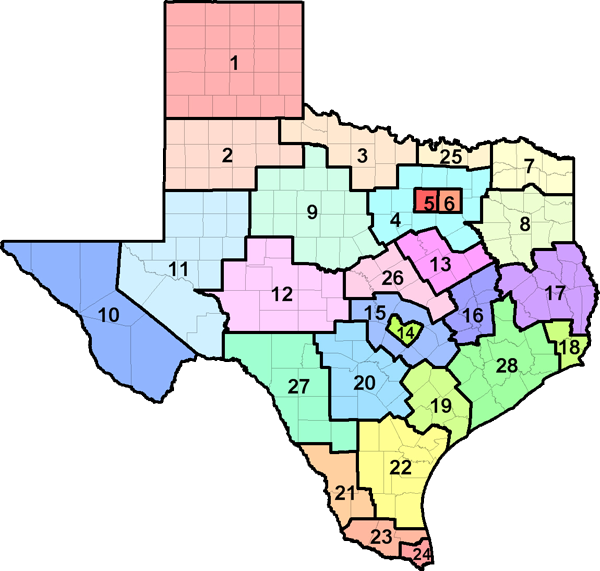
TEXAS COUNTY MAP BY WORKFORCE DEVELOPMENT AREA
* Due to confidentiality rules, not all regions may have the data displayed. The sum of all the regions may not be equal to the state total.


Top 10 Relevant Knowledge Areas Relevant Importance Levels
Public Safety and Security
Knowledge of relevant equipment, policies, procedures, and strategies to promote effective local, state, or national security operations for the protection of people, data, property, and institutions.
69.60%
English Language
Knowledge of the structure and content of the English language including the meaning and spelling of words, rules of composition, and grammar.
69.40%
Customer and Personal Service
Knowledge of principles and processes for providing customer and personal services. This includes customer needs assessment, meeting quality standards for services, and evaluation of customer satisfaction.
63.80%
Administration and Management
Knowledge of business and management principles involved in strategic planning, resource allocation, human resources modeling, leadership technique, production methods, and coordination of people and resources.
63.60%
Geography
Knowledge of principles and methods for describing the features of land, sea, and air masses, including their physical characteristics, locations, interrelationships, and distribution of plant, animal, and human life.
60.80%
Biology
Knowledge of plant and animal organisms, their tissues, cells, functions, interdependencies, and interactions with each other and the environment.
60.40%
Communications and Media
Knowledge of media production, communication, and dissemination techniques and methods. This includes alternative ways to inform and entertain via written, oral, and visual media.
57.60%
Transportation
Knowledge of principles and methods for moving people or goods by air, rail, sea, or road, including the relative costs and benefits.
57.00%
Education and Training
Knowledge of principles and methods for curriculum and training design, teaching and instruction for individuals and groups, and the measurement of training effects.
56.40%
Law and Government
Knowledge of laws, legal codes, court procedures, precedents, government regulations, executive orders, agency rules, and the democratic political process.
54.40%


Top 10 Relevant Skill Areas Relevant Importance Levels
Critical Thinking
Using logic and reasoning to identify the strengths and weaknesses of alternative solutions, conclusions, or approaches to problems.
62.40%
Monitoring
Monitoring/Assessing performance of yourself, other individuals, or organizations to make improvements or take corrective action.
62.40%
Active Learning
Understanding the implications of new information for both current and future problem-solving and decision-making.
60.00%
Reading Comprehension
Understanding written sentences and paragraphs in work-related documents.
60.00%
Active Listening
Giving full attention to what other people are saying, taking time to understand the points being made, asking questions as appropriate, and not interrupting at inappropriate times.
60.00%
Speaking
Talking to others to convey information effectively.
60.00%
Coordination
Adjusting actions in relation to others' actions.
60.00%
Judgment and Decision Making
Considering the relative costs and benefits of potential actions to choose the most appropriate one.
60.00%
Time Management
Managing one's own time and the time of others.
57.60%
Complex Problem Solving
Identifying complex problems and reviewing related information to develop and evaluate options and implement solutions.
57.60%


Top 10 Relevant Abilities Relevant Importance Levels
Problem Sensitivity
The ability to tell when something is wrong or is likely to go wrong. It does not involve solving the problem, only recognizing that there is a problem.
70.00%
Oral Comprehension
The ability to listen to and understand information and ideas presented through spoken words and sentences.
70.00%
Oral Expression
The ability to communicate information and ideas in speaking so others will understand.
65.00%
Static Strength
The ability to exert maximum muscle force to lift, push, pull, or carry objects.
65.00%
Dynamic Strength
The ability to exert muscle force repeatedly or continuously over time. This involves muscular endurance and resistance to muscle fatigue.
62.40%
Trunk Strength
The ability to use your abdominal and lower back muscles to support part of the body repeatedly or continuously over time without "giving out" or fatiguing.
62.40%
Stamina
The ability to exert yourself physically over long periods of time without getting winded or out of breath.
62.40%
Multilimb Coordination
The ability to coordinate two or more limbs (for example, two arms, two legs, or one leg and one arm) while sitting, standing, or lying down. It does not involve performing the activities while the whole body is in motion.
62.40%
Deductive Reasoning
The ability to apply general rules to specific problems to produce answers that make sense.
62.40%
Flexibility of Closure
The ability to identify or detect a known pattern (a figure, object, word, or sound) that is hidden in other distracting material.
62.40%


  • Operating Vehicles, Mechanized Devices, or Equipment
    -- Running, maneuvering, navigating, or driving vehicles or mechanized equipment, such as forklifts, passenger vehicles, aircraft, or watercraft.
  • Performing General Physical Activities
    -- Performing physical activities that require considerable use of your arms and legs and moving your whole body, such as climbing, lifting, balancing, walking, stooping, and handling materials.
  • Getting Information
    -- Observing, receiving, and otherwise obtaining information from all relevant sources.
  • Communicating with Supervisors, Peers, or Subordinates
    -- Providing information to supervisors, co-workers, and subordinates by telephone, in written form, e-mail, or in person.
  • Making Decisions and Solving Problems
    -- Analyzing information and evaluating results to choose the best solution and solve problems.
Other Activities


  • Independence
    - Occupations that satisfy this work value allow employees to work on their own and make decisions. Corresponding needs are Creativity, Responsibility and Autonomy.
  • Relationships
    - Occupations that satisfy this work value allow employees to provide service to others and work with co-workers in a friendly non-competitive environment. Corresponding needs are Co-workers, Moral Values and Social Service.


Tools

Acoustic ear muffs or defenders: Protective ear muffs;

Agricultural tractors: Multipurpose tractors;

All terrain vehicles tracked or wheeled: Four wheel drive 4WD vehicles;

Backhoes: Backhoes;

Claw hammer: Claw hammers;

Dibblers: Dibblers;

Distance meters: Electronic measuring devices;

Dump trucks: Dump trucks;

Earthmoving shovels: Fire plows;

Forestry saws: Epicormic knives; Pruning saws;

Geological compasses: Directional compasses;

Global positioning system GPS receiver: Geodetic ground global positioning system GPS receivers;

Hand sprayers: Spray guns;

Hard hats: Hard hats;

Harvesters: Harvesting machines;

Ladders: Portable ladders;

Lawnmowers: Riding mowers;

Mowers: Brush hogs;

Personal computers: Personal computers;

Picks: Mattocks;

Planters: Planting drills;

Portable data input terminals: Portable data collectors;

Power drills: Power drills;

Power saws: Chain saws;

Recreational motorboats: Motorboats;

Rescue truck: Fire trucks;

Saws: Hand saws;

Screwdrivers: Phillips head screwdrivers; Straight screwdrivers;

Secateurs or pruning shears: Loppers;

Spades: Spades;

Sprayers: Herbicide sprayers; Backpack sprayers;

Tape measures: Measuring tapes;

Two way radios: Two way radios;

Water pumps: Water pumps;

Weeders: Weedeaters;


Technology

Data base user interface and query software: Database software; Microsoft Access;

Electronic mail software: IBM Lotus Notes; Microsoft Outlook;

Geographic information system: ESRI ArcGIS software; Geographic information system GIS software; Geographic information system GIS systems;

Map creation software: Leica Geosystems ERDAS IMAGINE;

Office suite software: Microsoft Office software;

Operating system software: Microsoft Windows;

Presentation software: Microsoft PowerPoint;

Project management software: Microsoft Project;

Spreadsheet software: Microsoft Excel; IBM Lotus 1-2-3;

Word processing software: Microsoft Word; Word processing software;


Related O*NET occupational titles for Forest and Conservation Workers include:
  • 19-4012.00 Agricultural Technicians
  • 19-1031.00 Conservation Scientists
  • 45-2092.00 Farmworkers and Laborers, Crop, Nursery, and Greenhouse
  • 45-1011.00 First-Line Supervisors of Farming, Fishing, and Forestry Workers
  • 37-1012.00 First-Line Supervisors of Landscaping, Lawn Service, and Groundskeeping Workers
  • 19-4071.00 Forest and Conservation Technicians
  • 19-1032.00 Foresters
  • 37-3012.00 Pesticide Handlers, Sprayers, and Applicators, Vegetation
  • 19-1031.02 Range Managers
  • 37-3013.00 Tree Trimmers and Pruners


Sources of Additional Information
  • For information about forestry and conservation careers and about schools offering education in forestry and conservation, visit: Society of American Foresters (SAF)
  • Student Conservation Association (SCA)
  • The Wildlife Society (TWS)
  • For information about careers in forestry, particularly conservation forestry and land management, visit: Forest Stewards Guild
  • National Association of State Departments of Agriculture
  • Society for Range Management (SRM)
  • U.S. Forest Service
  • Forest and Conservation Workers

  • Contact Texas Workforce Commission
    Labor Market and Career Information  |  101 E. 15th Street, Annex Room 0252  |  Austin, Texas 78778
    Official Website  |  1-800-822-PLAN (7526)  |  512.936.3200

    ** The information in this report may be derived from many sources like O*NET, BLS (Bureau of Labor Statistics), OOH (Occupational Outlook Handbook), and Career One Stop.