Occupation Summary

Carpet Installers

O*NET 47-2041.00

Description:

Lay and install carpet from rolls or blocks on floors. Install padding and trim flooring materials.

Annual Wages:
$52,215.00
Employment Rate:
Employment is expected to increase by -6.64%.
Education Level:
High School Diploma - or the equivalent (for example, GED). According to O*Net, the majority of people employed in this occupation have this level of education.
Endorsement:
Business and Industry

  1. Join edges of carpet and seam edges where necessary, by sewing or by using tape with glue and heated carpet iron.
  2. Cut and trim carpet to fit along wall edges, openings, and projections, finishing the edges with a wall trimmer.
  3. Inspect the surface to be covered to determine its condition, and correct any imperfections that might show through carpet or cause carpet to wear unevenly.
  4. Roll out, measure, mark, and cut carpeting to size with a carpet knife, following floor sketches and allowing extra carpet for final fitting.
  5. Plan the layout of the carpet, allowing for expected traffic patterns and placing seams for best appearance and longest wear.
  6. Stretch carpet to align with walls and ensure a smooth surface, and press carpet in place over tack strips or use staples, tape, tacks or glue to hold carpet in place.
  7. Take measurements and study floor sketches to calculate the area to be carpeted and the amount of material needed.
  8. Cut carpet padding to size and install padding, following prescribed method.
  9. Install carpet on some floors using adhesive, following prescribed method.
  10. Nail tack strips around area to be carpeted or use old strips to attach edges of new carpet.
  11. Fasten metal treads across door openings or where carpet meets flooring to hold carpet in place.
  12. Measure, cut and install tackless strips along the baseboard or wall.
  13. Draw building diagrams and record dimensions.
  14. Move furniture from area to be carpeted and remove old carpet and padding.
  15. Cut and bind material.
  16. Clean up before and after installation, including vacuuming carpet and discarding remnant pieces.


National Industry Employment Patterns


Industry % of Carpet Installers employed Annual Growth Rate
Building finishing contractors 36.4 -1.53
Furniture and home furnishings retailers 22.9 -2.08
Residential building construction 2.7 -1.53


Labor Market Information


2024 Statewide average hourly wage $25.10
2024 National average hourly wage $26.85
2022 National employment 25,100
2022 Texas employment 919
Texas projected employment by 2032 858
Texas projected annual employment and Turnover openings through 2032 62


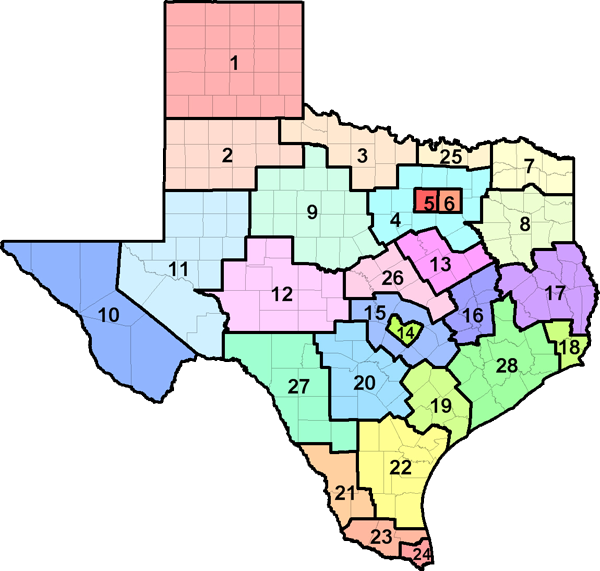
TEXAS COUNTY MAP BY WORKFORCE DEVELOPMENT AREA
* Due to confidentiality rules, not all regions may have the data displayed. The sum of all the regions may not be equal to the state total.


Top 10 Relevant Knowledge Areas Relevant Importance Levels
Customer and Personal Service
Knowledge of principles and processes for providing customer and personal services. This includes customer needs assessment, meeting quality standards for services, and evaluation of customer satisfaction.
73.40%
Mathematics
Knowledge of arithmetic, algebra, geometry, calculus, statistics, and their applications.
68.40%
Administration and Management
Knowledge of business and management principles involved in strategic planning, resource allocation, human resources modeling, leadership technique, production methods, and coordination of people and resources.
68.00%
English Language
Knowledge of the structure and content of the English language including the meaning and spelling of words, rules of composition, and grammar.
66.20%
Building and Construction
Knowledge of materials, methods, and the tools involved in the construction or repair of houses, buildings, or other structures such as highways and roads.
65.80%
Production and Processing
Knowledge of raw materials, production processes, quality control, costs, and other techniques for maximizing the effective manufacture and distribution of goods.
61.40%
Education and Training
Knowledge of principles and methods for curriculum and training design, teaching and instruction for individuals and groups, and the measurement of training effects.
59.40%
Mechanical
Knowledge of machines and tools, including their designs, uses, repair, and maintenance.
58.80%
Design
Knowledge of design techniques, tools, and principles involved in production of precision technical plans, blueprints, drawings, and models.
54.40%
Public Safety and Security
Knowledge of relevant equipment, policies, procedures, and strategies to promote effective local, state, or national security operations for the protection of people, data, property, and institutions.
51.00%


Top 10 Relevant Skill Areas Relevant Importance Levels
Monitoring
Monitoring/Assessing performance of yourself, other individuals, or organizations to make improvements or take corrective action.
62.40%
Coordination
Adjusting actions in relation to others' actions.
62.40%
Mathematics
Using mathematics to solve problems.
60.00%
Critical Thinking
Using logic and reasoning to identify the strengths and weaknesses of alternative solutions, conclusions, or approaches to problems.
60.00%
Quality Control Analysis
Conducting tests and inspections of products, services, or processes to evaluate quality or performance.
60.00%
Time Management
Managing one's own time and the time of others.
60.00%
Judgment and Decision Making
Considering the relative costs and benefits of potential actions to choose the most appropriate one.
57.60%
Active Listening
Giving full attention to what other people are saying, taking time to understand the points being made, asking questions as appropriate, and not interrupting at inappropriate times.
57.60%
Speaking
Talking to others to convey information effectively.
57.60%
Social Perceptiveness
Being aware of others' reactions and understanding why they react as they do.
57.60%


Top 10 Relevant Abilities Relevant Importance Levels
Problem Sensitivity
The ability to tell when something is wrong or is likely to go wrong. It does not involve solving the problem, only recognizing that there is a problem.
72.40%
Trunk Strength
The ability to use your abdominal and lower back muscles to support part of the body repeatedly or continuously over time without "giving out" or fatiguing.
72.40%
Extent Flexibility
The ability to bend, stretch, twist, or reach with your body, arms, and/or legs.
72.40%
Near Vision
The ability to see details at close range (within a few feet of the observer).
70.00%
Static Strength
The ability to exert maximum muscle force to lift, push, pull, or carry objects.
70.00%
Arm-Hand Steadiness
The ability to keep your hand and arm steady while moving your arm or while holding your arm and hand in one position.
65.00%
Manual Dexterity
The ability to quickly move your hand, your hand together with your arm, or your two hands to grasp, manipulate, or assemble objects.
65.00%
Visualization
The ability to imagine how something will look after it is moved around or when its parts are moved or rearranged.
65.00%
Speech Recognition
The ability to identify and understand the speech of another person.
65.00%
Multilimb Coordination
The ability to coordinate two or more limbs (for example, two arms, two legs, or one leg and one arm) while sitting, standing, or lying down. It does not involve performing the activities while the whole body is in motion.
62.40%


  • Performing General Physical Activities
    -- Performing physical activities that require considerable use of your arms and legs and moving your whole body, such as climbing, lifting, balancing, walking, stooping, and handling materials.
  • Handling and Moving Objects
    -- Using hands and arms in handling, installing, positioning, and moving materials, and manipulating things.
  • Getting Information
    -- Observing, receiving, and otherwise obtaining information from all relevant sources.
  • Inspecting Equipment, Structures, or Materials
    -- Inspecting equipment, structures, or materials to identify the cause of errors or other problems or defects.
  • Making Decisions and Solving Problems
    -- Analyzing information and evaluating results to choose the best solution and solve problems.
Other Activities


  • Relationships
    - Occupations that satisfy this work value allow employees to provide service to others and work with co-workers in a friendly non-competitive environment. Corresponding needs are Co-workers, Moral Values and Social Service.
  • Support
    - Occupations that satisfy this work value offer supportive management that stands behind employees. Corresponding needs are Company Policies, Supervision: Human Relations and Supervision: Technical.


Tools

Awls: Carpet awls;

Caulking guns: Caulking guns;

Desktop computers: Desktop computers;

Drill bit set: Drill bit sets; Spiral drill bits;

Fids: Row separators;

Furniture moving discs: Furniture skids;

Glue guns: Cool tip glue guns; Cove base guns; Butane glue guns; Electric glue guns;

Hammers: Hammers;

Hand trucks or accessories: Carpet trolleys; Hand trucks;

Hold down clamps: Carpet clamps;

Ironing machines or presses: Carpet seam steamers; Steaming irons;

Knife blades: Floor scraper blades; Hooked blades; Round corner carpet blades; Square corner carpet blades; Strip cutter blades; Trimmer carpet blades; Tackless cutter blades;

Laser printers: Laser printers;

Notebook computers: Notebook computers;

Personal computers: Personal computers;

Pneumatic nail drivers: Nail driving guns;

Pocket calculator: Handheld calculators;

Power drills: Power drills;

Power nail guns: Concrete nail drivers;

Power saws: Toe kick saws; Undercut saws; Jamb saws;

Power staple guns: Electric carpet tackers;

Pry bars: Molding lifter bars;

Pullers: Door pin tools;

Rubber mallet: Rubber mallets;

Sewing needles: Sewing needles;

Shears: Napping shears; Standup cutters; Seam cutters; Strip cutters; Loop pile cutters; Cushion back cutters; Cushion lock cutters; Carpet base cutters; Carpet cutters; Carpet shears;

Staple guns: Air underlayment staplers; Heavy duty electric staplers; Hammer tackers; Edge-binding staplers;

Straight edges: Straightedges;

Tape measures: Tape measures;

Tensioners: Swivel-lock stretchers; Turning tools; Seam squeezers; Stair claws; Stairway stretchers; Carpet tucking tools; Knee kickers;

Tool holders: Hexagon bit adaptors;

Torque tools: Carpet grippers/pullers; Power carpet stretchers;

Trowels: Switchblade trowels;

Ultraviolet UV lamps: Ultraviolet UV seam inspection lights;

Utility knives: Utility knives; Wall trimmers; Tucking trimmers; Multipurpose trimmers;


Technology

Calendar and scheduling software: RFMS Schedule Pro;

Computer aided design CAD software: Autodesk AutoCAD;

Data base user interface and query software: Aya Associates Comp-U-Floor; Carpet Dealer Management System CDMS; Flooring Technologies QFloors; Focus Floor Covering Software; Textile Management Systems RollMaster;

Office suite software: Microsoft Office software;

Project management software: Pacific Solutions FloorRight; Measure Square FloorEstimate Pro; eTakeoff; FIRST Flooring; FloorCOST Estimator for Excel;

Spreadsheet software: Microsoft Excel;

Word processing software: Microsoft Word;


Related O*NET occupational titles for Carpet Installers include:
  • 47-2081.00 Drywall and Ceiling Tile Installers
  • 47-2042.00 Floor Layers, Except Carpet, Wood, and Hard Tiles
  • 47-2043.00 Floor Sanders and Finishers
  • 51-7021.00 Furniture Finishers
  • 47-2131.00 Insulation Workers, Floor, Ceiling, and Wall
  • 47-2132.00 Insulation Workers, Mechanical
  • 47-2142.00 Paperhangers
  • 47-2053.00 Terrazzo Workers and Finishers
  • 47-2044.00 Tile and Stone Setters
  • 51-6093.00 Upholsterers


Sources of Additional Information
  • For details about apprenticeships, training, or other work opportunities in this trade, contact the offices of the state employment service, the state apprenticeship agency, local contractors or firms that employ flooring installers and tile and stone setters, or local union–management apprenticeship committees. Apprenticeship information is available from the U.S. Department of Labor's Apprenticeship program online or by phone at 877-872-5627. Visit Apprenticeship.gov to search for apprenticeship opportunities.
  • For more information about flooring installers and tile and stone setters, visit: Ceramic Tile Education Foundation
  • International Masonry Institute
  • International Union of Bricklayers & Allied Craftworkers
  • Tile Contractors’ Association of America
  • The Tile Council of North America, Inc.
  • Home Builders Institute
  • For more information about training and certification of flooring installers and tile and stone setters, visit: International Certified Floorcovering Installers Association
  • Finishing Trades Institute International
  • International Standards & Training Alliance (INSTALL)
  • National Tile Contractors Association
  • National Wood Flooring Association
  • Carpet Installers
  • Floor Layers, Except Carpet, Wood, and Hard Tiles
  • Floor Sanders and Finishers
  • Tile and Stone Setters

  • Contact Texas Workforce Commission
    Labor Market and Career Information  |  101 E. 15th Street, Annex Room 0252  |  Austin, Texas 78778
    Official Website  |  1-800-822-PLAN (7526)  |  512.936.3200

    ** The information in this report may be derived from many sources like O*NET, BLS (Bureau of Labor Statistics), OOH (Occupational Outlook Handbook), and Career One Stop.