Occupation Summary

Terrazzo Workers and Finishers

O*NET 47-2053.00

Description:

Apply a mixture of cement, sand, pigment, or marble chips to floors, stairways, and cabinet fixtures to fashion durable and decorative surfaces.

Annual Wages:
$49,141.00
Employment Rate:
Employment is expected to increase by -4.29%.
Education Level:
High School Diploma - or the equivalent (for example, GED). According to O*Net, the majority of people employed in this occupation have this level of education.
Endorsement:
Business and Industry

  1. Cut metal division strips and press them into the terrazzo base for joints or changes of color to form designs or patterns or to help prevent cracks.
  2. Blend marble chip mixtures, place into panels, and push a roller over the surface to embed the chips.
  3. Measure designated amounts of ingredients for terrazzo or grout, according to standard formulas and specifications, using graduated containers and scales, and load ingredients into portable mixer.
  4. Mold expansion joints and edges, using edging tools, jointers, or straightedges.
  5. Spread, level, or smooth concrete or terrazzo mixtures to form bases or finished surfaces, using rakes, shovels, hand or power trowels, hand or power screeds, or floats.
  6. Grind curved surfaces or areas inaccessible to surfacing machine, such as stairways or cabinet tops, with portable hand grinder.
  7. Grind surfaces with a power grinder, or polish surfaces with polishing or surfacing machines.
  8. Position and secure moisture membrane and wire mesh in preparation for pouring base materials for terrazzo installation.
  9. Modify mixing, grouting, grinding, or cleaning procedures, according to type of installation or material used.
  10. Wash polished terrazzo surface, using cleaner and water, and apply sealer and curing agent according to manufacturer's specifications, using brush or sprayer.
  11. Mix cement, sand, and water to produce concrete, grout, or slurry, using hoe, trowel, tamper, scraper, or concrete-mixing machine.
  12. Sprinkle colored marble or stone chips, powdered steel, or coloring powder over surface to produce prescribed finish.
  13. Wet surface to prepare for bonding, fill holes and cracks with grout or slurry, and smooth with a trowel.
  14. Repair concrete by cutting out damaged areas, drilling holes for reinforcing rods, and positioning reinforcing rods, using power saw and drill.
  15. Clean installation site, mixing and storage areas, tools, machines, and equipment, and store materials and equipment.
  16. Fill slight grinding depressions with matching grout material and hand-trowel for a smooth, uniform surface.
  17. Chip, scrape, or grind high spots, ridges, or rough projections to finish concrete, using pneumatic chisel, hand chisel, or other hand tools.
  18. Clean chipped area, using wire brush, and feel and observe surface to determine if it is rough or uneven.
  19. Move terrazzo installation materials, tools, machines, or work devices to work areas, manually or using wheelbarrow.
  20. Build wooden molds, clamping molds around areas to be repaired, or setting up frames to the proper depth and alignment.
  21. Signal truck driver to position truck to facilitate pouring concrete and move chute to direct concrete on forms.
  22. Produce rough concrete surface, using broom.
  23. Precast terrazzo blocks in wooden forms.
  24. Spread roofing paper on surface of foundation and spread concrete onto roofing paper with trowel to form terrazzo base.
  25. Remove frames when the foundation is dry.
  26. Wet concrete surface and rub with stone to smooth surface and obtain specified finish.


National Industry Employment Patterns


Industry % of Terrazzo Workers and Finishers employed Annual Growth Rate
Building finishing contractors 86.3 -1.66


Labor Market Information


2024 Statewide average hourly wage $23.63
2024 National average hourly wage $29.97
2022 National employment 1,600
2022 Texas employment 70
Texas projected employment by 2032 67
Texas projected annual employment and Turnover openings through 2032 5


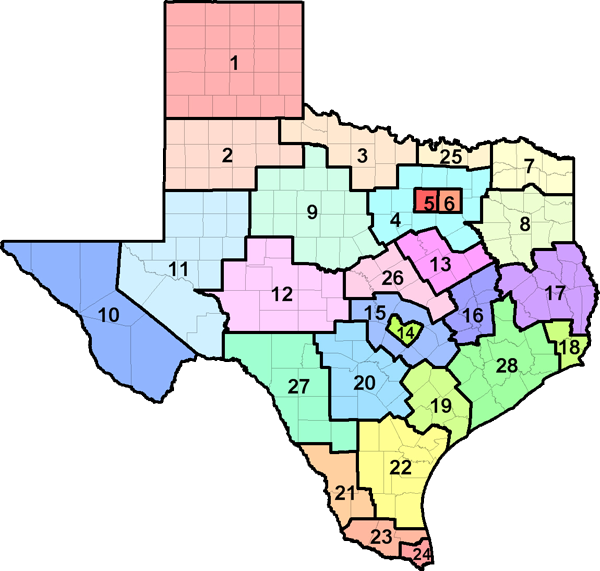
TEXAS COUNTY MAP BY WORKFORCE DEVELOPMENT AREA
* Due to confidentiality rules, not all regions may have the data displayed. The sum of all the regions may not be equal to the state total.


Top 10 Relevant Knowledge Areas Relevant Importance Levels
Building and Construction
Knowledge of materials, methods, and the tools involved in the construction or repair of houses, buildings, or other structures such as highways and roads.
81.00%
Design
Knowledge of design techniques, tools, and principles involved in production of precision technical plans, blueprints, drawings, and models.
71.60%
Mathematics
Knowledge of arithmetic, algebra, geometry, calculus, statistics, and their applications.
67.80%
English Language
Knowledge of the structure and content of the English language including the meaning and spelling of words, rules of composition, and grammar.
65.20%
Administration and Management
Knowledge of business and management principles involved in strategic planning, resource allocation, human resources modeling, leadership technique, production methods, and coordination of people and resources.
64.60%
Customer and Personal Service
Knowledge of principles and processes for providing customer and personal services. This includes customer needs assessment, meeting quality standards for services, and evaluation of customer satisfaction.
64.60%
Chemistry
Knowledge of the chemical composition, structure, and properties of substances and of the chemical processes and transformations that they undergo. This includes uses of chemicals and their interactions, danger signs, production techniques, and disposal methods.
63.00%
Mechanical
Knowledge of machines and tools, including their designs, uses, repair, and maintenance.
62.00%
Public Safety and Security
Knowledge of relevant equipment, policies, procedures, and strategies to promote effective local, state, or national security operations for the protection of people, data, property, and institutions.
60.40%
Production and Processing
Knowledge of raw materials, production processes, quality control, costs, and other techniques for maximizing the effective manufacture and distribution of goods.
59.20%


Top 10 Relevant Skill Areas Relevant Importance Levels
Coordination
Adjusting actions in relation to others' actions.
60.00%
Quality Control Analysis
Conducting tests and inspections of products, services, or processes to evaluate quality or performance.
60.00%
Judgment and Decision Making
Considering the relative costs and benefits of potential actions to choose the most appropriate one.
57.60%
Speaking
Talking to others to convey information effectively.
57.60%
Monitoring
Monitoring/Assessing performance of yourself, other individuals, or organizations to make improvements or take corrective action.
55.00%
Operations Monitoring
Watching gauges, dials, or other indicators to make sure a machine is working properly.
55.00%
Operation and Control
Controlling operations of equipment or systems.
55.00%
Time Management
Managing one's own time and the time of others.
55.00%
Social Perceptiveness
Being aware of others' reactions and understanding why they react as they do.
52.40%
Critical Thinking
Using logic and reasoning to identify the strengths and weaknesses of alternative solutions, conclusions, or approaches to problems.
52.40%


Top 10 Relevant Abilities Relevant Importance Levels
Manual Dexterity
The ability to quickly move your hand, your hand together with your arm, or your two hands to grasp, manipulate, or assemble objects.
75.00%
Multilimb Coordination
The ability to coordinate two or more limbs (for example, two arms, two legs, or one leg and one arm) while sitting, standing, or lying down. It does not involve performing the activities while the whole body is in motion.
70.00%
Trunk Strength
The ability to use your abdominal and lower back muscles to support part of the body repeatedly or continuously over time without "giving out" or fatiguing.
70.00%
Near Vision
The ability to see details at close range (within a few feet of the observer).
70.00%
Arm-Hand Steadiness
The ability to keep your hand and arm steady while moving your arm or while holding your arm and hand in one position.
67.60%
Finger Dexterity
The ability to make precisely coordinated movements of the fingers of one or both hands to grasp, manipulate, or assemble very small objects.
65.00%
Extent Flexibility
The ability to bend, stretch, twist, or reach with your body, arms, and/or legs.
65.00%
Far Vision
The ability to see details at a distance.
65.00%
Stamina
The ability to exert yourself physically over long periods of time without getting winded or out of breath.
62.40%
Static Strength
The ability to exert maximum muscle force to lift, push, pull, or carry objects.
62.40%


  • Performing General Physical Activities
    -- Performing physical activities that require considerable use of your arms and legs and moving your whole body, such as climbing, lifting, balancing, walking, stooping, and handling materials.
  • Getting Information
    -- Observing, receiving, and otherwise obtaining information from all relevant sources.
  • Handling and Moving Objects
    -- Using hands and arms in handling, installing, positioning, and moving materials, and manipulating things.
  • Controlling Machines and Processes
    -- Using either control mechanisms or direct physical activity to operate machines or processes (not including computers or vehicles).
  • Inspecting Equipment, Structures, or Materials
    -- Inspecting equipment, structures, or materials to identify the cause of errors or other problems or defects.
Other Activities


  • Independence
    - Occupations that satisfy this work value allow employees to work on their own and make decisions. Corresponding needs are Creativity, Responsibility and Autonomy.
  • Support
    - Occupations that satisfy this work value offer supportive management that stands behind employees. Corresponding needs are Company Policies, Supervision: Human Relations and Supervision: Technical.


  • Certified Installation Manager - Flooring (CIM)
  • FCICA


Tools

C clamps: Locking C-clamps;

Claw hammer: Claw hammers;

Concrete spreaders: Power screeds; Hand screeds;

Desktop computers: Desktop computers;

Edgers: Edgers;

Floats: Concrete floats;

Goggles: Safety goggles;

Grinding or polishing machines: Polishing machines;

Hand sprayers: Handheld sprayers;

Masks or accessories: Dust masks;

Notebook computers: Notebook computers;

Plaster or mortar mixers: Portable mortar mixers;

Pneumatic hammer: Pneumatic chisels;

Power buffers: Buffing machines;

Power drills: Power drills;

Power grinders: Power grinders; Surfacing machines; Portable hand grinders;

Power sanders: Floor sanders;

Power saws: Power saws;

Pressure or steam cleaners: Power washers;

Putty knives: Putty knives;

Shears: Metal shears;

Shovels: Shovels;

Stonemason chisel: Hand chisels;

Straight edges: Straightedges;

Trowels: Jointers; Hand trowels; Rake jointers; Power trowels;

Wire brushes: Wire brushes;


Technology

Accounting software: CPR International GeneralCOST Estimator; Intuit QuickBooks; Sapro Systems Paymee;

Analytical or scientific software: Construction Management Software ProEst;

Operating system software: Microsoft Windows;

Project management software: On Center Quick Bid; CPR Visual Estimator;

Spreadsheet software: Microsoft Excel;


Related O*NET occupational titles for Terrazzo Workers and Finishers include:
  • 47-2021.00 Brickmasons and Blockmasons
  • 47-2051.00 Cement Masons and Concrete Finishers
  • 47-2042.00 Floor Layers, Except Carpet, Wood, and Hard Tiles
  • 47-2043.00 Floor Sanders and Finishers
  • 51-7021.00 Furniture Finishers
  • 47-3011.00 Helpers--Brickmasons, Blockmasons, Stonemasons, and Tile and Marble Setters
  • 51-9195.00 Molders, Shapers, and Casters, Except Metal and Plastic
  • 51-9195.03 Stone Cutters and Carvers, Manufacturing
  • 47-2022.00 Stonemasons
  • 47-2044.00 Tile and Stone Setters


Sources of Additional Information
  • For details about apprenticeships or other work opportunities for masonry workers, contact the offices of the state employment service, the state apprenticeship agency, local contractors or firms that employ masons, or local union–management apprenticeship committees. Apprenticeship information is available from the U.S. Department of Labor's Apprenticeship program online or by phone at 877-872-5627. Visit Apprenticeship.gov to search for apprenticeship opportunities.
  • For more information about training for masons, visit: Associated Builders and Contractors, Inc.
  • Bricklayers and Allied Craftworkers International Union
  • Home Builders Institute
  • International Masonry Institute
  • Mason Contractors Association of America
  • National Association of Home Builders
  • NCCER
  • Operative Plasterers’ and Cement Masons’ International Association
  • The Associated General Contractors of America
  • The National Terrazzo and Mosaic Association
  • Brickmasons and Blockmasons
  • Cement Masons and Concrete Finishers
  • Stonemasons
  • Terrazzo Workers and Finishers

  • Contact Texas Workforce Commission
    Labor Market and Career Information  |  101 E. 15th Street, Annex Room 0252  |  Austin, Texas 78778
    Official Website  |  1-800-822-PLAN (7526)  |  512.936.3200

    ** The information in this report may be derived from many sources like O*NET, BLS (Bureau of Labor Statistics), OOH (Occupational Outlook Handbook), and Career One Stop.