Occupation Summary

Insulation Workers, Mechanical

O*NET 47-2132.00

Description:

Apply insulating materials to pipes or ductwork, or other mechanical systems in order to help control and maintain temperature.

Annual Wages:
$50,696.00
Employment Rate:
Employment is expected to increase by 9.54%.
Education Level:
High School Diploma - or the equivalent (for example, GED). According to O*Net, the majority of people employed in this occupation have this level of education.
Endorsement:
Business and Industry

  1. Measure and cut insulation for covering surfaces, using tape measures, handsaws, knives, and scissors.
  2. Fit insulation around obstructions, and shape insulating materials and protective coverings as required.
  3. Determine the amounts and types of insulation needed, and methods of installation, based on factors such as location, surface shape, and equipment use.
  4. Install sheet metal around insulated pipes with screws to protect the insulation from weather conditions or physical damage.
  5. Apply, remove, and repair insulation on industrial equipment, pipes, ductwork, or other mechanical systems such as heat exchangers, tanks, and vessels, to help control noise and maintain temperatures.
  6. Select appropriate insulation, such as fiberglass, Styrofoam, or cork, based on the heat retaining or excluding characteristics of the material.
  7. Read blueprints and specifications to determine job requirements.
  8. Cover, seal, or finish insulated surfaces or access holes with plastic covers, canvas strips, sealants, tape, cement, or asphalt mastic.
  9. Prepare surfaces for insulation application by brushing or spreading on adhesives, cement, or asphalt, or by attaching metal pins to surfaces.


National Industry Employment Patterns


Industry % of Insulation Workers, Mechanical employed Annual Growth Rate
Building equipment contractors 69.5 0.16
Building finishing contractors 13.7 0.27
Nonresidential building construction 3.5 0.00


Labor Market Information


2024 Statewide average hourly wage $24.37
2024 National average hourly wage $30.55
2022 National employment 27,200
2022 Texas employment 4,988
Texas projected employment by 2032 5,464
Texas projected annual employment and Turnover openings through 2032 447


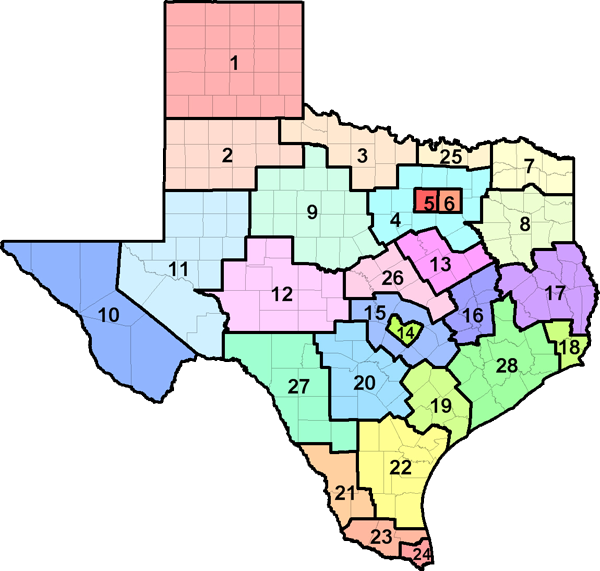
TEXAS COUNTY MAP BY WORKFORCE DEVELOPMENT AREA
* Due to confidentiality rules, not all regions may have the data displayed. The sum of all the regions may not be equal to the state total.


Top 10 Relevant Knowledge Areas Relevant Importance Levels
Building and Construction
Knowledge of materials, methods, and the tools involved in the construction or repair of houses, buildings, or other structures such as highways and roads.
86.40%
Customer and Personal Service
Knowledge of principles and processes for providing customer and personal services. This includes customer needs assessment, meeting quality standards for services, and evaluation of customer satisfaction.
81.80%
Mechanical
Knowledge of machines and tools, including their designs, uses, repair, and maintenance.
81.40%
Administration and Management
Knowledge of business and management principles involved in strategic planning, resource allocation, human resources modeling, leadership technique, production methods, and coordination of people and resources.
80.40%
Education and Training
Knowledge of principles and methods for curriculum and training design, teaching and instruction for individuals and groups, and the measurement of training effects.
77.40%
Mathematics
Knowledge of arithmetic, algebra, geometry, calculus, statistics, and their applications.
76.60%
Production and Processing
Knowledge of raw materials, production processes, quality control, costs, and other techniques for maximizing the effective manufacture and distribution of goods.
73.20%
Public Safety and Security
Knowledge of relevant equipment, policies, procedures, and strategies to promote effective local, state, or national security operations for the protection of people, data, property, and institutions.
73.20%
English Language
Knowledge of the structure and content of the English language including the meaning and spelling of words, rules of composition, and grammar.
72.40%
Design
Knowledge of design techniques, tools, and principles involved in production of precision technical plans, blueprints, drawings, and models.
71.00%


Top 10 Relevant Skill Areas Relevant Importance Levels
Active Listening
Giving full attention to what other people are saying, taking time to understand the points being made, asking questions as appropriate, and not interrupting at inappropriate times.
60.00%
Critical Thinking
Using logic and reasoning to identify the strengths and weaknesses of alternative solutions, conclusions, or approaches to problems.
60.00%
Monitoring
Monitoring/Assessing performance of yourself, other individuals, or organizations to make improvements or take corrective action.
60.00%
Coordination
Adjusting actions in relation to others' actions.
60.00%
Time Management
Managing one's own time and the time of others.
60.00%
Judgment and Decision Making
Considering the relative costs and benefits of potential actions to choose the most appropriate one.
57.60%
Speaking
Talking to others to convey information effectively.
57.60%
Active Learning
Understanding the implications of new information for both current and future problem-solving and decision-making.
55.00%
Reading Comprehension
Understanding written sentences and paragraphs in work-related documents.
55.00%
Operations Monitoring
Watching gauges, dials, or other indicators to make sure a machine is working properly.
55.00%


Top 10 Relevant Abilities Relevant Importance Levels
Trunk Strength
The ability to use your abdominal and lower back muscles to support part of the body repeatedly or continuously over time without "giving out" or fatiguing.
67.60%
Problem Sensitivity
The ability to tell when something is wrong or is likely to go wrong. It does not involve solving the problem, only recognizing that there is a problem.
65.00%
Extent Flexibility
The ability to bend, stretch, twist, or reach with your body, arms, and/or legs.
65.00%
Gross Body Equilibrium
The ability to keep or regain your body balance or stay upright when in an unstable position.
62.40%
Near Vision
The ability to see details at close range (within a few feet of the observer).
62.40%
Oral Comprehension
The ability to listen to and understand information and ideas presented through spoken words and sentences.
62.40%
Oral Expression
The ability to communicate information and ideas in speaking so others will understand.
62.40%
Information Ordering
The ability to arrange things or actions in a certain order or pattern according to a specific rule or set of rules (e.g., patterns of numbers, letters, words, pictures, mathematical operations).
62.40%
Static Strength
The ability to exert maximum muscle force to lift, push, pull, or carry objects.
62.40%
Arm-Hand Steadiness
The ability to keep your hand and arm steady while moving your arm or while holding your arm and hand in one position.
62.40%


  • Handling and Moving Objects
    -- Using hands and arms in handling, installing, positioning, and moving materials, and manipulating things.
  • Performing General Physical Activities
    -- Performing physical activities that require considerable use of your arms and legs and moving your whole body, such as climbing, lifting, balancing, walking, stooping, and handling materials.
  • Monitoring Processes, Materials, or Surroundings
    -- Monitoring and reviewing information from materials, events, or the environment, to detect or assess problems.
  • Communicating with Supervisors, Peers, or Subordinates
    -- Providing information to supervisors, co-workers, and subordinates by telephone, in written form, e-mail, or in person.
  • Making Decisions and Solving Problems
    -- Analyzing information and evaluating results to choose the best solution and solve problems.
Other Activities


  • Independence
    - Occupations that satisfy this work value allow employees to work on their own and make decisions. Corresponding needs are Creativity, Responsibility and Autonomy.
  • Support
    - Occupations that satisfy this work value offer supportive management that stands behind employees. Corresponding needs are Company Policies, Supervision: Human Relations and Supervision: Technical.


Tools

Adjustable widemouth pliers: Adjustable widemouth pliers;

Air compressors: Air compressors;

Blow torch: Acetylene torches;

Caulking guns: Caulking guns;

Chalk lines: Chalk lines;

Conduit benders: Conduit benders;

Desktop computers: Desktop computers;

Drop cloths: Drop cloths;

Filtering machinery: Air filtering devices; Filtered vacuum cleaners;

Hacksaw: Hacksaws;

Hazardous material protective apparel: Protective suits; Hooded protective suits;

Hole saws: Hole saws;

Ladders: Ladders; Stilts;

Metal cutters: Sheet metal cutters; Aviation snips;

Notebook computers: Notebook computers;

Pipe bending tools: Copper benders;

Pipe or tube cutter: Copper cutters;

Power buffers: Stud scrubbers;

Power drills: Power drills;

Power saws: Power saws; Reciprocating saws;

Protective coveralls: Painters whites;

Respirators: Respirators;

Safety glasses: Safety glasses;

Saws: Saws;

Scaffolding: Scaffolding;

Screwdrivers: Screwdrivers;

Sewing machines: Industrial sewing machines;

Shears: Scissors;

Staple guns: Hammer staplers; Pneumatic staplers; Staple guns;

Tape measures: Tape measures;

Thickness measuring devices: R-value rulers;

Tool template sets: Sheet metal templates;

Trowels: Trowels;

Utility knives: Batt knives; Knives;

Wire lug crimping tool: Beader crimpers;


Technology

Analytical or scientific software: North American Insulation Manufacturers Association NAIMA 3E Plus;

Data base user interface and query software: CMSN FieldPAK; Comput-Ability Mechanical Insulation Key Estimator;

Enterprise resource planning ERP software: IBM Maximo Asset Management;

Project management software: Turtle Creek Software Goldenseal;


Related O*NET occupational titles for Insulation Workers, Mechanical include:
  • 47-2021.00 Brickmasons and Blockmasons
  • 47-2031.00 Carpenters
  • 47-2081.00 Drywall and Ceiling Tile Installers
  • 47-2042.00 Floor Layers, Except Carpet, Wood, and Hard Tiles
  • 47-2131.00 Insulation Workers, Floor, Ceiling, and Wall
  • 47-2151.00 Pipelayers
  • 47-2152.00 Plumbers, Pipefitters, and Steamfitters
  • 47-2181.00 Roofers
  • 47-2211.00 Sheet Metal Workers
  • 51-2041.00 Structural Metal Fabricators and Fitters


Sources of Additional Information
  • For details about apprenticeships or other opportunities for insulators, contact the offices of the state employment service, the state apprenticeship agency, local insulation contractors, or firms that employ insulators. Apprenticeship information is available from the U.S. Department of Labor’s Apprenticeship program online or by phone at 877-872-5627. Visit Apprenticeship.gov to search for apprenticeship opportunities.
  • For more information about apprenticeship or training for insulators, visit: National Insulation Association
  • NCCER
  • International Association of Heat and Frost Insulators and Allied Workers
  • North American Building Trades Union
  • U.S. Environmental Protection Agency
  • Insulation Workers, Floor, Ceiling, and Wall
  • Insulation Workers, Mechanical

  • Contact Texas Workforce Commission
    Labor Market and Career Information  |  101 E. 15th Street, Annex Room 0252  |  Austin, Texas 78778
    Official Website  |  1-800-822-PLAN (7526)  |  512.936.3200

    ** The information in this report may be derived from many sources like O*NET, BLS (Bureau of Labor Statistics), OOH (Occupational Outlook Handbook), and Career One Stop.