Occupation Summary

Coil Winders, Tapers, and Finishers

O*NET 51-2021.00

Description:

Wind wire coils used in electrical components, such as resistors and transformers, and in electrical equipment and instruments, such as field cores, bobbins, armature cores, electrical motors, generators, and control equipment.

Annual Wages:
$44,144.00
Employment Rate:
Employment is expected to increase by -16.37%.
Education Level:
High School Diploma - or the equivalent (for example, GED). According to O*Net, the majority of people employed in this occupation have this level of education.
Endorsement:
Business and Industry

  1. Operate or tend wire-coiling machines to wind wire coils used in electrical components such as resistors and transformers, and in electrical equipment and instruments such as bobbins and generators.
  2. Review work orders and specifications to determine materials needed and types of parts to be processed.
  3. Cut, strip, and bend wire leads at ends of coils, using pliers and wire scrapers.
  4. Select and load materials such as workpieces, objects, and machine parts onto equipment used in coiling processes.
  5. Record production and operational data on specified forms.
  6. Attach, alter, and trim materials such as wire, insulation, and coils, using hand tools.
  7. Stop machines to remove completed components, using hand tools.
  8. Examine and test wired electrical components such as motors, armatures, and stators, using measuring devices, and record test results.
  9. Apply solutions or paints to wired electrical components, using hand tools, and bake components.
  10. Disassemble and assemble motors, and repair and maintain electrical components and machinery parts, using hand tools.
  11. Line slots with sheet insulation, and insert coils into slots.


National Industry Employment Patterns


Industry % of Coil Winders, Tapers, and Finishers employed Annual Growth Rate
Electrical equipment manufacturing 33.3 -1.75
Semiconductor and other electronic component manufacturing 9.4 -1.05
Nonferrous metal (except aluminum) production and processing 9.1 -2.21
Other electrical equipment and component manufacturing 4.8 1.84
Commercial machinery repair and maintenance 4.7 -2.21
Engine, turbine, and power transmission equipment manufacturing 3.8 -2.84
Employment services 2.6 -3.97
Steel product manufacturing from purchased steel 2.4 -3.97
Aerospace product and parts manufacturing 2 0.00


Labor Market Information


2024 Statewide average hourly wage $21.22
2024 National average hourly wage $23.53
2022 National employment 11,100
2022 Texas employment 739
Texas projected employment by 2032 618
Texas projected annual employment and Turnover openings through 2032 60


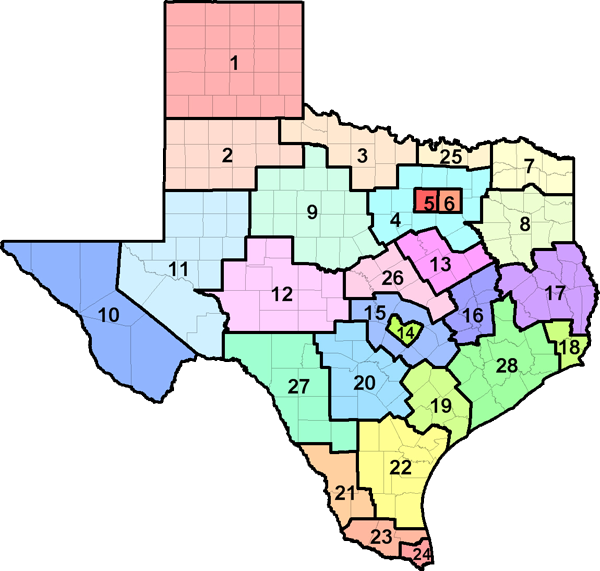
TEXAS COUNTY MAP BY WORKFORCE DEVELOPMENT AREA
* Due to confidentiality rules, not all regions may have the data displayed. The sum of all the regions may not be equal to the state total.


Top 10 Relevant Knowledge Areas Relevant Importance Levels
Education and Training
Knowledge of principles and methods for curriculum and training design, teaching and instruction for individuals and groups, and the measurement of training effects.
73.80%
English Language
Knowledge of the structure and content of the English language including the meaning and spelling of words, rules of composition, and grammar.
73.00%
Mathematics
Knowledge of arithmetic, algebra, geometry, calculus, statistics, and their applications.
72.40%
Administration and Management
Knowledge of business and management principles involved in strategic planning, resource allocation, human resources modeling, leadership technique, production methods, and coordination of people and resources.
72.20%
Production and Processing
Knowledge of raw materials, production processes, quality control, costs, and other techniques for maximizing the effective manufacture and distribution of goods.
70.60%
Mechanical
Knowledge of machines and tools, including their designs, uses, repair, and maintenance.
69.40%
Design
Knowledge of design techniques, tools, and principles involved in production of precision technical plans, blueprints, drawings, and models.
65.80%
Computers and Electronics
Knowledge of circuit boards, processors, chips, electronic equipment, and computer hardware and software, including applications and programming.
62.00%
Customer and Personal Service
Knowledge of principles and processes for providing customer and personal services. This includes customer needs assessment, meeting quality standards for services, and evaluation of customer satisfaction.
57.80%
Engineering and Technology
Knowledge of the practical application of engineering science and technology. This includes applying principles, techniques, procedures, and equipment to the design and production of various goods and services.
55.40%


Top 10 Relevant Skill Areas Relevant Importance Levels
Monitoring
Monitoring/Assessing performance of yourself, other individuals, or organizations to make improvements or take corrective action.
62.40%
Operations Monitoring
Watching gauges, dials, or other indicators to make sure a machine is working properly.
62.40%
Operation and Control
Controlling operations of equipment or systems.
60.00%
Active Listening
Giving full attention to what other people are saying, taking time to understand the points being made, asking questions as appropriate, and not interrupting at inappropriate times.
60.00%
Speaking
Talking to others to convey information effectively.
57.60%
Critical Thinking
Using logic and reasoning to identify the strengths and weaknesses of alternative solutions, conclusions, or approaches to problems.
57.60%
Coordination
Adjusting actions in relation to others' actions.
57.60%
Reading Comprehension
Understanding written sentences and paragraphs in work-related documents.
57.60%
Judgment and Decision Making
Considering the relative costs and benefits of potential actions to choose the most appropriate one.
55.00%
Social Perceptiveness
Being aware of others' reactions and understanding why they react as they do.
52.40%


Top 10 Relevant Abilities Relevant Importance Levels
Arm-Hand Steadiness
The ability to keep your hand and arm steady while moving your arm or while holding your arm and hand in one position.
75.00%
Manual Dexterity
The ability to quickly move your hand, your hand together with your arm, or your two hands to grasp, manipulate, or assemble objects.
67.60%
Control Precision
The ability to quickly and repeatedly adjust the controls of a machine or a vehicle to exact positions.
65.00%
Near Vision
The ability to see details at close range (within a few feet of the observer).
65.00%
Finger Dexterity
The ability to make precisely coordinated movements of the fingers of one or both hands to grasp, manipulate, or assemble very small objects.
62.40%
Selective Attention
The ability to concentrate on a task over a period of time without being distracted.
62.40%
Problem Sensitivity
The ability to tell when something is wrong or is likely to go wrong. It does not involve solving the problem, only recognizing that there is a problem.
62.40%
Deductive Reasoning
The ability to apply general rules to specific problems to produce answers that make sense.
60.00%
Oral Expression
The ability to communicate information and ideas in speaking so others will understand.
60.00%
Oral Comprehension
The ability to listen to and understand information and ideas presented through spoken words and sentences.
60.00%


  • Inspecting Equipment, Structures, or Materials
    -- Inspecting equipment, structures, or materials to identify the cause of errors or other problems or defects.
  • Getting Information
    -- Observing, receiving, and otherwise obtaining information from all relevant sources.
  • Handling and Moving Objects
    -- Using hands and arms in handling, installing, positioning, and moving materials, and manipulating things.
  • Identifying Objects, Actions, and Events
    -- Identifying information by categorizing, estimating, recognizing differences or similarities, and detecting changes in circumstances or events.
  • Performing General Physical Activities
    -- Performing physical activities that require considerable use of your arms and legs and moving your whole body, such as climbing, lifting, balancing, walking, stooping, and handling materials.
Other Activities


  • Support
    - Occupations that satisfy this work value offer supportive management that stands behind employees. Corresponding needs are Company Policies, Supervision: Human Relations and Supervision: Technical.
  • Working Conditions
    - Occupations that satisfy this work value offer job security and good working conditions. Corresponding needs are Activity, Compensation, Independence, Security, Variety and Working Conditions.

No certifications found.


Tools

Adjustable widemouth pliers: Multipurpose pliers;

Binocular light compound microscopes: Inspection microscopes;

Blow torch: Oxyacetylene torches;

Bolt cutters: Bolt cutters;

Cabling die: Cable forming fixtures;

Calibrated resistance measuring equipment: Wheatstone bridges;

Calipers: Digital calipers;

Circuit tester: Test lights;

Claw hammer: Claw hammers;

Cutting machines: Wire cutting machines;

Diesel generators: Alternating current AC generators;

Electrical coil winding machine: Coil spreading machines; Coil taping machines; Element winding machines;

Gas welding or brazing or cutting apparatus: Brazing torches;

Insulation resistance meters: Insulation resistance testers;

Mallets: Rawhide hammers;

Manual press brake: Arbor presses;

Metal inert gas welding machine: Fine wire welding machines;

Micrometers: Digital micrometers;

Ohmmeters: Digital ohmmeters;

Paint systems ovens: Curing ovens;

Personal computers: Personal computers;

Printing guillotines: Power paper cutters;

Pullers: Wire stretchers;

Punches or nail sets or drifts: Tube drifts;

Rubber mallet: Rubber mallets;

Screwdrivers: Straight screwdrivers;

Shears: Trimmer shears;

Soldering iron: Electric soldering irons;

Stripping tools: Wire strippers;

Tensiometers: Cable tensionmeters;

Tweezers: Industrial tweezers;

Voltage or current meters: Test lamps; Digital voltage meters;

Winding or reeling or spooling machines: Respooling machines;

Wire cutters: Wire cutting tools; Wire snips;

Wire or cable cutter: Hydraulic cable cutters;

Wire wrapping tool: Wire wrap guns;

Workshop cranes: Hydraulic cranes;

Wrapping machinery: Banding machines;


Technology

Analytical or scientific software: Electronic Systems of Wisconsin Motor Test System software;

Graphics or photo imaging software: Blueprint display software;

Industrial control software: Machine Control Specialists CoilPro;


Related O*NET occupational titles for Coil Winders, Tapers, and Finishers include:
  • 51-9032.00 Cutting and Slicing Machine Setters, Operators, and Tenders
  • 51-2022.00 Electrical and Electronic Equipment Assemblers
  • 51-2031.00 Engine and Other Machine Assemblers
  • 51-6091.00 Extruding and Forming Machine Setters, Operators, and Tenders, Synthetic and Glass Fibers
  • 51-4033.00 Grinding, Lapping, Polishing, and Buffing Machine Tool Setters, Operators, and Tenders, Metal and Plastic
  • 51-4034.00 Lathe and Turning Machine Tool Setters, Operators, and Tenders, Metal and Plastic
  • 51-4035.00 Milling and Planing Machine Setters, Operators, and Tenders, Metal and Plastic
  • 51-4081.00 Multiple Machine Tool Setters, Operators, and Tenders, Metal and Plastic
  • 51-4194.00 Tool Grinders, Filers, and Sharpeners
  • 51-4122.00 Welding, Soldering, and Brazing Machine Setters, Operators, and Tenders


Sources of Additional Information
  • For more information about assemblers and fabricators, including certification, training, and professional development, visit: Fabricators & Manufacturers Association, International
  • For information about careers in manufacturing, visit: Nuts, Bolts & Thingamajigs
  • For information about certifications in electronics soldering, visit: Association Connecting Electronics Industries
  • CareerOneStop

  • For a career video on aircraft structure, surfaces, rigging, and systems assemblers, visit: Aircraft Structure, Surfaces, Rigging, and Systems Assemblers
  • For a career video on structural metal fabricators and fitters, visit: Structural Metal Fabricators and Fitters
  • Aircraft Structure, Surfaces, Rigging, and Systems Assemblers
  • Assemblers and Fabricators, All Other
  • Coil Winders, Tapers, and Finishers
  • Electrical and Electronic Equipment Assemblers
  • Electromechanical Equipment Assemblers
  • Engine and Other Machine Assemblers
  • Fiberglass Laminators and Fabricators
  • Structural Metal Fabricators and Fitters
  • Team Assemblers
  • Timing Device Assemblers and Adjusters

  • Contact Texas Workforce Commission
    Labor Market and Career Information  |  101 E. 15th Street, Annex Room 0252  |  Austin, Texas 78778
    Official Website  |  1-800-822-PLAN (7526)  |  512.936.3200

    ** The information in this report may be derived from many sources like O*NET, BLS (Bureau of Labor Statistics), OOH (Occupational Outlook Handbook), and Career One Stop.