Occupation Summary

Butchers and Meat Cutters

O*NET 51-3021.00

Description:

Cut, trim, or prepare consumer-sized portions of meat for use or sale in retail establishments.

Annual Wages:
$38,562.00
Employment Rate:
Employment is expected to increase by 14.91%.
Education Level:
High School Diploma - or the equivalent (for example, GED). According to O*Net, the majority of people employed in this occupation have this level of education.
Endorsement:
Business and Industry

  1. Wrap, weigh, label, and price cuts of meat.
  2. Prepare and place meat cuts and products in display counter to appear attractive and catch the shopper's eye.
  3. Prepare special cuts of meat ordered by customers.
  4. Cut, trim, bone, tie, and grind meats, such as beef, pork, poultry, and fish, to prepare in cooking form.
  5. Receive, inspect, and store meat upon delivery to ensure meat quality.
  6. Shape, lace, and tie roasts, using boning knife, skewer, and twine.
  7. Estimate requirements and order or requisition meat supplies to maintain inventories.
  8. Supervise other butchers or meat cutters.
  9. Record quantity of meat received and issued to cooks or keep records of meat sales.
  10. Negotiate with representatives from supply companies to determine order details.
  11. Cure, smoke, tenderize, and preserve meat.


National Industry Employment Patterns


Industry % of Butchers and Meat Cutters employed Annual Growth Rate
Animal slaughtering and processing 7 0.43


Labor Market Information


2024 Statewide average hourly wage $18.54
2024 National average hourly wage $19.86
2022 National employment 131,600
2022 Texas employment 9,055
Texas projected employment by 2032 10,405
Texas projected annual employment and Turnover openings through 2032 1,281


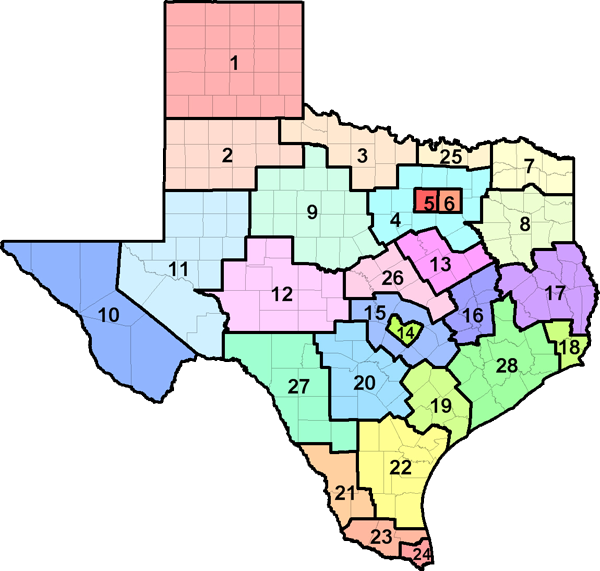
TEXAS COUNTY MAP BY WORKFORCE DEVELOPMENT AREA
* Due to confidentiality rules, not all regions may have the data displayed. The sum of all the regions may not be equal to the state total.


Top 10 Relevant Knowledge Areas Relevant Importance Levels
Customer and Personal Service
Knowledge of principles and processes for providing customer and personal services. This includes customer needs assessment, meeting quality standards for services, and evaluation of customer satisfaction.
82.60%
Food Production
Knowledge of techniques and equipment for planting, growing, and harvesting food products (both plant and animal) for consumption, including storage/handling techniques.
77.60%
Production and Processing
Knowledge of raw materials, production processes, quality control, costs, and other techniques for maximizing the effective manufacture and distribution of goods.
67.40%
Sales and Marketing
Knowledge of principles and methods for showing, promoting, and selling products or services. This includes marketing strategy and tactics, product demonstration, sales techniques, and sales control systems.
62.20%
English Language
Knowledge of the structure and content of the English language including the meaning and spelling of words, rules of composition, and grammar.
55.20%
Administration and Management
Knowledge of business and management principles involved in strategic planning, resource allocation, human resources modeling, leadership technique, production methods, and coordination of people and resources.
49.80%
Mathematics
Knowledge of arithmetic, algebra, geometry, calculus, statistics, and their applications.
49.20%
Education and Training
Knowledge of principles and methods for curriculum and training design, teaching and instruction for individuals and groups, and the measurement of training effects.
45.40%
Mechanical
Knowledge of machines and tools, including their designs, uses, repair, and maintenance.
45.00%
Administrative
Knowledge of administrative and office procedures and systems such as word processing, managing files and records, stenography and transcription, designing forms, and workplace terminology.
38.80%


Top 10 Relevant Skill Areas Relevant Importance Levels
Active Listening
Giving full attention to what other people are saying, taking time to understand the points being made, asking questions as appropriate, and not interrupting at inappropriate times.
62.40%
Speaking
Talking to others to convey information effectively.
60.00%
Monitoring
Monitoring/Assessing performance of yourself, other individuals, or organizations to make improvements or take corrective action.
60.00%
Social Perceptiveness
Being aware of others' reactions and understanding why they react as they do.
60.00%
Service Orientation
Actively looking for ways to help people.
60.00%
Critical Thinking
Using logic and reasoning to identify the strengths and weaknesses of alternative solutions, conclusions, or approaches to problems.
60.00%
Reading Comprehension
Understanding written sentences and paragraphs in work-related documents.
60.00%
Time Management
Managing one's own time and the time of others.
60.00%
Judgment and Decision Making
Considering the relative costs and benefits of potential actions to choose the most appropriate one.
57.60%
Complex Problem Solving
Identifying complex problems and reviewing related information to develop and evaluate options and implement solutions.
57.60%


Top 10 Relevant Abilities Relevant Importance Levels
Manual Dexterity
The ability to quickly move your hand, your hand together with your arm, or your two hands to grasp, manipulate, or assemble objects.
70.00%
Near Vision
The ability to see details at close range (within a few feet of the observer).
70.00%
Arm-Hand Steadiness
The ability to keep your hand and arm steady while moving your arm or while holding your arm and hand in one position.
65.00%
Control Precision
The ability to quickly and repeatedly adjust the controls of a machine or a vehicle to exact positions.
62.40%
Oral Comprehension
The ability to listen to and understand information and ideas presented through spoken words and sentences.
62.40%
Oral Expression
The ability to communicate information and ideas in speaking so others will understand.
62.40%
Problem Sensitivity
The ability to tell when something is wrong or is likely to go wrong. It does not involve solving the problem, only recognizing that there is a problem.
62.40%
Information Ordering
The ability to arrange things or actions in a certain order or pattern according to a specific rule or set of rules (e.g., patterns of numbers, letters, words, pictures, mathematical operations).
62.40%
Category Flexibility
The ability to generate or use different sets of rules for combining or grouping things in different ways.
62.40%
Finger Dexterity
The ability to make precisely coordinated movements of the fingers of one or both hands to grasp, manipulate, or assemble very small objects.
60.00%


  • Performing for or Working Directly with the Public
    -- Performing for people or dealing directly with the public. This includes serving customers in restaurants and stores, and receiving clients or guests.
  • Getting Information
    -- Observing, receiving, and otherwise obtaining information from all relevant sources.
  • Inspecting Equipment, Structures, or Materials
    -- Inspecting equipment, structures, or materials to identify the cause of errors or other problems or defects.
  • Performing General Physical Activities
    -- Performing physical activities that require considerable use of your arms and legs and moving your whole body, such as climbing, lifting, balancing, walking, stooping, and handling materials.
  • Selling or Influencing Others
    -- Convincing others to buy merchandise/goods or to otherwise change their minds or actions.
Other Activities


  • Independence
    - Occupations that satisfy this work value allow employees to work on their own and make decisions. Corresponding needs are Creativity, Responsibility and Autonomy.
  • Relationships
    - Occupations that satisfy this work value allow employees to provide service to others and work with co-workers in a friendly non-competitive environment. Corresponding needs are Co-workers, Moral Values and Social Service.


  • Animal Processing (WV)
  • NOCTI


Tools

Acoustic ear muffs or defenders: Protective ear muffs;

Air dryers: Air knives;

Baling press: Balers;

Belt conveyors: Material conveyors;

Blast freezers: Anti-griddles;

Butcher scissors: Poultry shears;

Chopping machinery: Bowl choppers; Mincing machines;

Commercial use blenders: Hand blenders;

Commercial use cutlery: Bone dusters; Boning hooks; Boning knives; Breaking knives; Chefs' knives; Butcher knives; Fish scalers; Fish skinners; Meat cleavers; Paring knives; T-handle boning hooks; Trim knives; Whizzard knives;

Commercial use dough machines: Dough mixers;

Commercial use food choppers or cubers or dicers: Meat cubers;

Commercial use food grinders: Frozen block grinders; Auto feed grinders;

Commercial use food slicers: Bacon slicers;

Commercial use food warmers: Thermal circulators;

Commercial use rotisseries: Rotisserie ovens;

Commercial use scales: Meat scales;

Cutting machinery: Brisket cutters;

Dehydrating machinery: Meat dehydrators;

Dicing machinery: Dicers;

Ear plugs: Protective ear plugs;

Fat extractors: Specific gravity fat analyzers;

Filling machinery: Sausage linkers;

Forming machine: Meatball molders; Hamburger presses;

Handheld thermometer: Food thermometers;

Hoists: Meat hoists;

Label making machines: Label printers;

Meat tyer or bagger: Meat stringing machines; Net applicators;

Metal detectors: Food metal detectors;

Packaging vacuum: Vacuum package machines;

Pallet trucks: Pallet jacks;

Personal computers: Personal computers;

Power saws: Frozen food saws; Beef splitting saws; Butcher saws; Meat cutting band saws;

Power staple guns: Power staple guns;

Saws: Handsaws;

Shaft collar: Beef shackles; Hog shackles;

Sharpening stones or tools or kits: Knife sharpeners;

Smoking machinery: Smokehouses;

Wrapping machinery: Wrapping machines;


Technology

Accounting software: Financial accounting software;

Electronic mail software: Microsoft Outlook;

Internet browser software: Web browser software;

Office suite software: Microsoft Office software;

Spreadsheet software: Microsoft Excel;

Word processing software: Microsoft Word;


Related O*NET occupational titles for Butchers and Meat Cutters include:
  • 51-3011.00 Bakers
  • 35-1011.00 Chefs and Head Cooks
  • 35-2012.00 Cooks, Institution and Cafeteria
  • 35-2014.00 Cooks, Restaurant
  • 35-2015.00 Cooks, Short Order
  • 51-3092.00 Food Batchmakers
  • 51-3093.00 Food Cooking Machine Operators and Tenders
  • 35-2021.00 Food Preparation Workers
  • 51-3022.00 Meat, Poultry, and Fish Cutters and Trimmers
  • 51-3023.00 Slaughterers and Meat Packers


Sources of Additional Information
  • For details about apprenticeships or other work opportunities in this occupation, contact the offices of the state employment service, the state apprenticeship agency, local unions, or firms that employ butchers. Apprenticeship information is available from the U.S. Department of Labor’s Apprenticeship program online or by phone at 877-872-5627. Visit Apprenticeship.gov to search for apprenticeship opportunities.
  • For information about the meat-processing industry and related trends, visit: North American Meat Institute
  • Occupational Requirements Survey

  • For a profile highlighting selected BLS data on occupational requirements, see
  • Butchers and meat cutters (PDF)
  • CareerOneStop

  • For a career video on butchers, visit: Butchers and meat cutters
  • Butchers and Meat Cutters

  • Contact Texas Workforce Commission
    Labor Market and Career Information  |  101 E. 15th Street, Annex Room 0252  |  Austin, Texas 78778
    Official Website  |  1-800-822-PLAN (7526)  |  512.936.3200

    ** The information in this report may be derived from many sources like O*NET, BLS (Bureau of Labor Statistics), OOH (Occupational Outlook Handbook), and Career One Stop.