Occupation Summary

Food Batchmakers

O*NET 51-3092.00

Description:

Set up and operate equipment that mixes or blends ingredients used in the manufacturing of food products. Includes candy makers and cheese makers.

Annual Wages:
$34,463.00
Employment Rate:
Employment is expected to increase by 16.14%.
Education Level:
High School Diploma - or the equivalent (for example, GED). According to O*Net, the majority of people employed in this occupation have this level of education.
Endorsement:
Business and Industry

  1. Record production and test data for each food product batch, such as the ingredients used, temperature, test results, and time cycle.
  2. Observe gauges and thermometers to determine if the mixing chamber temperature is within specified limits, and turn valves to control the temperature.
  3. Clean and sterilize vats and factory processing areas.
  4. Press switches and turn knobs to start, adjust, and regulate equipment, such as beaters, extruders, discharge pipes, and salt pumps.
  5. Observe and listen to equipment to detect possible malfunctions, such as leaks or plugging, and report malfunctions or undesirable tastes to supervisors.
  6. Set up, operate, and tend equipment that cooks, mixes, blends, or processes ingredients in the manufacturing of food products, according to formulas or recipes.
  7. Mix or blend ingredients, according to recipes, using a paddle or an agitator, or by controlling vats that heat and mix ingredients.
  8. Follow recipes to produce food products of specified flavor, texture, clarity, bouquet, or color.
  9. Select and measure or weigh ingredients, using English or metric measures and balance scales.
  10. Turn valve controls to start equipment and to adjust operation to maintain product quality.
  11. Determine mixing sequences, based on knowledge of temperature effects and of the solubility of specific ingredients.
  12. Fill processing or cooking containers, such as kettles, rotating cookers, pressure cookers, or vats, with ingredients, by opening valves, by starting pumps or injectors, or by hand.
  13. Give directions to other workers who are assisting in the batchmaking process.
  14. Homogenize or pasteurize material to prevent separation or to obtain prescribed butterfat content, using a homogenizing device.
  15. Inspect vats after cleaning to ensure that fermentable residue has been removed.
  16. Examine, feel, and taste product samples during production to evaluate quality, color, texture, flavor, and bouquet, and document the results.
  17. Test food product samples for moisture content, acidity level, specific gravity, or butter-fat content, and continue processing until desired levels are reached.
  18. Formulate or modify recipes for specific kinds of food products.
  19. Inspect and pack the final product.
  20. Grade food products according to government regulations or according to type, color, bouquet, and moisture content.
  21. Cool food product batches on slabs or in water-cooled kettles.
  22. Operate refining machines to reduce the particle size of cooked batches.
  23. Modify cooking and forming operations based on the results of sampling processes, adjusting time cycles and ingredients to achieve desired qualities, such as firmness or texture.
  24. Place products on carts or conveyors to transfer them to the next stage of processing.
  25. Manipulate products, by hand or using machines, to separate, spread, knead, spin, cast, cut, pull, or roll products.


National Industry Employment Patterns


Industry % of Food Batchmakers employed Annual Growth Rate
Other food manufacturing 16.1 1.80
Bakeries and tortilla manufacturing 16.1 1.04
Dairy product manufacturing 14 0.29
Fruit and vegetable preserving and specialty food manufacturing 13.3 0.47
Sugar and confectionery product manufacturing 9.1 0.19
Employment services 6.3 0.19
Animal slaughtering and processing 5.3 0.32
Animal food manufacturing 3.3 1.32
Beverage manufacturing 2.7 1.23
Restaurants and other eating places 2.6 0.65
Grain and oilseed milling 2.5 0.00


Labor Market Information


2024 Statewide average hourly wage $16.57
2024 National average hourly wage $20.59
2022 National employment 171,500
2022 Texas employment 9,130
Texas projected employment by 2032 10,604
Texas projected annual employment and Turnover openings through 2032 1,611


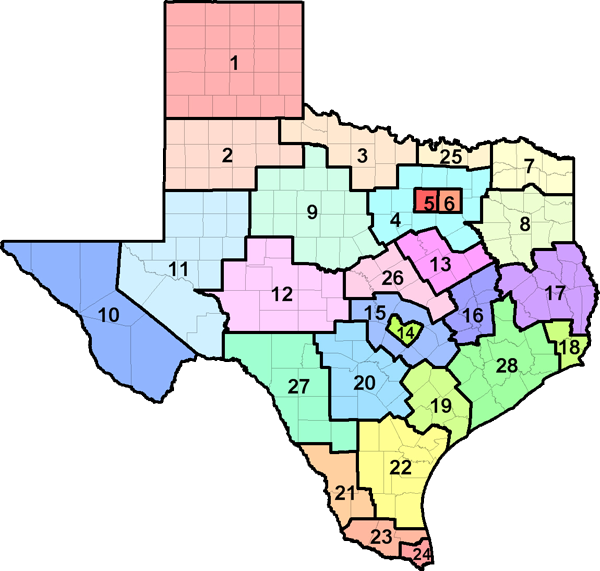
TEXAS COUNTY MAP BY WORKFORCE DEVELOPMENT AREA
* Due to confidentiality rules, not all regions may have the data displayed. The sum of all the regions may not be equal to the state total.


Top 10 Relevant Knowledge Areas Relevant Importance Levels
Public Safety and Security
Knowledge of relevant equipment, policies, procedures, and strategies to promote effective local, state, or national security operations for the protection of people, data, property, and institutions.
85.80%
Food Production
Knowledge of techniques and equipment for planting, growing, and harvesting food products (both plant and animal) for consumption, including storage/handling techniques.
85.20%
Production and Processing
Knowledge of raw materials, production processes, quality control, costs, and other techniques for maximizing the effective manufacture and distribution of goods.
84.20%
Education and Training
Knowledge of principles and methods for curriculum and training design, teaching and instruction for individuals and groups, and the measurement of training effects.
71.40%
English Language
Knowledge of the structure and content of the English language including the meaning and spelling of words, rules of composition, and grammar.
69.40%
Administration and Management
Knowledge of business and management principles involved in strategic planning, resource allocation, human resources modeling, leadership technique, production methods, and coordination of people and resources.
63.00%
Mechanical
Knowledge of machines and tools, including their designs, uses, repair, and maintenance.
63.00%
Mathematics
Knowledge of arithmetic, algebra, geometry, calculus, statistics, and their applications.
62.40%
Computers and Electronics
Knowledge of circuit boards, processors, chips, electronic equipment, and computer hardware and software, including applications and programming.
61.80%
Administrative
Knowledge of administrative and office procedures and systems such as word processing, managing files and records, stenography and transcription, designing forms, and workplace terminology.
58.20%


Top 10 Relevant Skill Areas Relevant Importance Levels
Operations Monitoring
Watching gauges, dials, or other indicators to make sure a machine is working properly.
65.00%
Reading Comprehension
Understanding written sentences and paragraphs in work-related documents.
62.40%
Critical Thinking
Using logic and reasoning to identify the strengths and weaknesses of alternative solutions, conclusions, or approaches to problems.
62.40%
Active Listening
Giving full attention to what other people are saying, taking time to understand the points being made, asking questions as appropriate, and not interrupting at inappropriate times.
60.00%
Speaking
Talking to others to convey information effectively.
60.00%
Coordination
Adjusting actions in relation to others' actions.
60.00%
Operation and Control
Controlling operations of equipment or systems.
60.00%
Judgment and Decision Making
Considering the relative costs and benefits of potential actions to choose the most appropriate one.
57.60%
Complex Problem Solving
Identifying complex problems and reviewing related information to develop and evaluate options and implement solutions.
57.60%
Writing
Communicating effectively in writing as appropriate for the needs of the audience.
57.60%


Top 10 Relevant Abilities Relevant Importance Levels
Information Ordering
The ability to arrange things or actions in a certain order or pattern according to a specific rule or set of rules (e.g., patterns of numbers, letters, words, pictures, mathematical operations).
72.40%
Near Vision
The ability to see details at close range (within a few feet of the observer).
72.40%
Oral Comprehension
The ability to listen to and understand information and ideas presented through spoken words and sentences.
65.00%
Written Comprehension
The ability to read and understand information and ideas presented in writing.
62.40%
Problem Sensitivity
The ability to tell when something is wrong or is likely to go wrong. It does not involve solving the problem, only recognizing that there is a problem.
62.40%
Control Precision
The ability to quickly and repeatedly adjust the controls of a machine or a vehicle to exact positions.
62.40%
Manual Dexterity
The ability to quickly move your hand, your hand together with your arm, or your two hands to grasp, manipulate, or assemble objects.
60.00%
Category Flexibility
The ability to generate or use different sets of rules for combining or grouping things in different ways.
60.00%
Oral Expression
The ability to communicate information and ideas in speaking so others will understand.
60.00%
Perceptual Speed
The ability to quickly and accurately compare similarities and differences among sets of letters, numbers, objects, pictures, or patterns. The things to be compared may be presented at the same time or one after the other. This ability also includes comparing a presented object with a remembered object.
60.00%


  • Monitoring Processes, Materials, or Surroundings
    -- Monitoring and reviewing information from materials, events, or the environment, to detect or assess problems.
  • Controlling Machines and Processes
    -- Using either control mechanisms or direct physical activity to operate machines or processes (not including computers or vehicles).
  • Documenting/Recording Information
    -- Entering, transcribing, recording, storing, or maintaining information in written or electronic/magnetic form.
  • Communicating with Supervisors, Peers, or Subordinates
    -- Providing information to supervisors, co-workers, and subordinates by telephone, in written form, e-mail, or in person.
  • Inspecting Equipment, Structures, or Materials
    -- Inspecting equipment, structures, or materials to identify the cause of errors or other problems or defects.
Other Activities


  • Relationships
    - Occupations that satisfy this work value allow employees to provide service to others and work with co-workers in a friendly non-competitive environment. Corresponding needs are Co-workers, Moral Values and Social Service.
  • Support
    - Occupations that satisfy this work value offer supportive management that stands behind employees. Corresponding needs are Company Policies, Supervision: Human Relations and Supervision: Technical.


Tools

Cheese making machine: Centrifugal clarifiers; Cheese finishing tables; Cheese presses; Cheese vats;

Commercial use broilers: Food broilers;

Commercial use deep fryers: Deep-fry cookers;

Commercial use dough machines: Dough processing machines; Extruders;

Commercial use food warmers: Food heating cabinets; Heating tables;

Commercial use high pressure steamers: Steam-cooking vats;

Commercial use jacketed tilting kettle: Tilting commercial cooking kettles; Water-cooled kettles;

Commercial use microwave ovens: Microwave drying machines;

Commercial use mixers: Beaters; Agitators; Cooker mixers; Cream beaters;

Commercial use ranges: Commercial induction cookers; Chocolate melters; Candy cookers; Candy stoves;

Commercial use rolling pins: Levelers; Sizers;

Commercial use scales: Balance scales;

Cooling machine: Cooling tables;

Cream separator: Commercial cream separators;

Cutting machinery: Roller cutters; Cheese cutters;

Dehydrating machinery: Evaporators;

Domestic kitchen or food thermometers: Digital kitchen thermometers;

Filling machinery: Liquid filling machines;

Food sterilizing machine: Food sterilizing machines;

Forming machine: Sausage machines;

Homogenizers: Commercial use homogenizers;

Ice cream machines: Ice cream machines;

Lifts: Kettle lifters;

Manual meat tenderizer: Meat tenderizing tools;

Metering or injection or proportioning pumps: Revolving pan depositors; Metered transfer pumps; Injector pumps; Depositing pumps;

Milling machinery: Ball mills; Flour milling machines;

Packaging vacuum: Vacuum packagers;

Pushcarts: Kettle dollies;

Slicing machinery: Meat cutting machines;

Sorting machinery: Vibrating tables;

Torque wrenches: Torque wrenches;


Technology

Enterprise resource planning ERP software: Plex Systems Plex Manufacturing Cloud;

Inventory management software: Edible Software;

Office suite software: Microsoft Office software;


Related O*NET occupational titles for Food Batchmakers include:
  • 51-3011.00 Bakers
  • 51-9192.00 Cleaning, Washing, and Metal Pickling Equipment Operators and Tenders
  • 51-9193.00 Cooling and Freezing Equipment Operators and Tenders
  • 51-9021.00 Crushing, Grinding, and Polishing Machine Setters, Operators, and Tenders
  • 51-9041.00 Extruding, Forming, Pressing, and Compacting Machine Setters, Operators, and Tenders
  • 51-3091.00 Food and Tobacco Roasting, Baking, and Drying Machine Operators and Tenders
  • 51-3093.00 Food Cooking Machine Operators and Tenders
  • 45-2041.00 Graders and Sorters, Agricultural Products
  • 51-9023.00 Mixing and Blending Machine Setters, Operators, and Tenders
  • 51-9012.00 Separating, Filtering, Clarifying, Precipitating, and Still Machine Setters, Operators, and Tenders

Contact Texas Workforce Commission
Labor Market and Career Information  |  101 E. 15th Street, Annex Room 0252  |  Austin, Texas 78778
Official Website  |  1-800-822-PLAN (7526)  |  512.936.3200

** The information in this report may be derived from many sources like O*NET, BLS (Bureau of Labor Statistics), OOH (Occupational Outlook Handbook), and Career One Stop.