
The U.S. Department of Labor has developed an automated occupational information database, O*NET, that identifies and describes work content, work skills, and training requirements for all jobs across the country in all sectors of the economy. Much of the occupational information contained in this report is derived directly from the O*NET database, and supplemented with information from the Bureau of Labor Statistics, Census Bureau, and Labor Market and Career Information.
| Industry | % of Extruding and Drawing Machine Setters, Operators, and Tenders, Metal and Plastic employed | Annual Growth Rate |
|---|---|---|
| Plastics product manufacturing | 49.2 | -0.13 |
| Nonferrous metal (except aluminum) production and processing | 9.5 | -0.68 |
| Alumina and aluminum production and processing | 5.7 | -0.55 |
| Other electrical equipment and component manufacturing | 4.5 | 2.74 |
| Steel product manufacturing from purchased steel | 4.1 | -0.80 |
| Employment services | 3.3 | -0.49 |
| Rubber product manufacturing | 3 | -1.11 |
| 2024 Statewide average hourly wage | $21.64 |
| 2024 National average hourly wage | $23.16 |
| 2022 National employment | 64,300 |
| 2022 Texas employment | 3,729 |
| Texas projected employment by 2032 | 3,743 |
| Texas projected annual employment and Turnover openings through 2032 | 382 |
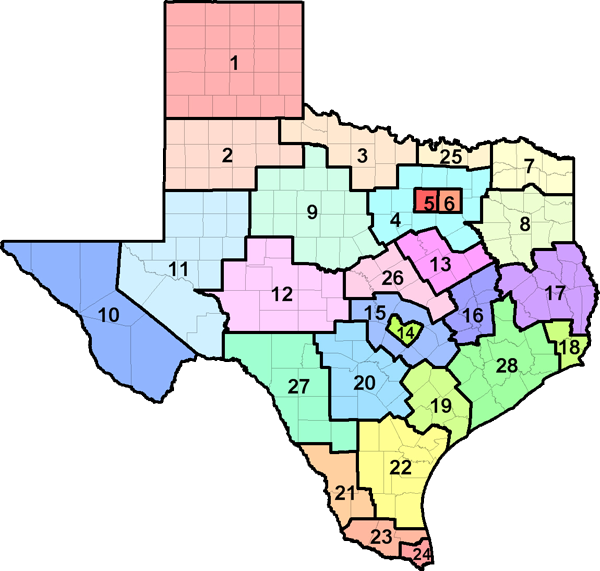
| Region | Employment | Projected Employment 2032 | Projected Annual Openings 2032 |
Annual Growth Rate |
Average Income |
|---|---|---|---|---|---|
| Texas (all regions) | 3,729 | 3,743 | 382 | 0.04% | $45,015.00 |
| Top 10 Relevant Knowledge Areas | Relevant Importance Levels |
|---|---|
| Production and Processing Knowledge of raw materials, production processes, quality control, costs, and other techniques for maximizing the effective manufacture and distribution of goods. |
|
| Mathematics Knowledge of arithmetic, algebra, geometry, calculus, statistics, and their applications. |
|
| English Language Knowledge of the structure and content of the English language including the meaning and spelling of words, rules of composition, and grammar. |
|
| Administration and Management Knowledge of business and management principles involved in strategic planning, resource allocation, human resources modeling, leadership technique, production methods, and coordination of people and resources. |
|
| Computers and Electronics Knowledge of circuit boards, processors, chips, electronic equipment, and computer hardware and software, including applications and programming. |
|
| Mechanical Knowledge of machines and tools, including their designs, uses, repair, and maintenance. |
|
| Public Safety and Security Knowledge of relevant equipment, policies, procedures, and strategies to promote effective local, state, or national security operations for the protection of people, data, property, and institutions. |
|
| Customer and Personal Service Knowledge of principles and processes for providing customer and personal services. This includes customer needs assessment, meeting quality standards for services, and evaluation of customer satisfaction. |
|
| Education and Training Knowledge of principles and methods for curriculum and training design, teaching and instruction for individuals and groups, and the measurement of training effects. |
|
| Engineering and Technology Knowledge of the practical application of engineering science and technology. This includes applying principles, techniques, procedures, and equipment to the design and production of various goods and services. |
| Top 10 Relevant Skill Areas | Relevant Importance Levels |
|---|---|
| Operations Monitoring Watching gauges, dials, or other indicators to make sure a machine is working properly. |
|
| Operation and Control Controlling operations of equipment or systems. |
|
| Quality Control Analysis Conducting tests and inspections of products, services, or processes to evaluate quality or performance. |
|
| Judgment and Decision Making Considering the relative costs and benefits of potential actions to choose the most appropriate one. |
|
| Critical Thinking Using logic and reasoning to identify the strengths and weaknesses of alternative solutions, conclusions, or approaches to problems. |
|
| Monitoring Monitoring/Assessing performance of yourself, other individuals, or organizations to make improvements or take corrective action. |
|
| Speaking Talking to others to convey information effectively. |
|
| Coordination Adjusting actions in relation to others' actions. |
|
| Complex Problem Solving Identifying complex problems and reviewing related information to develop and evaluate options and implement solutions. |
|
| Troubleshooting Determining causes of operating errors and deciding what to do about it. |
| Top 10 Relevant Abilities | Relevant Importance Levels |
|---|---|
| Control Precision The ability to quickly and repeatedly adjust the controls of a machine or a vehicle to exact positions. |
|
| Multilimb Coordination The ability to coordinate two or more limbs (for example, two arms, two legs, or one leg and one arm) while sitting, standing, or lying down. It does not involve performing the activities while the whole body is in motion. |
|
| Manual Dexterity The ability to quickly move your hand, your hand together with your arm, or your two hands to grasp, manipulate, or assemble objects. |
|
| Reaction Time The ability to quickly respond (with the hand, finger, or foot) to a signal (sound, light, picture) when it appears. |
|
| Rate Control The ability to time your movements or the movement of a piece of equipment in anticipation of changes in the speed and/or direction of a moving object or scene. |
|
| Problem Sensitivity The ability to tell when something is wrong or is likely to go wrong. It does not involve solving the problem, only recognizing that there is a problem. |
|
| Near Vision The ability to see details at close range (within a few feet of the observer). |
|
| Trunk Strength The ability to use your abdominal and lower back muscles to support part of the body repeatedly or continuously over time without "giving out" or fatiguing. |
|
| Static Strength The ability to exert maximum muscle force to lift, push, pull, or carry objects. |
|
| Arm-Hand Steadiness The ability to keep your hand and arm steady while moving your arm or while holding your arm and hand in one position. |