Occupation Summary

Print Binding and Finishing Workers

O*NET 51-5113.00

Description:

Bind books and other publications or finish printed products by hand or machine. May set up binding and finishing machines.

Annual Wages:
$39,623.00
Employment Rate:
Employment is expected to increase by 4.80%.
Education Level:
High School Diploma - or the equivalent (for example, GED). According to O*Net, the majority of people employed in this occupation have this level of education.
Endorsement:
Business and Industry

  1. Bind new books, using hand tools such as bone folders, knives, hammers, or brass binding tools.
  2. Compress sewed or glued signatures, using hand presses or smashing machines.
  3. Cut binder boards to specified dimensions, using board shears, hand cutters, or cutting machines.
  4. Cut cover material to specified dimensions, fitting and gluing material to binder boards by hand or machine.
  5. Design original or special bindings for limited editions or other custom binding projects.
  6. Form book bodies by folding and sewing printed sheets to form signatures and assembling signatures in numerical order.
  7. Imprint or emboss lettering, designs, or numbers on book covers, using gold, silver, or colored foil, and stamping machines.
  8. Insert book bodies in devices that form back edges of books into convex shapes and produce grooves that facilitate cover attachment.
  9. Maintain records, such as daily production records, using specified forms.
  10. Meet with clients, printers, or designers to discuss job requirements or binding plans.
  11. Monitor machine operations to detect malfunctions or to determine whether adjustments are needed.
  12. Perform highly skilled hand finishing binding operations, such as grooving or lettering.
  13. Punch holes in and fasten paper sheets, signatures, or other material, using hand or machine punches and staplers.
  14. Read work orders to determine instructions and specifications for machine set-up.
  15. Repair, restore, or rebind old, rare, or damaged books, using hand tools.
  16. Set up or operate bindery machines, such as coil binders, thermal or tape binders, plastic comb binders, or specialty binders.
  17. Set up or operate glue machines by filling glue reservoirs, turning switches to activate heating elements, or adjusting glue flow or conveyor speed.
  18. Set up or operate machines that perform binding operations, such as pressing, folding, or trimming.
  19. Stitch or glue endpapers, bindings, backings, or signatures, using sewing machines, glue machines, or glue and brushes.
  20. Trim edges of books to size, using cutting machines, book trimming machines, or hand cutters.
  21. Examine stitched, collated, bound, or unbound product samples for defects, such as imperfect bindings, ink spots, torn pages, loose pages, or loose or uncut threads.
  22. Install or adjust bindery machine devices, such as knives, guides, rollers, rounding forms, creasing rams, or clamps, to accommodate sheets, signatures, or books of specified sizes.
  23. Lubricate, clean, or make minor repairs to machine parts to keep machines in working condition.
  24. Prepare finished books for shipping by wrapping or packing books and stacking boxes on pallets.
  25. Train workers to set up, operate, and use automatic bindery machines.


National Industry Employment Patterns


Industry % of Print Binding and Finishing Workers employed Annual Growth Rate
Employment services 5.3 0.00


Labor Market Information


2024 Statewide average hourly wage $19.05
2024 National average hourly wage $20.69
2022 National employment 41,400
2022 Texas employment 3,291
Texas projected employment by 2032 3,449
Texas projected annual employment and Turnover openings through 2032 325


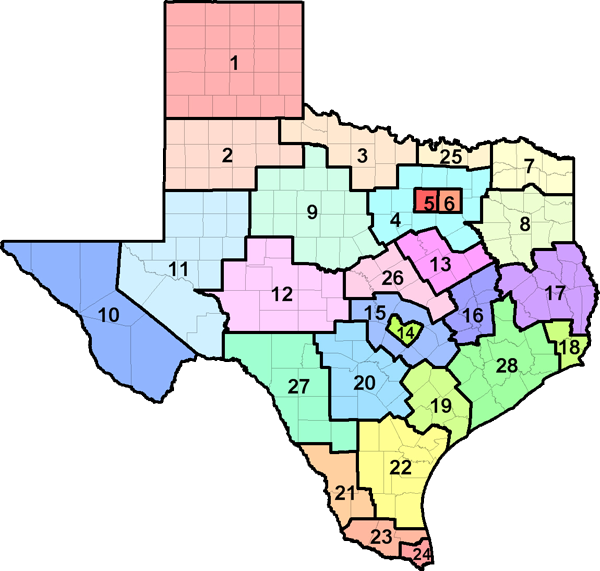
TEXAS COUNTY MAP BY WORKFORCE DEVELOPMENT AREA
* Due to confidentiality rules, not all regions may have the data displayed. The sum of all the regions may not be equal to the state total.


Top 10 Relevant Knowledge Areas Relevant Importance Levels
Administration and Management
Knowledge of business and management principles involved in strategic planning, resource allocation, human resources modeling, leadership technique, production methods, and coordination of people and resources.
70.20%
Production and Processing
Knowledge of raw materials, production processes, quality control, costs, and other techniques for maximizing the effective manufacture and distribution of goods.
67.60%
Mechanical
Knowledge of machines and tools, including their designs, uses, repair, and maintenance.
64.80%
Customer and Personal Service
Knowledge of principles and processes for providing customer and personal services. This includes customer needs assessment, meeting quality standards for services, and evaluation of customer satisfaction.
61.60%
Mathematics
Knowledge of arithmetic, algebra, geometry, calculus, statistics, and their applications.
58.00%
English Language
Knowledge of the structure and content of the English language including the meaning and spelling of words, rules of composition, and grammar.
58.00%
Administrative
Knowledge of administrative and office procedures and systems such as word processing, managing files and records, stenography and transcription, designing forms, and workplace terminology.
55.00%
Education and Training
Knowledge of principles and methods for curriculum and training design, teaching and instruction for individuals and groups, and the measurement of training effects.
54.20%
Computers and Electronics
Knowledge of circuit boards, processors, chips, electronic equipment, and computer hardware and software, including applications and programming.
47.60%
Sales and Marketing
Knowledge of principles and methods for showing, promoting, and selling products or services. This includes marketing strategy and tactics, product demonstration, sales techniques, and sales control systems.
43.20%


Top 10 Relevant Skill Areas Relevant Importance Levels
Operations Monitoring
Watching gauges, dials, or other indicators to make sure a machine is working properly.
67.60%
Critical Thinking
Using logic and reasoning to identify the strengths and weaknesses of alternative solutions, conclusions, or approaches to problems.
65.00%
Monitoring
Monitoring/Assessing performance of yourself, other individuals, or organizations to make improvements or take corrective action.
62.40%
Reading Comprehension
Understanding written sentences and paragraphs in work-related documents.
62.40%
Judgment and Decision Making
Considering the relative costs and benefits of potential actions to choose the most appropriate one.
62.40%
Quality Control Analysis
Conducting tests and inspections of products, services, or processes to evaluate quality or performance.
60.00%
Speaking
Talking to others to convey information effectively.
60.00%
Complex Problem Solving
Identifying complex problems and reviewing related information to develop and evaluate options and implement solutions.
60.00%
Coordination
Adjusting actions in relation to others' actions.
57.60%
Instructing
Teaching others how to do something.
57.60%


Top 10 Relevant Abilities Relevant Importance Levels
Problem Sensitivity
The ability to tell when something is wrong or is likely to go wrong. It does not involve solving the problem, only recognizing that there is a problem.
70.00%
Finger Dexterity
The ability to make precisely coordinated movements of the fingers of one or both hands to grasp, manipulate, or assemble very small objects.
70.00%
Near Vision
The ability to see details at close range (within a few feet of the observer).
70.00%
Arm-Hand Steadiness
The ability to keep your hand and arm steady while moving your arm or while holding your arm and hand in one position.
67.60%
Manual Dexterity
The ability to quickly move your hand, your hand together with your arm, or your two hands to grasp, manipulate, or assemble objects.
67.60%
Oral Expression
The ability to communicate information and ideas in speaking so others will understand.
67.60%
Oral Comprehension
The ability to listen to and understand information and ideas presented through spoken words and sentences.
67.60%
Visualization
The ability to imagine how something will look after it is moved around or when its parts are moved or rearranged.
65.00%
Deductive Reasoning
The ability to apply general rules to specific problems to produce answers that make sense.
65.00%
Speech Clarity
The ability to speak clearly so others can understand you.
65.00%


  • Controlling Machines and Processes
    -- Using either control mechanisms or direct physical activity to operate machines or processes (not including computers or vehicles).
  • Getting Information
    -- Observing, receiving, and otherwise obtaining information from all relevant sources.
  • Monitoring Processes, Materials, or Surroundings
    -- Monitoring and reviewing information from materials, events, or the environment, to detect or assess problems.
  • Handling and Moving Objects
    -- Using hands and arms in handling, installing, positioning, and moving materials, and manipulating things.
  • Making Decisions and Solving Problems
    -- Analyzing information and evaluating results to choose the best solution and solve problems.
Other Activities


  • Independence
    - Occupations that satisfy this work value allow employees to work on their own and make decisions. Corresponding needs are Creativity, Responsibility and Autonomy.
  • Support
    - Occupations that satisfy this work value offer supportive management that stands behind employees. Corresponding needs are Company Policies, Supervision: Human Relations and Supervision: Technical.

No certifications found.


Tools

Applicator brushes: Bookbinding glue brushes;

Banding machines: Strapping machines;

Book creasing machines: Scoring machines; Rounding and backing machines;

Book cutting machines: Die cutting equipment;

Book folding machines: Knife folders; Buckle folders;

Book jogging machines: Paper jogging machines;

Book punching machines: Paper punching machines; Punching cradles;

Book stitching machines: Plastic comb binding machines; Saddle stitchers; Spiral coil inserters; Coil binding machines; Book stitching equipment;

Conveyor feeders: Cover feeders; Signature feeders;

Digital duplicators: Digital duplicating machines;

Dollies: Hand dollies;

End cut pliers: Band nippers;

Flat nose pliers: Coil crimping pliers;

Forklifts: Forklifts;

Hand trucks or accessories: Hand trucks;

Hot stamp printer: Hot foil stamping machines;

Industrial shrink wrap equipment: Shrink wrap machines;

Jig block: Bookbinding jigs;

Knife blades: Paper knives;

Laminators: Laminating machines;

Longnose pliers: Long nose pliers;

Output stackers: Bindery stackers;

Paint rollers: Glue rollers;

Pallet trucks: Pallet jacks;

Paper drilling machines: Paper drills;

Perforating machines: Perforators;

Personal computers: Personal computers;

Printing assemblers: Padding presses; Case makers; Smashing machines;

Printing awls: Bookbinding awls;

Printing collators or decollators: Printing collators;

Printing cutters: Corner rounders;

Printing guillotines: Board shears; Guillotine paper cutters;

Printing punches: Push drills;

Printing trimmers: Hydraulic trimmers;

Punches or nail sets or drifts: Rotary punches;

Roller conveyors: Bookbinding machine conveyors;

Rulers: Book binding rulers;

Thermal book binding machines: Perfect binding machines; Spine tapers; Tape binding machines; Thermal book binding equipment;

Utility knives: Bookbinding utility knives;


Technology

Accounting software: Trade Bindery Software Bindery Estimating System;

Desktop publishing software: Microsoft Publisher;

Electronic mail software: Microsoft Outlook; Email software;

Enterprise resource planning ERP software: Trade Bindery Software Bindery Management System;

Internet browser software: Web browser software;

Label making software: Label printing software;

Library software: Houchen Bindery Library Automated Retrieval System LARS;

Office suite software: Microsoft Office software;

Spreadsheet software: Microsoft Excel;

Word processing software: Microsoft Word;


Related O*NET occupational titles for Print Binding and Finishing Workers include:
  • 51-9191.00 Adhesive Bonding Machine Operators and Tenders
  • 51-9032.00 Cutting and Slicing Machine Setters, Operators, and Tenders
  • 51-4031.00 Cutting, Punching, and Press Machine Setters, Operators, and Tenders, Metal and Plastic
  • 51-4033.00 Grinding, Lapping, Polishing, and Buffing Machine Tool Setters, Operators, and Tenders, Metal and Plastic
  • 53-7063.00 Machine Feeders and Offbearers
  • 51-9196.00 Paper Goods Machine Setters, Operators, and Tenders
  • 51-5112.00 Printing Press Operators
  • 51-6031.00 Sewing Machine Operators
  • 51-6062.00 Textile Cutting Machine Setters, Operators, and Tenders
  • 51-7042.00 Woodworking Machine Setters, Operators, and Tenders, Except Sawing


No sources of additional information found.

Contact Texas Workforce Commission
Labor Market and Career Information  |  101 E. 15th Street, Annex Room 0252  |  Austin, Texas 78778
Official Website  |  1-800-822-PLAN (7526)  |  512.936.3200

** The information in this report may be derived from many sources like O*NET, BLS (Bureau of Labor Statistics), OOH (Occupational Outlook Handbook), and Career One Stop.