Occupation Summary

Sewing Machine Operators

O*NET 51-6031.00

Description:

Operate or tend sewing machines to join, reinforce, decorate, or perform related sewing operations in the manufacture of garment or nongarment products.

Annual Wages:
$31,314.00
Employment Rate:
Employment is expected to increase by 1.94%.
Education Level:
Less than a High School Diploma. According to O*Net, the majority of people employed in this occupation have this level of education.
Endorsement:
Business and Industry

  1. Monitor machine operation to detect problems such as defective stitching, breaks in thread, or machine malfunctions.
  2. Position items under needles, using marks on machines, clamps, templates, or cloth as guides.
  3. Place spools of thread, cord, or other materials on spindles, insert bobbins, and thread ends through machine guides and components.
  4. Match cloth pieces in correct sequences prior to sewing them, and verify that dye lots and patterns match.
  5. Guide garments or garment parts under machine needles and presser feet to sew parts together.
  6. Start and operate or tend machines, such as single or double needle serging and flat-bed felling machines, to automatically join, reinforce, or decorate material or articles.
  7. Record quantities of materials processed.
  8. Inspect garments, and examine repair tags and markings on garments to locate defects or damage, and mark errors as necessary.
  9. Select supplies such as fasteners and thread, according to job requirements.
  10. Mount attachments, such as needles, cutting blades, or pattern plates, and adjust machine guides according to specifications.
  11. Cut excess material or thread from finished products.
  12. Fold or stretch edges or lengths of items while sewing to facilitate forming specified sections.
  13. Perform equipment maintenance tasks such as replacing needles, sanding rough areas of needles, or cleaning and oiling sewing machines.
  14. Examine and measure finished articles to verify conformance to standards, using rulers.
  15. Turn knobs, screws, and dials to adjust settings of machines, according to garment styles and equipment performance.
  16. Repair or alter items by adding replacement parts or missing stitches.
  17. Cut materials according to specifications, using blades, scissors, or electric knives.
  18. Remove holding devices and finished items from machines.
  19. Position and mark patterns on materials to prepare for sewing.
  20. Position material or articles in clamps, templates, or hoop frames prior to automatic operation of machines.
  21. Attach tape, trim, appliques, or elastic to specified garments or garment parts, according to item specifications.
  22. Perform specialized or automatic sewing machine functions, such as buttonhole making or tacking.
  23. Attach buttons, hooks, zippers, fasteners, or other accessories to fabric, using feeding hoppers or clamp holders.
  24. Baste edges of material to align and temporarily secure parts for final assembly.
  25. Tape or twist together thread or cord to repair breaks.
  26. Draw markings or pin appliques on fabric to obtain variations in design.


National Industry Employment Patterns


Industry % of Sewing Machine Operators employed Annual Growth Rate
Other furniture related product manufacturing 2.8 -1.61
Clothing and clothing accessories retailers 2.6 -0.84
Apparel, piece goods, and notions merchant wholesalers 2.4 -0.30
Employment services 2.1 0.34


Labor Market Information


2024 Statewide average hourly wage $15.05
2024 National average hourly wage $17.64
2022 National employment 141,900
2022 Texas employment 9,213
Texas projected employment by 2032 9,392
Texas projected annual employment and Turnover openings through 2032 1,062


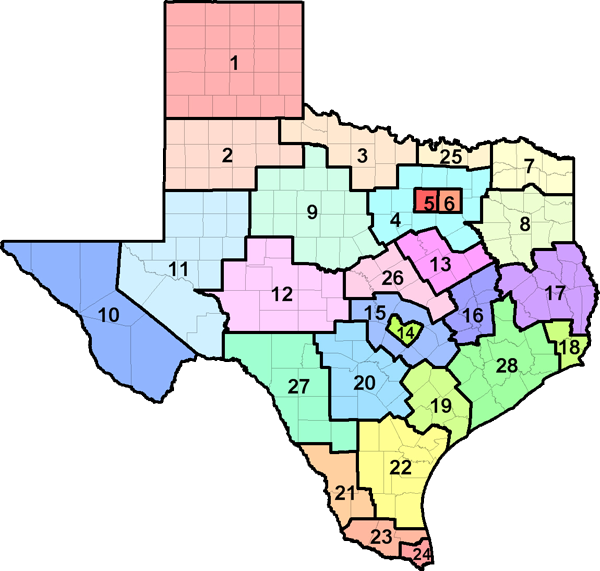
TEXAS COUNTY MAP BY WORKFORCE DEVELOPMENT AREA
* Due to confidentiality rules, not all regions may have the data displayed. The sum of all the regions may not be equal to the state total.


Top 10 Relevant Knowledge Areas Relevant Importance Levels
English Language
Knowledge of the structure and content of the English language including the meaning and spelling of words, rules of composition, and grammar.
54.40%
Production and Processing
Knowledge of raw materials, production processes, quality control, costs, and other techniques for maximizing the effective manufacture and distribution of goods.
50.60%
Mathematics
Knowledge of arithmetic, algebra, geometry, calculus, statistics, and their applications.
45.60%
Education and Training
Knowledge of principles and methods for curriculum and training design, teaching and instruction for individuals and groups, and the measurement of training effects.
44.40%
Customer and Personal Service
Knowledge of principles and processes for providing customer and personal services. This includes customer needs assessment, meeting quality standards for services, and evaluation of customer satisfaction.
43.20%
Public Safety and Security
Knowledge of relevant equipment, policies, procedures, and strategies to promote effective local, state, or national security operations for the protection of people, data, property, and institutions.
42.40%
Mechanical
Knowledge of machines and tools, including their designs, uses, repair, and maintenance.
41.20%
Administration and Management
Knowledge of business and management principles involved in strategic planning, resource allocation, human resources modeling, leadership technique, production methods, and coordination of people and resources.
39.80%
Transportation
Knowledge of principles and methods for moving people or goods by air, rail, sea, or road, including the relative costs and benefits.
34.00%
Computers and Electronics
Knowledge of circuit boards, processors, chips, electronic equipment, and computer hardware and software, including applications and programming.
32.20%


Top 10 Relevant Skill Areas Relevant Importance Levels
Monitoring
Monitoring/Assessing performance of yourself, other individuals, or organizations to make improvements or take corrective action.
62.40%
Critical Thinking
Using logic and reasoning to identify the strengths and weaknesses of alternative solutions, conclusions, or approaches to problems.
55.00%
Active Listening
Giving full attention to what other people are saying, taking time to understand the points being made, asking questions as appropriate, and not interrupting at inappropriate times.
55.00%
Complex Problem Solving
Identifying complex problems and reviewing related information to develop and evaluate options and implement solutions.
55.00%
Operations Monitoring
Watching gauges, dials, or other indicators to make sure a machine is working properly.
55.00%
Quality Control Analysis
Conducting tests and inspections of products, services, or processes to evaluate quality or performance.
55.00%
Judgment and Decision Making
Considering the relative costs and benefits of potential actions to choose the most appropriate one.
55.00%
Time Management
Managing one's own time and the time of others.
55.00%
Reading Comprehension
Understanding written sentences and paragraphs in work-related documents.
52.40%
Operation and Control
Controlling operations of equipment or systems.
52.40%


Top 10 Relevant Abilities Relevant Importance Levels
Arm-Hand Steadiness
The ability to keep your hand and arm steady while moving your arm or while holding your arm and hand in one position.
75.00%
Manual Dexterity
The ability to quickly move your hand, your hand together with your arm, or your two hands to grasp, manipulate, or assemble objects.
72.40%
Control Precision
The ability to quickly and repeatedly adjust the controls of a machine or a vehicle to exact positions.
70.00%
Near Vision
The ability to see details at close range (within a few feet of the observer).
67.60%
Finger Dexterity
The ability to make precisely coordinated movements of the fingers of one or both hands to grasp, manipulate, or assemble very small objects.
65.00%
Rate Control
The ability to time your movements or the movement of a piece of equipment in anticipation of changes in the speed and/or direction of a moving object or scene.
62.40%
Multilimb Coordination
The ability to coordinate two or more limbs (for example, two arms, two legs, or one leg and one arm) while sitting, standing, or lying down. It does not involve performing the activities while the whole body is in motion.
62.40%
Information Ordering
The ability to arrange things or actions in a certain order or pattern according to a specific rule or set of rules (e.g., patterns of numbers, letters, words, pictures, mathematical operations).
62.40%
Problem Sensitivity
The ability to tell when something is wrong or is likely to go wrong. It does not involve solving the problem, only recognizing that there is a problem.
60.00%
Deductive Reasoning
The ability to apply general rules to specific problems to produce answers that make sense.
60.00%


  • Handling and Moving Objects
    -- Using hands and arms in handling, installing, positioning, and moving materials, and manipulating things.
  • Inspecting Equipment, Structures, or Materials
    -- Inspecting equipment, structures, or materials to identify the cause of errors or other problems or defects.
  • Controlling Machines and Processes
    -- Using either control mechanisms or direct physical activity to operate machines or processes (not including computers or vehicles).
  • Identifying Objects, Actions, and Events
    -- Identifying information by categorizing, estimating, recognizing differences or similarities, and detecting changes in circumstances or events.
  • Getting Information
    -- Observing, receiving, and otherwise obtaining information from all relevant sources.
Other Activities


  • Relationships
    - Occupations that satisfy this work value allow employees to provide service to others and work with co-workers in a friendly non-competitive environment. Corresponding needs are Co-workers, Moral Values and Social Service.
  • Support
    - Occupations that satisfy this work value offer supportive management that stands behind employees. Corresponding needs are Company Policies, Supervision: Human Relations and Supervision: Technical.


Tools

Awls: Sewing awls;

Bobbins or bobbin holders: Bobbins; Spindles;

Bodkin: Ball point bodkins;

Buttonhole machines: Buttonhole makers;

Domestic clothing irons: Clothes pressing irons;

Embroidery hoops: Hoop frames;

Hand clamps: Sewing clamps;

Hand sander: Hand sanding blocks;

Needle threader: Drawstring threaders;

Pattern cutting mats or boards: Cutting pads;

Rotary paper or fabric cutter: Portable electric fabric cutters; Rotary fabric cutters;

Rulers: Transparent rulers; Quilting rulers;

Seam ripper: Seam rippers;

Serrated pattern tracing wheel: Serrated pattern tracing wheels;

Sewing machine needles: Sewing machine needles;

Sewing machines: Single needle sewing machines; Sergers; Tackers; Flatbed felling machines; Fur sewing machines; Double needle sewing machines; Multi-needle sewing machines; Programmable sewing machines;

Sewing patterns: Seam rolls; Pattern plates;

Shears: Scissors;

Stitch bonding machines: Stitch bonders;

Straight pins: Straight pins;

Tape measures: Measuring tapes;

Utility knives: Utility knives;


Technology

Electronic mail software: Email software; Microsoft Outlook;

Internet browser software: Web browser software;

Office suite software: Microsoft Office software;

Spreadsheet software: Microsoft Excel;

Word processing software: Microsoft Word;


Related O*NET occupational titles for Sewing Machine Operators include:
  • 51-9031.00 Cutters and Trimmers, Hand
  • 51-9032.00 Cutting and Slicing Machine Setters, Operators, and Tenders
  • 53-7063.00 Machine Feeders and Offbearers
  • 51-9196.00 Paper Goods Machine Setters, Operators, and Tenders
  • 51-6021.00 Pressers, Textile, Garment, and Related Materials
  • 51-6051.00 Sewers, Hand
  • 51-6041.00 Shoe and Leather Workers and Repairers
  • 51-6042.00 Shoe Machine Operators and Tenders
  • 51-6062.00 Textile Cutting Machine Setters, Operators, and Tenders
  • 51-6063.00 Textile Knitting and Weaving Machine Setters, Operators, and Tenders


No sources of additional information found.

Contact Texas Workforce Commission
Labor Market and Career Information  |  101 E. 15th Street, Annex Room 0252  |  Austin, Texas 78778
Official Website  |  1-800-822-PLAN (7526)  |  512.936.3200

** The information in this report may be derived from many sources like O*NET, BLS (Bureau of Labor Statistics), OOH (Occupational Outlook Handbook), and Career One Stop.