Occupation Summary

Medical Appliance Technicians

O*NET 51-9082.00

Description:

Construct, maintain, or repair medical supportive devices such as braces, orthotics and prosthetic devices, joints, arch supports, and other surgical and medical appliances.

Annual Wages:
$50,852.00
Employment Rate:
Employment is expected to increase by 8.53%.
Education Level:
Associate's Degree (or other 2-year degree). According to O*Net, the majority of people employed in this occupation have this level of education.
Endorsement:
Business and Industry

  1. Fit appliances onto patients, and make any necessary adjustments.
  2. Make orthotic or prosthetic devices, using materials such as thermoplastic and thermosetting materials, metal alloys and leather, and hand or power tools.
  3. Read prescriptions or specifications to determine the type of product or device to be fabricated and the materials and tools required.
  4. Repair, modify, or maintain medical supportive devices, such as artificial limbs, braces, or surgical supports, according to specifications.
  5. Instruct patients in use of prosthetic or orthotic devices.
  6. Take patients' body or limb measurements for use in device construction.
  7. Construct or receive casts or impressions of patients' torsos or limbs for use as cutting and fabrication patterns.
  8. Bend, form, and shape fabric or material to conform to prescribed contours of structural components.
  9. Drill and tap holes for rivets, and glue, weld, bolt, or rivet parts together to form prosthetic or orthotic devices.
  10. Lay out and mark dimensions of parts, using templates and precision measuring instruments.
  11. Test medical supportive devices for proper alignment, movement, or biomechanical stability, using meters and alignment fixtures.
  12. Cover or pad metal or plastic structures or devices, using coverings such as rubber, leather, felt, plastic, or fiberglass.
  13. Polish artificial limbs, braces, or supports, using grinding and buffing wheels.
  14. Service or repair machinery used in the fabrication of appliances.
  15. Mix pigments to match patients' skin coloring, according to formulas, and apply mixtures to orthotic or prosthetic devices.


National Industry Employment Patterns


Industry % of Medical Appliance Technicians employed Annual Growth Rate
Medical equipment and supplies manufacturing 53 0.23
Professional and commercial equipment and supplies merchant wholesalers 10.2 0.00
Health and personal care retailers 6.8 0.87
General medical and surgical hospitals 3.9 0.00
Offices of physicians 2.9 0.00


Labor Market Information


2024 Statewide average hourly wage $24.45
2024 National average hourly wage $24.72
2022 National employment 16,600
2022 Texas employment 996
Texas projected employment by 2032 1,081
Texas projected annual employment and Turnover openings through 2032 128


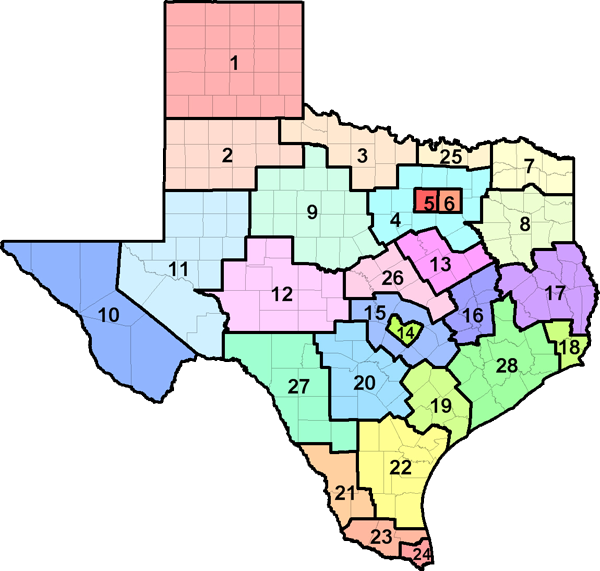
TEXAS COUNTY MAP BY WORKFORCE DEVELOPMENT AREA
* Due to confidentiality rules, not all regions may have the data displayed. The sum of all the regions may not be equal to the state total.


Top 10 Relevant Knowledge Areas Relevant Importance Levels
Production and Processing
Knowledge of raw materials, production processes, quality control, costs, and other techniques for maximizing the effective manufacture and distribution of goods.
77.80%
Customer and Personal Service
Knowledge of principles and processes for providing customer and personal services. This includes customer needs assessment, meeting quality standards for services, and evaluation of customer satisfaction.
73.60%
English Language
Knowledge of the structure and content of the English language including the meaning and spelling of words, rules of composition, and grammar.
69.40%
Mechanical
Knowledge of machines and tools, including their designs, uses, repair, and maintenance.
68.60%
Design
Knowledge of design techniques, tools, and principles involved in production of precision technical plans, blueprints, drawings, and models.
65.60%
Education and Training
Knowledge of principles and methods for curriculum and training design, teaching and instruction for individuals and groups, and the measurement of training effects.
61.40%
Mathematics
Knowledge of arithmetic, algebra, geometry, calculus, statistics, and their applications.
60.00%
Administration and Management
Knowledge of business and management principles involved in strategic planning, resource allocation, human resources modeling, leadership technique, production methods, and coordination of people and resources.
59.00%
Administrative
Knowledge of administrative and office procedures and systems such as word processing, managing files and records, stenography and transcription, designing forms, and workplace terminology.
57.80%
Engineering and Technology
Knowledge of the practical application of engineering science and technology. This includes applying principles, techniques, procedures, and equipment to the design and production of various goods and services.
57.80%


Top 10 Relevant Skill Areas Relevant Importance Levels
Active Listening
Giving full attention to what other people are saying, taking time to understand the points being made, asking questions as appropriate, and not interrupting at inappropriate times.
77.60%
Critical Thinking
Using logic and reasoning to identify the strengths and weaknesses of alternative solutions, conclusions, or approaches to problems.
75.00%
Quality Control Analysis
Conducting tests and inspections of products, services, or processes to evaluate quality or performance.
75.00%
Troubleshooting
Determining causes of operating errors and deciding what to do about it.
72.40%
Reading Comprehension
Understanding written sentences and paragraphs in work-related documents.
72.40%
Speaking
Talking to others to convey information effectively.
72.40%
Social Perceptiveness
Being aware of others' reactions and understanding why they react as they do.
70.00%
Operations Monitoring
Watching gauges, dials, or other indicators to make sure a machine is working properly.
70.00%
Complex Problem Solving
Identifying complex problems and reviewing related information to develop and evaluate options and implement solutions.
67.60%
Monitoring
Monitoring/Assessing performance of yourself, other individuals, or organizations to make improvements or take corrective action.
65.00%


Top 10 Relevant Abilities Relevant Importance Levels
Oral Comprehension
The ability to listen to and understand information and ideas presented through spoken words and sentences.
77.60%
Problem Sensitivity
The ability to tell when something is wrong or is likely to go wrong. It does not involve solving the problem, only recognizing that there is a problem.
77.60%
Near Vision
The ability to see details at close range (within a few feet of the observer).
77.60%
Deductive Reasoning
The ability to apply general rules to specific problems to produce answers that make sense.
75.00%
Visualization
The ability to imagine how something will look after it is moved around or when its parts are moved or rearranged.
75.00%
Oral Expression
The ability to communicate information and ideas in speaking so others will understand.
75.00%
Arm-Hand Steadiness
The ability to keep your hand and arm steady while moving your arm or while holding your arm and hand in one position.
75.00%
Finger Dexterity
The ability to make precisely coordinated movements of the fingers of one or both hands to grasp, manipulate, or assemble very small objects.
72.40%
Information Ordering
The ability to arrange things or actions in a certain order or pattern according to a specific rule or set of rules (e.g., patterns of numbers, letters, words, pictures, mathematical operations).
72.40%
Inductive Reasoning
The ability to combine pieces of information to form general rules or conclusions (includes finding a relationship among seemingly unrelated events).
70.00%


  • Getting Information
    -- Observing, receiving, and otherwise obtaining information from all relevant sources.
  • Inspecting Equipment, Structures, or Materials
    -- Inspecting equipment, structures, or materials to identify the cause of errors or other problems or defects.
  • Making Decisions and Solving Problems
    -- Analyzing information and evaluating results to choose the best solution and solve problems.
  • Communicating with Supervisors, Peers, or Subordinates
    -- Providing information to supervisors, co-workers, and subordinates by telephone, in written form, e-mail, or in person.
  • Organizing, Planning, and Prioritizing Work
    -- Developing specific goals and plans to prioritize, organize, and accomplish your work.
Other Activities


  • Relationships
    - Occupations that satisfy this work value allow employees to provide service to others and work with co-workers in a friendly non-competitive environment. Corresponding needs are Co-workers, Moral Values and Social Service.
  • Support
    - Occupations that satisfy this work value offer supportive management that stands behind employees. Corresponding needs are Company Policies, Supervision: Human Relations and Supervision: Technical.


Tools

Acoustic ear muffs or defenders: Protective ear muffs;

Alignment jig: Alignment stands;

Anvils: Anvils;

Belt sander: Belt sanders;

Bench vises: Prosthetic bench vises; Workshop bench vises;

Blow torch: Acetylene torches;

Calipers: Dial calipers;

Cast cutters or saws: Cast cutting saws;

Cheesegrater file: Wood files;

Claw hammer: Claw hammers;

Cutting machines: Cutting wheels;

Deburring tool: Deburring tools;

Digital camcorders or video cameras: Digital camcorders;

Drilling machines: Drill presses;

Dust collectors: High volume dust collectors;

End cut pliers: End cutting nippers;

Glue guns: Glue guns;

Half round file: Half-round files;

Heat guns: Heat guns;

Hex keys: Allen wrenches; Hex wrenches;

Horizontal turning center: Computerized lathes;

Hydraulic press brake: Bending brakes;

Laboratory box furnaces: High temperature laboratory box furnaces;

Laboratory mechanical convection ovens: High temperature laboratory ovens; Laboratory infrared ovens; Laboratory mechanical benchtop convection ovens; Laboratory mechanical convection ovens;

Manual press brake: Arbor presses;

Notebook computers: Laptop computers;

Personal computers: Personal computers;

Pipe bending mandrel: Pipe bending mandrels;

Pipe vises: Pipe vises;

Pneumatic hammer: Pneumatic riveting hammers;

Pneumatic sanding machines: Bead blasters;

Pneumatic vacuum equipment: Vacuum stations;

Power buffers: Buffing wheels;

Power drills: Cordless drills; Power drills;

Power grinders: Metal grinders; Grinding wheels; Grinding equipment;

Power planes: Power planers;

Power riveter: Rivet guns;

Power routers: Power routing tools; Vertical routers;

Power sanders: Disk sanders; Drum sanders;

Power saws: Band saws; Table saws; Rotary saws; Metal-cutting bandsaws; Pneumatic oscillating saws;

Pressure indicators: Force platforms;

Punches or nail sets or drifts: Bench punches;

Rasps: Grinding rasps;

Respiratory therapy compressors: Air compressors;

Rubber mallet: Rubber mallets;

Safety glasses: Safety glasses;

Scanners: 3D scanning systems; Digitizers;

Sewing machines: Flatbed sewing machines; Longarm sewing machines;

Spot welding machine: Welders;

Swaging tools: Swaging tools;

Tape measures: Measuring tapes;

Torque wrenches: Torque wrenches;

Tracer or duplicating or contouring lathe: Bench lathes;

Traveling column milling machine: Computer numerical controlled CNC milling machines;

Utility knives: Hot knives;

Vacuum molding machines: Vacuum formers;


Technology

Computer aided design CAD software: Autodesk AutoCAD; Ohio Willow Wood OMEGA Tracer System; Seattle Systems Shapemaker; SoftSource CADview; Vorum Research Corporation CANFIT-PLUS;

Computer aided manufacturing CAM software: Orthotic fabrication software;

Electronic mail software: Microsoft Outlook;

Medical software: Footmaxx Metascan software; Gait analysis software;

Office suite software: Microsoft Office software;

Spreadsheet software: Microsoft Excel;

Word processing software: Microsoft Word;


Related O*NET occupational titles for Medical Appliance Technicians include:
  • 17-3028.00 Calibration Technologists and Technicians
  • 51-9081.00 Dental Laboratory Technicians
  • 51-2022.00 Electrical and Electronic Equipment Assemblers
  • 31-9093.00 Medical Equipment Preparers
  • 49-9062.00 Medical Equipment Repairers
  • 51-9195.00 Molders, Shapers, and Casters, Except Metal and Plastic
  • 51-9083.00 Ophthalmic Laboratory Technicians
  • 51-2041.00 Structural Metal Fabricators and Fitters
  • 29-2055.00 Surgical Technologists
  • 51-4122.00 Welding, Soldering, and Brazing Machine Setters, Operators, and Tenders


Sources of Additional Information
  • For information about requirements for certification of dental laboratory technicians, visit: National Board for Certification in Dental Laboratory Technology
  • For information about career opportunities in commercial dental laboratories, visit: National Association of Dental Laboratories
  • For a list of accredited programs for ophthalmic laboratory technicians, visit: International Council of Accreditation
  • For a list of accredited programs for medical appliance technicians, visit: American Academy of Orthotists & Prosthetists
  • National Commission on Orthotic and Prosthetic Education
  • For information on requirements for certification of medical appliance technicians, visit: American Board for Certification in Orthotics, Prosthetics & Pedorthics
  • American Board of Opticianry and National Contact Lens Examiners
  • CareerOneStop

  • For career videos on dental laboratory and medical appliance technicians, visit: Dental Laboratory Technicians
  • Medical Appliance Technicians
  • Dental Laboratory Technicians
  • Medical Appliance Technicians
  • Ophthalmic Laboratory Technicians

  • Contact Texas Workforce Commission
    Labor Market and Career Information  |  101 E. 15th Street, Annex Room 0252  |  Austin, Texas 78778
    Official Website  |  1-800-822-PLAN (7526)  |  512.936.3200

    ** The information in this report may be derived from many sources like O*NET, BLS (Bureau of Labor Statistics), OOH (Occupational Outlook Handbook), and Career One Stop.