Occupation Summary

First-Line Supervisors of Material-Moving Machine and Vehicle Operators

O*NET 53-1043.00

Description:

Directly supervise and coordinate activities of material-moving machine and vehicle operators and helpers.

Annual Wages:
Unavailable
Employment Rate:
Employment is expected to increase by %.
Education Level:
High School Diploma - or the equivalent (for example, GED). According to O*Net, the majority of people employed in this occupation have this level of education.

  1. Enforce safety rules and regulations.
  2. Plan work assignments and equipment allocations to meet transportation, operations or production goals.
  3. Confer with customers, supervisors, contractors, or other personnel to exchange information or to resolve problems.
  4. Resolve worker problems or collaborate with employees to assist in problem resolution.
  5. Review orders, production schedules, blueprints, or shipping or receiving notices to determine work sequences and material shipping dates, types, volumes, or destinations.
  6. Recommend and implement measures to improve worker motivation, equipment performance, work methods, or customer services.
  7. Maintain or verify records of time, materials, expenditures, or crew activities.
  8. Interpret transportation or tariff regulations, shipping orders, safety regulations, or company policies and procedures for workers.
  9. Explain and demonstrate work tasks to new workers or assign training tasks to experienced workers.
  10. Prepare, compile, and submit reports on work activities, operations, production, or work-related accidents.
  11. Recommend or implement personnel actions, such as employee selection, evaluation, rewards, or disciplinary actions.
  12. Requisition needed personnel, supplies, equipment, parts, or repair services.
  13. Inspect or test materials, stock, vehicles, equipment, or facilities to ensure that they are safe, free of defects, and consistent with specifications.
  14. Compute or estimate cash, payroll, transportation, personnel, or storage requirements.
  15. Dispatch personnel and vehicles in response to telephone or radio reports of emergencies.
  16. Perform or schedule repairs or preventive maintenance of vehicles or other equipment.
  17. Examine, measure, or weigh cargo or materials to determine specific handling requirements.
  18. Drive vehicles or operate machines or equipment to complete work assignments or to assist workers.
  19. Monitor field work to ensure proper performance and use of materials.
  20. Assist workers in tasks, such as loading vehicles.
  21. Direct workers in transportation or related services, such as pumping, moving, storing, or loading or unloading of materials.
  22. Plan and establish schedules.


No Industry Employment Patterns found.

Labor Market Information


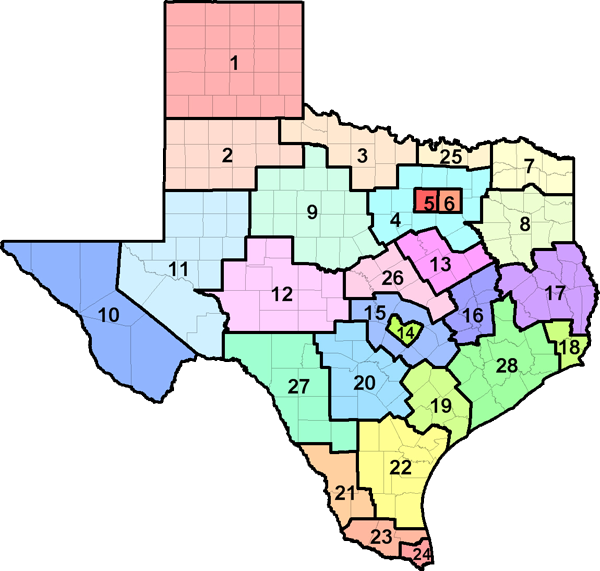
TEXAS COUNTY MAP BY WORKFORCE DEVELOPMENT AREA
Region Employment Projected Employment 2032 Projected
Annual Openings 2032
Annual
Growth Rate
Average Income
Texas (all regions) Unavailable Unavailable Unavailable Unavailable Unavailable
* Due to confidentiality rules, not all regions may have the data displayed. The sum of all the regions may not be equal to the state total.


Top 10 Relevant Knowledge Areas Relevant Importance Levels
Administration and Management
Knowledge of business and management principles involved in strategic planning, resource allocation, human resources modeling, leadership technique, production methods, and coordination of people and resources.
85.60%
Customer and Personal Service
Knowledge of principles and processes for providing customer and personal services. This includes customer needs assessment, meeting quality standards for services, and evaluation of customer satisfaction.
83.20%
Mathematics
Knowledge of arithmetic, algebra, geometry, calculus, statistics, and their applications.
82.40%
Production and Processing
Knowledge of raw materials, production processes, quality control, costs, and other techniques for maximizing the effective manufacture and distribution of goods.
81.00%
English Language
Knowledge of the structure and content of the English language including the meaning and spelling of words, rules of composition, and grammar.
81.00%
Personnel and Human Resources
Knowledge of principles and procedures for personnel recruitment, selection, training, compensation and benefits, labor relations and negotiation, and personnel information systems.
78.60%
Public Safety and Security
Knowledge of relevant equipment, policies, procedures, and strategies to promote effective local, state, or national security operations for the protection of people, data, property, and institutions.
78.00%
Computers and Electronics
Knowledge of circuit boards, processors, chips, electronic equipment, and computer hardware and software, including applications and programming.
76.80%
Transportation
Knowledge of principles and methods for moving people or goods by air, rail, sea, or road, including the relative costs and benefits.
75.20%
Administrative
Knowledge of administrative and office procedures and systems such as word processing, managing files and records, stenography and transcription, designing forms, and workplace terminology.
74.40%


Top 10 Relevant Skill Areas Relevant Importance Levels
Active Listening
Giving full attention to what other people are saying, taking time to understand the points being made, asking questions as appropriate, and not interrupting at inappropriate times.
80.00%
Coordination
Adjusting actions in relation to others' actions.
80.00%
Time Management
Managing one's own time and the time of others.
80.00%
Management of Personnel Resources
Motivating, developing, and directing people as they work, identifying the best people for the job.
80.00%
Speaking
Talking to others to convey information effectively.
77.60%
Critical Thinking
Using logic and reasoning to identify the strengths and weaknesses of alternative solutions, conclusions, or approaches to problems.
72.40%
Reading Comprehension
Understanding written sentences and paragraphs in work-related documents.
72.40%
Social Perceptiveness
Being aware of others' reactions and understanding why they react as they do.
72.40%
Judgment and Decision Making
Considering the relative costs and benefits of potential actions to choose the most appropriate one.
72.40%
Monitoring
Monitoring/Assessing performance of yourself, other individuals, or organizations to make improvements or take corrective action.
70.00%


Top 10 Relevant Abilities Relevant Importance Levels
Oral Expression
The ability to communicate information and ideas in speaking so others will understand.
80.00%
Oral Comprehension
The ability to listen to and understand information and ideas presented through spoken words and sentences.
80.00%
Written Comprehension
The ability to read and understand information and ideas presented in writing.
75.00%
Problem Sensitivity
The ability to tell when something is wrong or is likely to go wrong. It does not involve solving the problem, only recognizing that there is a problem.
75.00%
Deductive Reasoning
The ability to apply general rules to specific problems to produce answers that make sense.
72.40%
Inductive Reasoning
The ability to combine pieces of information to form general rules or conclusions (includes finding a relationship among seemingly unrelated events).
70.00%
Written Expression
The ability to communicate information and ideas in writing so others will understand.
70.00%
Near Vision
The ability to see details at close range (within a few feet of the observer).
70.00%
Speech Recognition
The ability to identify and understand the speech of another person.
67.60%
Speech Clarity
The ability to speak clearly so others can understand you.
67.60%


  • Getting Information
    -- Observing, receiving, and otherwise obtaining information from all relevant sources.
  • Communicating with Supervisors, Peers, or Subordinates
    -- Providing information to supervisors, co-workers, and subordinates by telephone, in written form, e-mail, or in person.
  • Developing and Building Teams
    -- Encouraging and building mutual trust, respect, and cooperation among team members.
  • Coordinating the Work and Activities of Others
    -- Getting members of a group to work together to accomplish tasks.
  • Guiding, Directing, and Motivating Subordinates
    -- Providing guidance and direction to subordinates, including setting performance standards and monitoring performance.
Other Activities


  • Independence
    - Occupations that satisfy this work value allow employees to work on their own and make decisions. Corresponding needs are Creativity, Responsibility and Autonomy.
  • Support
    - Occupations that satisfy this work value offer supportive management that stands behind employees. Corresponding needs are Company Policies, Supervision: Human Relations and Supervision: Technical.


Tools

Adjustable widemouth pliers: Adjustable widemouth pliers;

Conveyor roller: Roller beds;

Desktop computers: Desktop computers;

Flatbed trailers: Lowboys;

Forklifts: Forklifts;

Grease guns: Grease guns;

Hand trucks or accessories: Hand trucks;

Impact wrenches: Impact wrenches;

Jacks: Hydraulic jacks;

Micrometers: Micrometers;

Pallet trucks: Pallet jacks;

Personal computers: Personal computers;

Personal digital assistant PDAs or organizers: Personal digital assistants PDA;

Ratchets: Ratchet wrenches;

Screwdrivers: Straight screwdrivers; Phillips head screwdrivers;

Spot welding machine: Portable welding equipment;

Temperature controlled container trailers: Refrigerated trailers;

Torque wrenches: Torque wrenches;

Two way radios: Two way radios;

Wheel nut or lug wrench: Lug wrenches;


Technology

Accounting software: General ledger software;

Bar coding software: Barcode software;

Calendar and scheduling software: Scheduling software;

Data base user interface and query software: Microsoft Access;

Electronic mail software: Microsoft Outlook;

Enterprise resource planning ERP software: SAP software; Enterprise resource planning ERP software;

Internet browser software: Web browser software;

Map creation software: Mapping software;

Materials requirements planning logistics and supply chain software: Actsoft Comet Tracker; Fleet management systems; JDA Manugistics; Load optimization software; MagicLogic Optimization Cube-IQ; Bill of lading software; CAPE Systems CAPE PACK; CAPE Systems TRUCKFILL; @Road GeoManager; Coptimal Logics AutoLoad Pro; Creative Systems Corporation Freight-Link System; XATA XATANET; Softtruck CargoWiz; Starre Enterprises Star Bill of Lading; Strategic Business Systems Proof of Delivery; TOPS Engineering MaxLoad Pro; UPS Logistics Technologies Roadnet Transportation Suite; Warehouse management system WMS; Optimum Logistics LoadPlanner; Proof of delivery POD software;

Mobile location based services software: Accellos Real Dispatch; Commercial vehicle operations CVO software;

Office suite software: Microsoft Office software;

Presentation software: Microsoft PowerPoint;

Spreadsheet software: Microsoft Excel;

Word processing software: Microsoft Word;


Related O*NET occupational titles for First-Line Supervisors of Material-Moving Machine and Vehicle Operators include:
  • 47-1011.00 First-Line Supervisors of Construction Trades and Extraction Workers
  • 45-1011.00 First-Line Supervisors of Farming, Fishing, and Forestry Workers
  • 53-1042.00 First-Line Supervisors of Helpers, Laborers, and Material Movers, Hand
  • 37-1011.00 First-Line Supervisors of Housekeeping and Janitorial Workers
  • 49-1011.00 First-Line Supervisors of Mechanics, Installers, and Repairers
  • 41-1012.00 First-Line Supervisors of Non-Retail Sales Workers
  • 43-1011.00 First-Line Supervisors of Office and Administrative Support Workers
  • 53-1044.00 First-Line Supervisors of Passenger Attendants
  • 51-1011.00 First-Line Supervisors of Production and Operating Workers
  • 33-1091.00 First-Line Supervisors of Security Workers


No sources of additional information found.

Contact Texas Workforce Commission
Labor Market and Career Information  |  101 E. 15th Street, Annex Room 0252  |  Austin, Texas 78778
Official Website  |  1-800-822-PLAN (7526)  |  512.936.3200

** The information in this report may be derived from many sources like O*NET, BLS (Bureau of Labor Statistics), OOH (Occupational Outlook Handbook), and Career One Stop.