Occupation Summary

Airfield Operations Specialists

O*NET 53-2022.00

Description:

Ensure the safe takeoff and landing of commercial and military aircraft. Duties include coordination between air-traffic control and maintenance personnel, dispatching, using airfield landing and navigational aids, implementing airfield safety procedures, monitoring and maintaining flight records, and applying knowledge of weather information.

Annual Wages:
$83,888.00
Employment Rate:
Employment is expected to increase by 18.33%.
Education Level:
Bachelor's Degree. According to O*Net, the majority of people employed in this occupation have this level of education.
Endorsement:
Business and Industry

  1. Implement airfield safety procedures to ensure a safe operating environment for personnel and aircraft operation.
  2. Plan and coordinate airfield construction.
  3. Coordinate with agencies, such as air traffic control, civil engineers, or command posts, to ensure support of airfield management activities.
  4. Monitor the arrival, parking, refueling, loading, and departure of all aircraft.
  5. Maintain air-to-ground and point-to-point radio contact with aircraft commanders.
  6. Train operations staff.
  7. Relay departure, arrival, delay, aircraft and airfield status, and other pertinent information to upline controlling agencies.
  8. Procure, produce, and provide information on the safe operation of aircraft, such as flight planning publications, operations publications, charts and maps, or weather information.
  9. Coordinate communications between air traffic control and maintenance personnel.
  10. Perform and supervise airfield management activities, including mobile airfield management functions.
  11. Receive, transmit, and control message traffic.
  12. Receive and post weather information and flight plan data, such as air routes or arrival and departure times.
  13. Maintain flight and event logs, air crew flying records, and flight operations records of incoming and outgoing flights.
  14. Coordinate with agencies to meet aircrew requirements for billeting, messing, refueling, ground transportation, and transient aircraft maintenance.
  15. Collaborate with others to plan flight schedules and air crew assignments.
  16. Coordinate changes to flight itineraries with appropriate Air Traffic Control (ATC) agencies.
  17. Anticipate aircraft equipment needs for air evacuation and cargo flights.
  18. Provide aircrews with information and services needed for airfield management and flight planning.
  19. Conduct departure and arrival briefings.
  20. Use airfield landing and navigational aids and digital data terminal communications equipment to perform duties.
  21. Post visual display boards and status boards.
  22. Check military flight plans with civilian agencies.
  23. Assist in responding to aircraft and medical emergencies.
  24. Manage wildlife on and around airport grounds.
  25. Inspect airfield conditions to ensure compliance with federal regulatory requirements.
  26. Conduct inspections of the airport property and perimeter to maintain controlled access to airfields.
  27. Initiate or conduct airport-wide coordination of snow removal on runways and taxiways.


National Industry Employment Patterns


Industry % of Airfield Operations Specialists employed Annual Growth Rate
Support activities for air transportation 29.5 0.66
Scheduled air transportation 24.6 0.27
Couriers and express delivery services 5.1 1.18
Nonscheduled air transportation 5 0.00


Labor Market Information


2024 Statewide average hourly wage $40.33
2024 National average hourly wage $32.27
2022 National employment 15,000
2022 Texas employment 1,151
Texas projected employment by 2032 1,362
Texas projected annual employment and Turnover openings through 2032 129


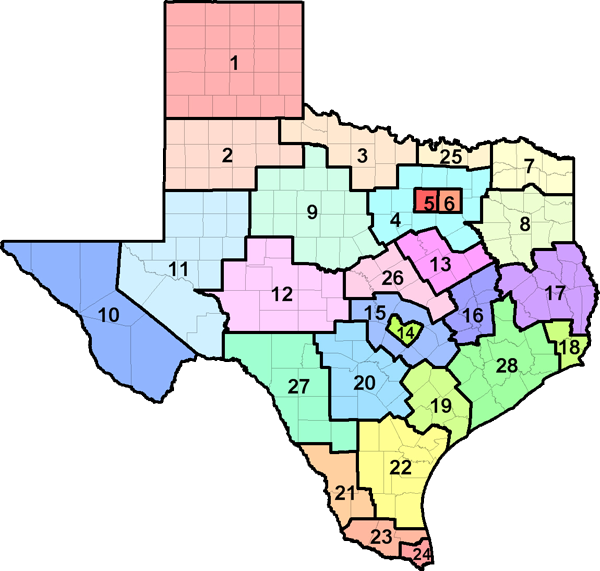
TEXAS COUNTY MAP BY WORKFORCE DEVELOPMENT AREA
* Due to confidentiality rules, not all regions may have the data displayed. The sum of all the regions may not be equal to the state total.


Top 10 Relevant Knowledge Areas Relevant Importance Levels
Public Safety and Security
Knowledge of relevant equipment, policies, procedures, and strategies to promote effective local, state, or national security operations for the protection of people, data, property, and institutions.
89.00%
Transportation
Knowledge of principles and methods for moving people or goods by air, rail, sea, or road, including the relative costs and benefits.
85.00%
English Language
Knowledge of the structure and content of the English language including the meaning and spelling of words, rules of composition, and grammar.
83.60%
Customer and Personal Service
Knowledge of principles and processes for providing customer and personal services. This includes customer needs assessment, meeting quality standards for services, and evaluation of customer satisfaction.
80.60%
Education and Training
Knowledge of principles and methods for curriculum and training design, teaching and instruction for individuals and groups, and the measurement of training effects.
74.80%
Telecommunications
Knowledge of transmission, broadcasting, switching, control, and operation of telecommunications systems.
73.00%
Administration and Management
Knowledge of business and management principles involved in strategic planning, resource allocation, human resources modeling, leadership technique, production methods, and coordination of people and resources.
71.80%
Law and Government
Knowledge of laws, legal codes, court procedures, precedents, government regulations, executive orders, agency rules, and the democratic political process.
67.40%
Administrative
Knowledge of administrative and office procedures and systems such as word processing, managing files and records, stenography and transcription, designing forms, and workplace terminology.
67.20%
Computers and Electronics
Knowledge of circuit boards, processors, chips, electronic equipment, and computer hardware and software, including applications and programming.
65.80%


Top 10 Relevant Skill Areas Relevant Importance Levels
Active Listening
Giving full attention to what other people are saying, taking time to understand the points being made, asking questions as appropriate, and not interrupting at inappropriate times.
80.00%
Monitoring
Monitoring/Assessing performance of yourself, other individuals, or organizations to make improvements or take corrective action.
80.00%
Critical Thinking
Using logic and reasoning to identify the strengths and weaknesses of alternative solutions, conclusions, or approaches to problems.
75.00%
Speaking
Talking to others to convey information effectively.
75.00%
Coordination
Adjusting actions in relation to others' actions.
75.00%
Reading Comprehension
Understanding written sentences and paragraphs in work-related documents.
75.00%
Complex Problem Solving
Identifying complex problems and reviewing related information to develop and evaluate options and implement solutions.
67.60%
Writing
Communicating effectively in writing as appropriate for the needs of the audience.
67.60%
Active Learning
Understanding the implications of new information for both current and future problem-solving and decision-making.
65.00%
Instructing
Teaching others how to do something.
65.00%


Top 10 Relevant Abilities Relevant Importance Levels
Problem Sensitivity
The ability to tell when something is wrong or is likely to go wrong. It does not involve solving the problem, only recognizing that there is a problem.
82.40%
Deductive Reasoning
The ability to apply general rules to specific problems to produce answers that make sense.
82.40%
Oral Comprehension
The ability to listen to and understand information and ideas presented through spoken words and sentences.
80.00%
Written Comprehension
The ability to read and understand information and ideas presented in writing.
80.00%
Oral Expression
The ability to communicate information and ideas in speaking so others will understand.
80.00%
Inductive Reasoning
The ability to combine pieces of information to form general rules or conclusions (includes finding a relationship among seemingly unrelated events).
75.00%
Speech Clarity
The ability to speak clearly so others can understand you.
75.00%
Near Vision
The ability to see details at close range (within a few feet of the observer).
72.40%
Far Vision
The ability to see details at a distance.
72.40%
Information Ordering
The ability to arrange things or actions in a certain order or pattern according to a specific rule or set of rules (e.g., patterns of numbers, letters, words, pictures, mathematical operations).
72.40%


  • Inspecting Equipment, Structures, or Materials
    -- Inspecting equipment, structures, or materials to identify the cause of errors or other problems or defects.
  • Operating Vehicles, Mechanized Devices, or Equipment
    -- Running, maneuvering, navigating, or driving vehicles or mechanized equipment, such as forklifts, passenger vehicles, aircraft, or watercraft.
  • Evaluating Information to Determine Compliance with Standards
    -- Using relevant information and individual judgment to determine whether events or processes comply with laws, regulations, or standards.
  • Identifying Objects, Actions, and Events
    -- Identifying information by categorizing, estimating, recognizing differences or similarities, and detecting changes in circumstances or events.
  • Communicating with Supervisors, Peers, or Subordinates
    -- Providing information to supervisors, co-workers, and subordinates by telephone, in written form, e-mail, or in person.
Other Activities


  • Independence
    - Occupations that satisfy this work value allow employees to work on their own and make decisions. Corresponding needs are Creativity, Responsibility and Autonomy.
  • Support
    - Occupations that satisfy this work value offer supportive management that stands behind employees. Corresponding needs are Company Policies, Supervision: Human Relations and Supervision: Technical.


Tools

Alarm systems: Security alarm systems;

All terrain vehicles tracked or wheeled: All terrain vehicles ATVs;

Animal control traps: Animal traps;

Area lighting: Airfield lighting equipment;

Articulating boom lift: Bucket lifts;

Desktop computers: Desktop computers;

Dump trucks: Dump trucks;

Fire extinguishers: Multipurpose fire extinguishers;

Flares: Pyrotechnic pistols;

Forklifts: Wheeled forklifts;

Joint cleaning or refacing machines: Crack sealing equipment;

Lawnmowers: Lawn mowing tractors;

Light trucks or sport utility vehicles: Utility trucks;

Liquid crystal display LCD panels or monitors: Visual display boards;

Multi function printers: Identification card printers;

Power sanders: Paint stripping equipment;

Rescue truck: Emergency response vehicles; Fire vehicles;

Road sweeper: Sweeper vehicles;

Safety glasses: Protective glasses;

Security or access control systems: Airfield access control systems;

Snow blowers: Snow removal equipment;

Sporting shotguns: Shotguns;

Sporting traps: Snares;

Two way radios: Mobile radios;


Technology

Accounting software: Intuit QuickBooks;

Application server software: Apache HTTP Server;

Calendar and scheduling software: Operations scheduling software;

Cloud-based data access and sharing software: Microsoft SharePoint;

Data base user interface and query software: Microsoft Access; Aircraft noise monitoring system software; FileMaker Pro; Ground transportation management system; Oracle Database; Parking access revenue control system; TRMI Airport AVI;

Electronic mail software: Microsoft Outlook;

Enterprise application integration software: Extensible markup language XML;

Enterprise resource planning ERP software: SAP software;

Expert system software: Decision Support Technologies Propworks;

Graphics or photo imaging software: Adobe Photoshop;

Internet protocol IP multimedia subsystem software: Internet Protocol Television Systems;

Office suite software: Microsoft Office software;

Operating system software: Microsoft operating system; Microsoft Windows; Linux;

Presentation software: Microsoft PowerPoint;

Spreadsheet software: Microsoft Excel;

Word processing software: Microsoft Word; Word processing software;


Related O*NET occupational titles for Airfield Operations Specialists include:
  • 53-2021.00 Air Traffic Controllers
  • 53-1041.00 Aircraft Cargo Handling Supervisors
  • 53-2011.00 Airline Pilots, Copilots, and Flight Engineers
  • 53-6051.01 Aviation Inspectors
  • 53-2012.00 Commercial Pilots
  • 53-1043.00 First-Line Supervisors of Material-Moving Machine and Vehicle Operators
  • 53-1044.00 First-Line Supervisors of Passenger Attendants
  • 53-2031.00 Flight Attendants
  • 53-4031.00 Railroad Conductors and Yardmasters
  • 11-3071.00 Transportation, Storage, and Distribution Managers


No sources of additional information found.

Contact Texas Workforce Commission
Labor Market and Career Information  |  101 E. 15th Street, Annex Room 0252  |  Austin, Texas 78778
Official Website  |  1-800-822-PLAN (7526)  |  512.936.3200

** The information in this report may be derived from many sources like O*NET, BLS (Bureau of Labor Statistics), OOH (Occupational Outlook Handbook), and Career One Stop.