Occupation Summary

Locomotive Engineers

O*NET 53-4011.00

Description:

Drive electric, diesel-electric, steam, or gas-turbine-electric locomotives to transport passengers or freight. Interpret train orders, electronic or manual signals, and railroad rules and regulations.

Annual Wages:
$74,355.00
Employment Rate:
Employment is expected to increase by 9.90%.
Education Level:
High School Diploma - or the equivalent (for example, GED). According to O*Net, the majority of people employed in this occupation have this level of education.
Endorsement:
Business and Industry

  1. Monitor gauges or meters that measure speed, amperage, battery charge, or air pressure in brake lines or in main reservoirs.
  2. Observe tracks to detect obstructions.
  3. Interpret train orders, signals, or railroad rules and regulations that govern the operation of locomotives.
  4. Receive starting signals from conductors and use controls such as throttles or air brakes to drive electric, diesel-electric, steam, or gas turbine-electric locomotives.
  5. Confer with conductors or traffic control center personnel via radiophones to issue or receive information concerning stops, delays, or oncoming trains.
  6. Operate locomotives to transport freight or passengers between stations or to assemble or disassemble trains within rail yards.
  7. Respond to emergency conditions or breakdowns, following applicable safety procedures and rules.
  8. Check to ensure that brake examination tests are conducted at shunting stations.
  9. Call out train signals to assistants to verify meanings.
  10. Inspect locomotives to verify adequate fuel, sand, water, or other supplies before each run or to check for mechanical problems.
  11. Prepare reports regarding any problems encountered, such as accidents, signaling problems, unscheduled stops, or delays.
  12. Check to ensure that documentation, such as procedure manuals or logbooks, are in the driver's cab and available for staff use.
  13. Inspect locomotives after runs to detect damaged or defective equipment.
  14. Monitor train loading procedures to ensure that freight or rolling stock are loaded or unloaded without damage.


No Industry Employment Patterns found.

Labor Market Information


2024 Statewide average hourly wage $35.75
2024 National average hourly wage $39.20
2022 National employment 29,700
2022 Texas employment 3,900
Texas projected employment by 2032 4,286
Texas projected annual employment and Turnover openings through 2032 360


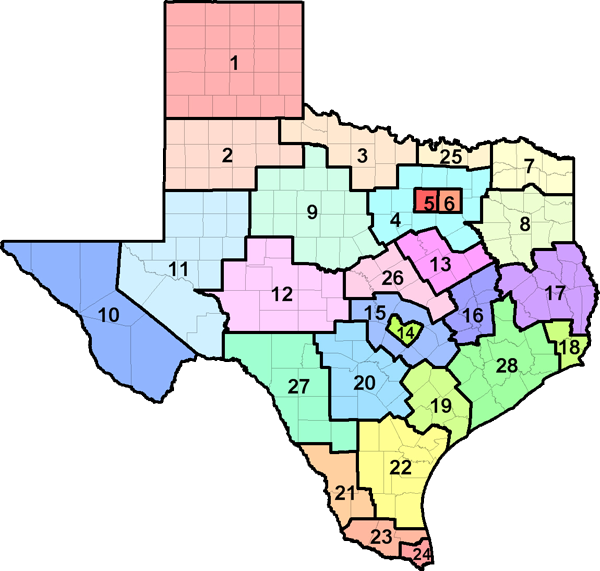
TEXAS COUNTY MAP BY WORKFORCE DEVELOPMENT AREA
* Due to confidentiality rules, not all regions may have the data displayed. The sum of all the regions may not be equal to the state total.


Top 10 Relevant Knowledge Areas Relevant Importance Levels
Transportation
Knowledge of principles and methods for moving people or goods by air, rail, sea, or road, including the relative costs and benefits.
89.20%
Public Safety and Security
Knowledge of relevant equipment, policies, procedures, and strategies to promote effective local, state, or national security operations for the protection of people, data, property, and institutions.
72.40%
English Language
Knowledge of the structure and content of the English language including the meaning and spelling of words, rules of composition, and grammar.
66.60%
Education and Training
Knowledge of principles and methods for curriculum and training design, teaching and instruction for individuals and groups, and the measurement of training effects.
66.40%
Customer and Personal Service
Knowledge of principles and processes for providing customer and personal services. This includes customer needs assessment, meeting quality standards for services, and evaluation of customer satisfaction.
60.40%
Mechanical
Knowledge of machines and tools, including their designs, uses, repair, and maintenance.
59.80%
Administration and Management
Knowledge of business and management principles involved in strategic planning, resource allocation, human resources modeling, leadership technique, production methods, and coordination of people and resources.
55.80%
Law and Government
Knowledge of laws, legal codes, court procedures, precedents, government regulations, executive orders, agency rules, and the democratic political process.
48.80%
Telecommunications
Knowledge of transmission, broadcasting, switching, control, and operation of telecommunications systems.
48.20%
Computers and Electronics
Knowledge of circuit boards, processors, chips, electronic equipment, and computer hardware and software, including applications and programming.
46.20%


Top 10 Relevant Skill Areas Relevant Importance Levels
Operation and Control
Controlling operations of equipment or systems.
82.40%
Operations Monitoring
Watching gauges, dials, or other indicators to make sure a machine is working properly.
80.00%
Active Listening
Giving full attention to what other people are saying, taking time to understand the points being made, asking questions as appropriate, and not interrupting at inappropriate times.
75.00%
Speaking
Talking to others to convey information effectively.
72.40%
Critical Thinking
Using logic and reasoning to identify the strengths and weaknesses of alternative solutions, conclusions, or approaches to problems.
72.40%
Monitoring
Monitoring/Assessing performance of yourself, other individuals, or organizations to make improvements or take corrective action.
72.40%
Reading Comprehension
Understanding written sentences and paragraphs in work-related documents.
67.60%
Judgment and Decision Making
Considering the relative costs and benefits of potential actions to choose the most appropriate one.
67.60%
Time Management
Managing one's own time and the time of others.
62.40%
Active Learning
Understanding the implications of new information for both current and future problem-solving and decision-making.
62.40%


Top 10 Relevant Abilities Relevant Importance Levels
Far Vision
The ability to see details at a distance.
87.60%
Selective Attention
The ability to concentrate on a task over a period of time without being distracted.
80.00%
Control Precision
The ability to quickly and repeatedly adjust the controls of a machine or a vehicle to exact positions.
80.00%
Response Orientation
The ability to choose quickly between two or more movements in response to two or more different signals (lights, sounds, pictures). It includes the speed with which the correct response is started with the hand, foot, or other body part.
80.00%
Reaction Time
The ability to quickly respond (with the hand, finger, or foot) to a signal (sound, light, picture) when it appears.
77.60%
Problem Sensitivity
The ability to tell when something is wrong or is likely to go wrong. It does not involve solving the problem, only recognizing that there is a problem.
77.60%
Near Vision
The ability to see details at close range (within a few feet of the observer).
77.60%
Depth Perception
The ability to judge which of several objects is closer or farther away from you, or to judge the distance between you and an object.
77.60%
Oral Comprehension
The ability to listen to and understand information and ideas presented through spoken words and sentences.
75.00%
Oral Expression
The ability to communicate information and ideas in speaking so others will understand.
75.00%


  • Controlling Machines and Processes
    -- Using either control mechanisms or direct physical activity to operate machines or processes (not including computers or vehicles).
  • Identifying Objects, Actions, and Events
    -- Identifying information by categorizing, estimating, recognizing differences or similarities, and detecting changes in circumstances or events.
  • Inspecting Equipment, Structures, or Materials
    -- Inspecting equipment, structures, or materials to identify the cause of errors or other problems or defects.
  • Operating Vehicles, Mechanized Devices, or Equipment
    -- Running, maneuvering, navigating, or driving vehicles or mechanized equipment, such as forklifts, passenger vehicles, aircraft, or watercraft.
  • Getting Information
    -- Observing, receiving, and otherwise obtaining information from all relevant sources.
Other Activities


  • Support
    - Occupations that satisfy this work value offer supportive management that stands behind employees. Corresponding needs are Company Policies, Supervision: Human Relations and Supervision: Technical.
  • Working Conditions
    - Occupations that satisfy this work value offer job security and good working conditions. Corresponding needs are Activity, Compensation, Independence, Security, Variety and Working Conditions.


Tools

Adjustable widemouth pliers: Adjustable widemouth pliers;

Adjustable wrenches: Adjustable hand wrenches;

Claw hammer: Claw hammers;

Desktop computers: Desktop computers;

Diesel freight locomotives: Diesel freight engines;

Diesel passenger locomotives: Diesel passenger engines;

Electric freight locomotives: Electric freight engines; Gas-turbine-electric engines;

Electric passenger locomotives: Electric passenger engines;

Personal computers: Personal computers;

Radio frequency transmitters or receivers: Two-way end of train devices;

Rail couplers: Car coupling devices;

Rail switching systems: Manual rail switches; Automatic track switching systems;

Screwdrivers: Phillips head screwdrivers; Straight screwdrivers;

Socket sets: Socket wrench sets;

Steam engines: Steam engines;

Tape measures: Tape measures;

Thin client computers: On-board computers;

Train braking systems: Freight car air brakes; Locomotive air brakes;

Two way radios: Two way radios;

Vehicle horns: Warning horns;


Technology

Expert system software: Electronic train management systems ETMS;

Route navigation software: Route mapping software;

Spreadsheet software: Microsoft Excel;

Time accounting software: Time tracking software;

Word processing software: Microsoft Word;


Related O*NET occupational titles for Locomotive Engineers include:
  • 49-3031.00 Bus and Truck Mechanics and Diesel Engine Specialists
  • 53-3032.00 Heavy and Tractor-Trailer Truck Drivers
  • 47-2073.00 Operating Engineers and Other Construction Equipment Operators
  • 53-4013.00 Rail Yard Engineers, Dinkey Operators, and Hostlers
  • 53-4022.00 Railroad Brake, Signal, and Switch Operators and Locomotive Firers
  • 53-4031.00 Railroad Conductors and Yardmasters
  • 53-5031.00 Ship Engineers
  • 49-9097.00 Signal and Track Switch Repairers
  • 53-4041.00 Subway and Streetcar Operators
  • 53-6051.07 Transportation Vehicle, Equipment and Systems Inspectors, Except Aviation


Sources of Additional Information
  • For more information about training programs, certifications, and job opportunities in rail transportation, visit: National Railroad Passenger Corporation (Amtrak)
  • Association of American Railroads (AAR)
  • Federal Railroad Administration (FRA)
  • CareerOneStop

  • For career videos on railroad workers, visit: Locomotive Firers
  • Locomotive Engineers
  • Locomotive Engineers
  • Rail Yard Engineers, Dinkey Operators, and Hostlers
  • Railroad Brake, Signal, and Switch Operators and Locomotive Firers
  • Railroad Conductors and Yardmasters

  • Contact Texas Workforce Commission
    Labor Market and Career Information  |  101 E. 15th Street, Annex Room 0252  |  Austin, Texas 78778
    Official Website  |  1-800-822-PLAN (7526)  |  512.936.3200

    ** The information in this report may be derived from many sources like O*NET, BLS (Bureau of Labor Statistics), OOH (Occupational Outlook Handbook), and Career One Stop.