Occupation Summary

Railroad Conductors and Yardmasters

O*NET 53-4031.00

Description:

Coordinate activities of switch-engine crew within railroad yard, industrial plant, or similar location. Conductors coordinate activities of train crew on passenger or freight trains. Yardmasters review train schedules and switching orders and coordinate activities of workers engaged in railroad traffic operations, such as the makeup or breakup of trains and yard switching.

Annual Wages:
$70,015.00
Employment Rate:
Employment is expected to increase by 10.61%.
Education Level:
High School Diploma - or the equivalent (for example, GED). According to O*Net, the majority of people employed in this occupation have this level of education.
Endorsement:
Business and Industry

  1. Signal engineers to begin train runs, stop trains, or change speed, using telecommunications equipment or hand signals.
  2. Receive information regarding train or rail problems from dispatchers or from electronic monitoring devices.
  3. Direct and instruct workers engaged in yard activities, such as switching tracks, coupling and uncoupling cars, and routing inbound and outbound traffic.
  4. Keep records of the contents and destination of each train car, and make sure that cars are added or removed at proper points on routes.
  5. Operate controls to activate track switches and traffic signals.
  6. Instruct workers to set warning signals in front and at rear of trains during emergency stops.
  7. Direct engineers to move cars to fit planned train configurations, combining or separating cars to make up or break up trains.
  8. Receive instructions from dispatchers regarding trains' routes, timetables, and cargoes.
  9. Review schedules, switching orders, way bills, and shipping records to obtain cargo loading and unloading information and to plan work.
  10. Confer with engineers regarding train routes, timetables, and cargoes, and to discuss alternative routes when there are rail defects or obstructions.
  11. Arrange for the removal of defective cars from trains at stations or stops.
  12. Inspect each car periodically during runs.
  13. Observe yard traffic to determine tracks available to accommodate inbound and outbound traffic.
  14. Document and prepare reports of accidents, unscheduled stops, or delays.
  15. Confirm routes and destination information for freight cars.
  16. Supervise and coordinate crew activities to transport freight and passengers and to provide boarding, porter, maid, and meal services to passengers.
  17. Supervise workers in the inspection and maintenance of mechanical equipment to ensure efficient and safe train operation.
  18. Record departure and arrival times, messages, tickets and revenue collected, and passenger accommodations and destinations.
  19. Inspect freight cars for compliance with sealing procedures, and record car numbers and seal numbers.
  20. Verify accuracy of timekeeping instruments with engineers to ensure trains depart on time.


National Industry Employment Patterns


Industry % of Railroad Conductors and Yardmasters employed Annual Growth Rate
Support activities for rail transportation 2.9 0.00


Labor Market Information


2024 Statewide average hourly wage $33.66
2024 National average hourly wage $36.29
2022 National employment 34,200
2022 Texas employment 4,166
Texas projected employment by 2032 4,608
Texas projected annual employment and Turnover openings through 2032 391


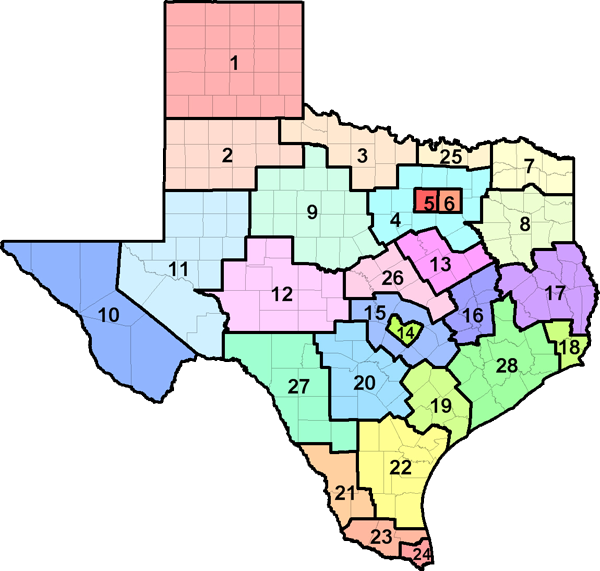
TEXAS COUNTY MAP BY WORKFORCE DEVELOPMENT AREA
* Due to confidentiality rules, not all regions may have the data displayed. The sum of all the regions may not be equal to the state total.


Top 10 Relevant Knowledge Areas Relevant Importance Levels
Public Safety and Security
Knowledge of relevant equipment, policies, procedures, and strategies to promote effective local, state, or national security operations for the protection of people, data, property, and institutions.
79.60%
Transportation
Knowledge of principles and methods for moving people or goods by air, rail, sea, or road, including the relative costs and benefits.
79.00%
English Language
Knowledge of the structure and content of the English language including the meaning and spelling of words, rules of composition, and grammar.
69.20%
Education and Training
Knowledge of principles and methods for curriculum and training design, teaching and instruction for individuals and groups, and the measurement of training effects.
62.20%
Law and Government
Knowledge of laws, legal codes, court procedures, precedents, government regulations, executive orders, agency rules, and the democratic political process.
60.20%
Customer and Personal Service
Knowledge of principles and processes for providing customer and personal services. This includes customer needs assessment, meeting quality standards for services, and evaluation of customer satisfaction.
58.80%
Telecommunications
Knowledge of transmission, broadcasting, switching, control, and operation of telecommunications systems.
57.80%
Mechanical
Knowledge of machines and tools, including their designs, uses, repair, and maintenance.
57.40%
Computers and Electronics
Knowledge of circuit boards, processors, chips, electronic equipment, and computer hardware and software, including applications and programming.
55.80%
Mathematics
Knowledge of arithmetic, algebra, geometry, calculus, statistics, and their applications.
53.60%


Top 10 Relevant Skill Areas Relevant Importance Levels
Speaking
Talking to others to convey information effectively.
75.00%
Monitoring
Monitoring/Assessing performance of yourself, other individuals, or organizations to make improvements or take corrective action.
75.00%
Coordination
Adjusting actions in relation to others' actions.
75.00%
Critical Thinking
Using logic and reasoning to identify the strengths and weaknesses of alternative solutions, conclusions, or approaches to problems.
72.40%
Active Listening
Giving full attention to what other people are saying, taking time to understand the points being made, asking questions as appropriate, and not interrupting at inappropriate times.
70.00%
Judgment and Decision Making
Considering the relative costs and benefits of potential actions to choose the most appropriate one.
70.00%
Time Management
Managing one's own time and the time of others.
70.00%
Operations Monitoring
Watching gauges, dials, or other indicators to make sure a machine is working properly.
67.60%
Operation and Control
Controlling operations of equipment or systems.
65.00%
Complex Problem Solving
Identifying complex problems and reviewing related information to develop and evaluate options and implement solutions.
65.00%


Top 10 Relevant Abilities Relevant Importance Levels
Oral Expression
The ability to communicate information and ideas in speaking so others will understand.
80.00%
Oral Comprehension
The ability to listen to and understand information and ideas presented through spoken words and sentences.
77.60%
Problem Sensitivity
The ability to tell when something is wrong or is likely to go wrong. It does not involve solving the problem, only recognizing that there is a problem.
77.60%
Near Vision
The ability to see details at close range (within a few feet of the observer).
72.40%
Far Vision
The ability to see details at a distance.
72.40%
Speech Recognition
The ability to identify and understand the speech of another person.
72.40%
Speech Clarity
The ability to speak clearly so others can understand you.
72.40%
Information Ordering
The ability to arrange things or actions in a certain order or pattern according to a specific rule or set of rules (e.g., patterns of numbers, letters, words, pictures, mathematical operations).
70.00%
Deductive Reasoning
The ability to apply general rules to specific problems to produce answers that make sense.
67.60%
Inductive Reasoning
The ability to combine pieces of information to form general rules or conclusions (includes finding a relationship among seemingly unrelated events).
67.60%


  • Getting Information
    -- Observing, receiving, and otherwise obtaining information from all relevant sources.
  • Inspecting Equipment, Structures, or Materials
    -- Inspecting equipment, structures, or materials to identify the cause of errors or other problems or defects.
  • Communicating with Supervisors, Peers, or Subordinates
    -- Providing information to supervisors, co-workers, and subordinates by telephone, in written form, e-mail, or in person.
  • Identifying Objects, Actions, and Events
    -- Identifying information by categorizing, estimating, recognizing differences or similarities, and detecting changes in circumstances or events.
  • Performing General Physical Activities
    -- Performing physical activities that require considerable use of your arms and legs and moving your whole body, such as climbing, lifting, balancing, walking, stooping, and handling materials.
Other Activities


  • Independence
    - Occupations that satisfy this work value allow employees to work on their own and make decisions. Corresponding needs are Creativity, Responsibility and Autonomy.
  • Support
    - Occupations that satisfy this work value offer supportive management that stands behind employees. Corresponding needs are Company Policies, Supervision: Human Relations and Supervision: Technical.


Tools

Adjustable wrenches: Adjustable wrenches;

Bar code reader equipment: Portable bar code scanners;

Desktop computers: Desktop computers;

Dock plates: Bridge plates;

Intercom systems: Intercom systems;

Location based messaging service platforms: Portable satellite communications systems;

Lockout devices: Automatic container locks;

Mainframe computers: Mainframe computers;

Notebook computers: Laptop computers;

Personal computers: Personal computers;

Punches or nail sets or drifts: Starter punches;

Radio frequency identification devices: Radio frequency identification RFID devices;

Radio frequency transmitters or receivers: Ultra high frequency UHF radio communication systems;

Rail couplers: Uncoupling levers;

Rail switching systems: Switching system controls;

Ratchets: Locking ratchet wrenches;

Specialty wrenches: Terminal wrenches; Switch adjusting wrenches;

Tie down anchors: Tie-down winches;

Truck or rail scales: Weigh-in-motion scales;

Two way radios: Two way radios;

Winches: Car pullers;

Wire or cable cutter: Cable sheath cutters;


Technology

Electronic mail software: Microsoft Outlook;

Expert system software: Positive train control PTC systems;

Industrial control software: RailComm DocYard; SAIC government services and IT support software; Softrail AEI Automatic Yard Tracking System; Automated equipment identification AEI software;

Inventory management software: Inventory tracking software; Softrail AEI Rail & Road Manager;

Materials requirements planning logistics and supply chain software: Bourque Data Systems YardMaster; Freight reservation software;

Office suite software: Microsoft Office software;

Presentation software: Microsoft PowerPoint;

Spreadsheet software: Microsoft Excel;

Word processing software: Microsoft Word;


Related O*NET occupational titles for Railroad Conductors and Yardmasters include:
  • 53-2021.00 Air Traffic Controllers
  • 53-1041.00 Aircraft Cargo Handling Supervisors
  • 53-2022.00 Airfield Operations Specialists
  • 43-5032.00 Dispatchers, Except Police, Fire, and Ambulance
  • 53-1043.00 First-Line Supervisors of Material-Moving Machine and Vehicle Operators
  • 53-4011.00 Locomotive Engineers
  • 53-4013.00 Rail Yard Engineers, Dinkey Operators, and Hostlers
  • 53-4022.00 Railroad Brake, Signal, and Switch Operators and Locomotive Firers
  • 53-4041.00 Subway and Streetcar Operators
  • 53-6051.07 Transportation Vehicle, Equipment and Systems Inspectors, Except Aviation


Sources of Additional Information
  • For more information about training programs, certifications, and job opportunities in rail transportation, visit: National Railroad Passenger Corporation (Amtrak)
  • Association of American Railroads (AAR)
  • Federal Railroad Administration (FRA)
  • CareerOneStop

  • For career videos on railroad workers, visit: Locomotive Firers
  • Locomotive Engineers
  • Locomotive Engineers
  • Rail Yard Engineers, Dinkey Operators, and Hostlers
  • Railroad Brake, Signal, and Switch Operators and Locomotive Firers
  • Railroad Conductors and Yardmasters

  • Contact Texas Workforce Commission
    Labor Market and Career Information  |  101 E. 15th Street, Annex Room 0252  |  Austin, Texas 78778
    Official Website  |  1-800-822-PLAN (7526)  |  512.936.3200

    ** The information in this report may be derived from many sources like O*NET, BLS (Bureau of Labor Statistics), OOH (Occupational Outlook Handbook), and Career One Stop.