Occupation Summary

Motorboat Operators

O*NET 53-5022.00

Description:

Operate small motor-driven boats. May assist in navigational activities.

Annual Wages:
$57,906.00
Employment Rate:
Employment is expected to increase by 14.37%.
Education Level:
High School Diploma - or the equivalent (for example, GED). According to O*Net, the majority of people employed in this occupation have this level of education.
Endorsement:
Business and Industry

  1. Maintain desired courses, using compasses or electronic navigational aids.
  2. Follow safety procedures to ensure the protection of passengers, cargo, and vessels.
  3. Operate engine throttles and steering mechanisms to guide boats on desired courses.
  4. Direct safety operations in emergency situations.
  5. Issue directions for loading, unloading, and seating in boats.
  6. Secure boats to docks with mooring lines, and cast off lines to enable departure.
  7. Maintain equipment such as range markers, fire extinguishers, boat fenders, lines, pumps, and fittings.
  8. Report any observed navigational hazards to authorities.
  9. Service motors by performing tasks such as changing oil and lubricating parts.
  10. Arrange repairs, fuel, and supplies for vessels.
  11. Organize and direct the activities of crew members.
  12. Tow, push, or guide other boats, barges, logs, or rafts.
  13. Clean boats and repair hulls and superstructures, using hand tools, paint, and brushes.
  14. Oversee operation of vessels used for carrying passengers, motor vehicles, or goods across rivers, harbors, lakes, and coastal waters.
  15. Take depth soundings in turning basins.
  16. Perform general labor duties such as repairing booms.


National Industry Employment Patterns


Industry % of Motorboat Operators employed Annual Growth Rate
Scenic and sightseeing transportation, water 19.8 0.00
Travel arrangement and reservation services 6.2 0.00
Support activities for water transportation 5.6 0.00
Inland water transportation 5.2 0.00
Other heavy and civil engineering construction 4.8 0.00
Traveler accommodation 2.3 0.00
Personal and household goods repair and maintenance 2 0.00


Labor Market Information


2024 Statewide average hourly wage $27.84
2024 National average hourly wage $26.62
2022 National employment 3,600
2022 Texas employment 167
Texas projected employment by 2032 191
Texas projected annual employment and Turnover openings through 2032 20


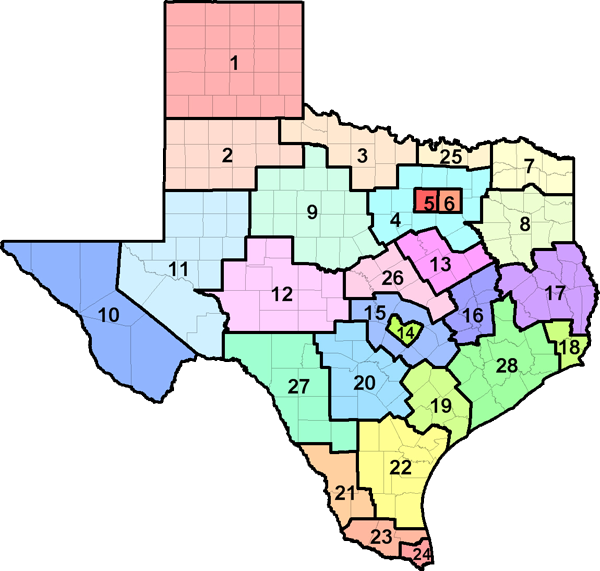
TEXAS COUNTY MAP BY WORKFORCE DEVELOPMENT AREA
* Due to confidentiality rules, not all regions may have the data displayed. The sum of all the regions may not be equal to the state total.


Top 10 Relevant Knowledge Areas Relevant Importance Levels
Customer and Personal Service
Knowledge of principles and processes for providing customer and personal services. This includes customer needs assessment, meeting quality standards for services, and evaluation of customer satisfaction.
87.20%
English Language
Knowledge of the structure and content of the English language including the meaning and spelling of words, rules of composition, and grammar.
82.00%
Education and Training
Knowledge of principles and methods for curriculum and training design, teaching and instruction for individuals and groups, and the measurement of training effects.
78.20%
Public Safety and Security
Knowledge of relevant equipment, policies, procedures, and strategies to promote effective local, state, or national security operations for the protection of people, data, property, and institutions.
76.40%
Transportation
Knowledge of principles and methods for moving people or goods by air, rail, sea, or road, including the relative costs and benefits.
75.40%
Mechanical
Knowledge of machines and tools, including their designs, uses, repair, and maintenance.
69.20%
Geography
Knowledge of principles and methods for describing the features of land, sea, and air masses, including their physical characteristics, locations, interrelationships, and distribution of plant, animal, and human life.
59.40%
Personnel and Human Resources
Knowledge of principles and procedures for personnel recruitment, selection, training, compensation and benefits, labor relations and negotiation, and personnel information systems.
58.80%
Administration and Management
Knowledge of business and management principles involved in strategic planning, resource allocation, human resources modeling, leadership technique, production methods, and coordination of people and resources.
58.60%
Telecommunications
Knowledge of transmission, broadcasting, switching, control, and operation of telecommunications systems.
58.40%


Top 10 Relevant Skill Areas Relevant Importance Levels
Operation and Control
Controlling operations of equipment or systems.
77.60%
Operations Monitoring
Watching gauges, dials, or other indicators to make sure a machine is working properly.
75.00%
Equipment Maintenance
Performing routine maintenance on equipment and determining when and what kind of maintenance is needed.
67.60%
Speaking
Talking to others to convey information effectively.
67.60%
Monitoring
Monitoring/Assessing performance of yourself, other individuals, or organizations to make improvements or take corrective action.
67.60%
Judgment and Decision Making
Considering the relative costs and benefits of potential actions to choose the most appropriate one.
65.00%
Active Listening
Giving full attention to what other people are saying, taking time to understand the points being made, asking questions as appropriate, and not interrupting at inappropriate times.
62.40%
Critical Thinking
Using logic and reasoning to identify the strengths and weaknesses of alternative solutions, conclusions, or approaches to problems.
62.40%
Service Orientation
Actively looking for ways to help people.
60.00%
Complex Problem Solving
Identifying complex problems and reviewing related information to develop and evaluate options and implement solutions.
60.00%


Top 10 Relevant Abilities Relevant Importance Levels
Control Precision
The ability to quickly and repeatedly adjust the controls of a machine or a vehicle to exact positions.
80.00%
Spatial Orientation
The ability to know your location in relation to the environment or to know where other objects are in relation to you.
77.60%
Far Vision
The ability to see details at a distance.
75.00%
Perceptual Speed
The ability to quickly and accurately compare similarities and differences among sets of letters, numbers, objects, pictures, or patterns. The things to be compared may be presented at the same time or one after the other. This ability also includes comparing a presented object with a remembered object.
72.40%
Problem Sensitivity
The ability to tell when something is wrong or is likely to go wrong. It does not involve solving the problem, only recognizing that there is a problem.
72.40%
Arm-Hand Steadiness
The ability to keep your hand and arm steady while moving your arm or while holding your arm and hand in one position.
72.40%
Manual Dexterity
The ability to quickly move your hand, your hand together with your arm, or your two hands to grasp, manipulate, or assemble objects.
72.40%
Multilimb Coordination
The ability to coordinate two or more limbs (for example, two arms, two legs, or one leg and one arm) while sitting, standing, or lying down. It does not involve performing the activities while the whole body is in motion.
70.00%
Oral Expression
The ability to communicate information and ideas in speaking so others will understand.
70.00%
Auditory Attention
The ability to focus on a single source of sound in the presence of other distracting sounds.
70.00%


  • Operating Vehicles, Mechanized Devices, or Equipment
    -- Running, maneuvering, navigating, or driving vehicles or mechanized equipment, such as forklifts, passenger vehicles, aircraft, or watercraft.
  • Identifying Objects, Actions, and Events
    -- Identifying information by categorizing, estimating, recognizing differences or similarities, and detecting changes in circumstances or events.
  • Inspecting Equipment, Structures, or Materials
    -- Inspecting equipment, structures, or materials to identify the cause of errors or other problems or defects.
  • Monitoring Processes, Materials, or Surroundings
    -- Monitoring and reviewing information from materials, events, or the environment, to detect or assess problems.
  • Controlling Machines and Processes
    -- Using either control mechanisms or direct physical activity to operate machines or processes (not including computers or vehicles).
Other Activities


  • Relationships
    - Occupations that satisfy this work value allow employees to provide service to others and work with co-workers in a friendly non-competitive environment. Corresponding needs are Co-workers, Moral Values and Social Service.
  • Support
    - Occupations that satisfy this work value offer supportive management that stands behind employees. Corresponding needs are Company Policies, Supervision: Human Relations and Supervision: Technical.


Tools

Adjustable wrenches: Adjustable wrench sets;

Anchor lines: Chafing gear;

Binoculars: Binoculars;

Blowers: Forced draft blowers;

Boat Trailer: Boat towing trailers;

Boathooks: Boat hooks;

Carbon monoxide analyzer: Carbon monoxide detectors;

Collection tanks: Sanitation treatment tanks;

Complex controlling devices: Electronic navigational aids;

Depth indicators: High water alarms;

Desktop computers: Desktop computers;

Dewatering pumps: Automatic bilge pumps; Manual bilge pumps;

Direction finding compasses: Navigational compasses;

Electrical jumper cable: Jumper packs;

Emergency dye signals: Die markers;

Exterior ship or boat lighting: Anchor lights; Masthead lights; Sidelights; Stern lights;

Fire alarm systems: Fire detectors;

Fire extinguishers: Carbon dioxide fire extinguishers; Dry chemical fire extinguishers; Halon fire extinguishers; Foam fire extinguishers;

Fire suppression system: Fixed fire suppression systems;

Flags or accessories: Signal flags;

Flame arrestor: Backfire flame arrestors;

Flares: Parachute flares; Pyrotechnic flares; Smoke flares;

Gasoline engines: Kicker engines;

Gasoline outboard motor: Jet motors; Gas powered outboard motors;

Glow stick or light stick: Glow sticks;

Grease guns: Grease dispensing guns;

Hand sprayers: Handheld sprayers;

Insulated or flotation suits: Exposure suits;

Kerosene or propane or natural gas or butane lantern: Signal lanterns;

Life rings: Flotation aids; Throwable flotation devices;

Life vests or preservers: Inflatable personal flotation devices PFD; Recreational life jackets; Near-shore life jackets; Offshore life jackets;

Lightning protection apparatus and accessories: Lightning protection systems;

Marine craft communications systems: Single sideband SSB radios; Satellite communications radios; Very high frequency VHF radiotelephones;

Marine rudders: Drogues;

Marine signaling systems: Distress flags; Signal horns; Signal bells;

Marine steering gear: Boat steering mechanisms;

Masks or fins or snorkels: Snorkels; Diving masks;

Metallic mirrors: Signal mirrors;

Mobile medical services first aid kits: First aid kits;

Nylon rope: Nylon ropes; Mooring pendants;

Oil can: Oil dispensing cans;

Paddles: Oars;

Radarbased surveillance systems: Radar systems; Mini automatic radar plotting aids MARPA;

Radio access equipment: Citizen's band CB radios;

Radio beacon: Emergency position indicating radio beacons EPIRB;

Recreational motorboats: Recreational motorboats;

Reflective apparel or accessories: Space blankets;

Rescue light: Visual distress signals;

Rope float lines: Rescue throw bags;

Safety chains: Safety chains;

Safety horns: Air horns;

Sail booms: Booms;

Shaft collar: Captive-pin shackles;

Smoke signal device: Floating smoke signals;

Sonars: Sonar devices;

Strobe or warning lights: Strobe lights;

Sump pumps: Discharger pumps;

Swivel carabiner: Carabiners;

Throttle: Engine throttles;

Tie down anchors: Mushroom anchors; Kedge anchors; Burying anchors; Danforth anchors;

Tillers: Boat tillers;

Towing hook: Boat towing hooks;

Two way radios: Mobile radios;

Utility knives: Emergency knives;

Winches: Marine winches;

Wire brushes: Wire cleaning brushes;

Wire rope: Wire ropes;


Technology

Analytical or scientific software: Echo sounder software; Radar software;

Expert system software: Autopilot software;

Internet browser software: Web browser software;

Map creation software: Cartography software;

Mobile location based services software: Global positioning system GPS software;


Related O*NET occupational titles for Motorboat Operators include:
  • 53-5021.00 Captains, Mates, and Pilots of Water Vessels
  • 53-2012.00 Commercial Pilots
  • 53-7031.00 Dredge Operators
  • 45-3031.00 Fishing and Hunting Workers
  • 53-3032.00 Heavy and Tractor-Trailer Truck Drivers
  • 53-7041.00 Hoist and Winch Operators
  • 49-3051.00 Motorboat Mechanics and Service Technicians
  • 49-9096.00 Riggers
  • 53-5011.00 Sailors and Marine Oilers
  • 53-5031.00 Ship Engineers


Sources of Additional Information
  • For details about apprenticeships or other work opportunities in these occupations, contact the offices of the state employment service, the state apprenticeship agency, local unions, or firms that employ water transportation workers. Apprenticeship information is available from the U.S. Department of Labor’s Apprenticeship program online or by phone at 877-872-5627. Visit Apprenticeship.gov to search for apprenticeship opportunities.
  • For more information about water transportation workers, including employment and training information, visit: Maritime Administration, U.S. Department of Transportation
  • For more information about licensing requirements and other credentials, visit: National Maritime Center, U.S. Coast Guard
  • Transportation Security Administration, U.S. Department of Homeland Security
  • For information about jobs on barges, tugboats, and towboats traveling on inland and coastal waterways, visit: Lake Carriers’ Association
  • CareerOneStop

  • For career videos on water transportation workers, visit: Captains, Mates, and Pilots of Water Vessels
  • Motorboat Operators
  • Sailors and Marine Oilers
  • Captains, Mates, and Pilots of Water Vessels
  • Motorboat Operators
  • Sailors and Marine Oilers
  • Ship Engineers

  • Contact Texas Workforce Commission
    Labor Market and Career Information  |  101 E. 15th Street, Annex Room 0252  |  Austin, Texas 78778
    Official Website  |  1-800-822-PLAN (7526)  |  512.936.3200

    ** The information in this report may be derived from many sources like O*NET, BLS (Bureau of Labor Statistics), OOH (Occupational Outlook Handbook), and Career One Stop.